التمييز بين تصنيع ثنائي الفينيل متعدد الكلور و تدمج تقنية تجميع ثنائي الفينيل متعدد الكلور (SiP) رقائق متعددة في حزمة واحدة، مما يقلل من حجم وحدة الاستشعار بنسبة 70%. أمر بالغ الأهمية للمهندسين والمصممين وفرق المشتريات.
يساعد فهم كلتا العمليتين في:
- تقليل أخطاء التصنيع
- تحسين التكلفة والمهلة الزمنية
- التخطيط للاختبار ومراقبة الجودة
في هذه المقالة، سنستكشف في هذه المقالة الاختلافات والتحديات والاعتبارات الرئيسية من من منظور TOPFAST الاحترافي لتصنيع ثنائي الفينيل متعدد الكلور.
للحصول على نظرة عامة مفصلة عن عملية تصنيع ثنائي الفينيل متعدد الكلور، راجع صفحة المحور: عملية تصنيع ثنائي الفينيل متعدد الكلور
جدول المحتويات
ما هو تصنيع ثنائي الفينيل متعدد الكلور؟ (الهيكل العظمي)
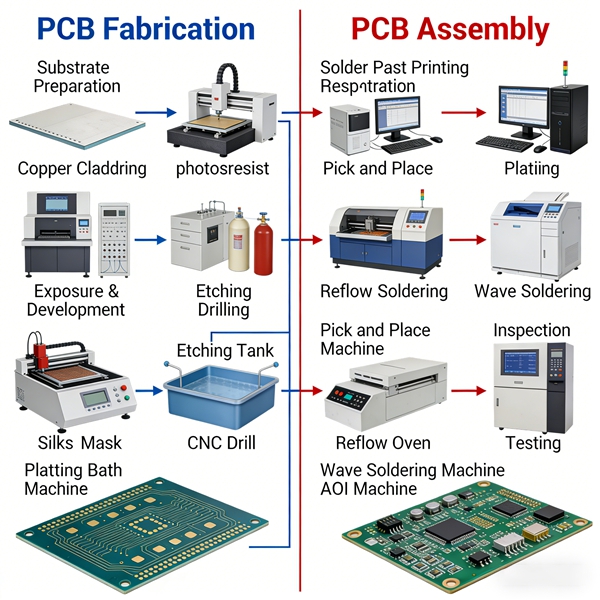
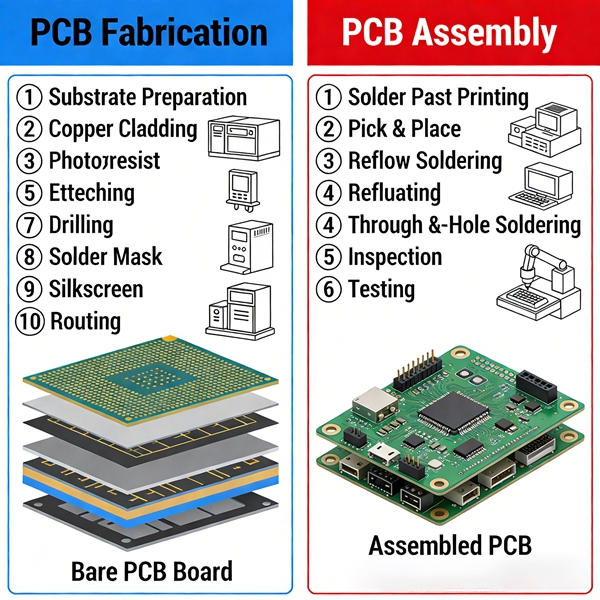
تصنيع ثنائي الفينيل متعدد الكلور هو العملية الميكانيكية لإنشاء لوحة الدارات العارية. وتتضمن:
- اختيار المواد: اختيار الركيزة المناسبة للإدارة تكاليف التصنيع.
- التصفيح والحفر: إنشاء طبقات النحاس الموصلة.
- الحفر: استخدام المثاقب الميكانيكية أو الليزرية من أجل تصنيع ثنائي الفينيل متعدد الكلور HDI.
- تشطيب السطح: تطبيق HASL أو ENIG لحماية النحاس وضمان قابلية اللحام.
ما هو تجميع ثنائي الفينيل متعدد الكلور؟ (الجهاز العصبي)
تجميع ثنائي الفينيل متعدد الكلور هو عملية اللحام المكونات الإلكترونية SMD والأجزاء عبر الفتحات على اللوحة المصنّعة.
- معالجة SMT: وضع آلي عالي السرعة للمكونات الصغيرة جداً.
- إعادة التدفق واللحام الموجي: تشكيل الوصلات الكهربائية الدائمة.
- الاختبار: استخدام طرق ل مكثفات الاختبار والمنطق العام للدائرة الكهربية.

لمحة سريعة عن الاختلافات الجوهرية
| الميزة | تصنيع ثنائي الفينيل متعدد الكلور | تجميع ثنائي الفينيل متعدد الكلور (PCBA) |
| المخرجات | لوح مكشوف (بدون مكونات) | جهاز إلكتروني وظيفي |
| الهدف الأساسي | البنية المادية والاتصال المادي | الوظائف الكهربائية والأداء الكهربائي |
| المواد الرئيسية | نحاس، FR-4، قناع اللحام | مكونات SMD، معجون اللحام |
| التحقق من المفتاح | سوق دبي المالي (التصميم من أجل التصنيع) | DFA (تصميم للتجميع) |
كيفية الانتقال بسلاسة من التصنيع إلى التجميع
- المراجعة الموحدة لسوق دبي المالي/إدارة الشؤون المالية
تأكد من أن قرارات تصميم ثنائي الفينيل متعدد الكلور حساب كل من حدود النقش على النحاس وتصاريح ماكينة الالتقاط والوضع.
- تحسين قائمة المنتجات المُصنّعة
توفير قائمة كاملة بقائمة المواد (BOM) مع أرقام أجزاء الشركة المصنعة الدقيقة لتجنب عدم تطابق المكونات.
- تنسيق المكدس
قم بمطابقة تصميم مكدس ثنائي الفينيل متعدد الكلور مع المتطلبات الحرارية لفرن إعادة اللحام بإعادة التدفق.
- استراتيجية تشكيل الألواح
استخدم أحجام الألواح التي تزيد من استخدام المواد في التصنيع مع الحفاظ على توافقها مع ناقلات SMT.
- تتبع الجودة
تنفيذ الأرقام التسلسلية على اللوحة العارية أثناء التصنيع لتتبع معالجة PCBA التاريخ.
الأسئلة الشائعة حول تصنيع ثنائي الفينيل متعدد الكلور مقابل تجميع ثنائي الفينيل متعدد الكلور
A: بالتأكيد. يُفضّل استخدام ENIG في حالة الرقائق الدقيقة مكونات SMDبينما يعد HASL خيارًا فعالاً من حيث التكلفة للتصميمات الأكبر والأقل تعقيدًا.
ج: يمكن أن تتسبب الطبقات غير المحاذية أو سوء الحفر أو مشاكل الطلاء في حدوث عيوب في اللحام وإزاحة المكونات عن مكانها والإجهاد الحراري أثناء التجميع.
A: نعم، ولكن استخدام مزود خدمة متكاملة مثل Topfast يقلل من أخطاء الاتصال ويسرّع من عملية الاتصال بشكل عام ميزانية التصنيع الإدارة.
ج: يضمن التصميم باستخدام التباعد المناسب وأحجام الوسائد وتوازن النحاس قابلية التصنيع ويقلل من فقدان الإنتاجية في كل من التصنيع والتجميع.
ج: يطبق TOPFAST منظور التصنيع أولاًوالتحكم في جودة العملية والعائد والموثوقية بدءًا من التصنيع وحتى التجميع النهائي.
A: وسادات البصمة غير صحيحة. إذا كانت وسادة التصنيع صغيرة جداً، فإن معالجة PCBA ستؤدي إلى وصلات لحام رديئة أو "تكسير المقابر".
A: نستخدم الهيئة العربية للتصنيع والأشعة السينية والاختبار الوظيفي. يمكنك أيضًا يدويًا مكثفات الاختبار أثناء مرحلة تصحيح أخطاء النموذج الأولي الخاص بك.
A: وعموماً، فإن PCBA أكثر تكلفة بسبب تكلفة المكونات الإلكترونية SMD والمعدات الدقيقة المتخصصة المطلوبة.
الخاتمة
فهم الفرق بين التصنيع و التجميع يسمح بتخطيط أفضل للمشروع والتحكم في التكاليف. في Topfast، نقوم بسد هذه الفجوة من خلال تقديم خدمات سلسة وعالية الموثوقية خدمات تجميع ثنائي الفينيل متعدد الكلور.
هل أنت مستعد للانتقال من التصميم إلى الأجهزة الوظيفية؟ احصل على عرض أسعار موحد لثنائي الفينيل متعدد الكلور وثنائي الفينيل متعدد الكلور من توب فاست اليوم