Inspektion og test af printkort er vigtige skridt for at sikre, at et printkort opfylder både kvalitets- og funktionskrav.
Mens inspektionen fokuserer på opdage fejl og mangler, verificerer testen elektrisk integritet og ydeevne.
Tilsammen udgør de den sidste kvalitetskontrol før PCB-samling eller forsendelse.
Denne side giver et overblik over de vigtigste PCB-inspektions- og testmetoder og links til uddybende tekniske artikler om hver enkelt.
Fundament for kvalitet:
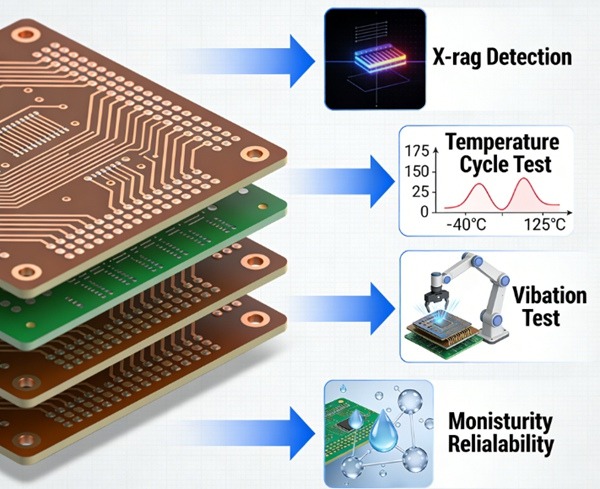
PCB-kvalitet og -pålidelighed forklaret
Indholdsfortegnelse
Hvorfor PCB-inspektion og -test er vigtigt
Selv med robuste produktionsprocesser kan der stadig opstå fejl.
Inspektion og test hjælper med at:
- Opdag produktionsfejl tidligt
- Forhindrer defekte boards i at nå frem til samlingen
- Giv feedback til forbedring af processen
- Reducer pålidelighed og risiko for fejl i marken
De erstatter ikke godt design eller proceskontrol, men de reducerer risikoen betydeligt.
Automatiseret optisk inspektion (AOI)
AOI er den mest anvendte inspektionsmetode i PCB-produktion.
Hvad AOI gør godt
- Registrerer defekter på overfladeniveau
- Identificerer åbninger og kortslutninger visuelt
- Forbedrer inspektionshastigheden og -konsistensen
AOI-begrænsninger
- Kan ikke opdage interne defekter
- Kan ikke verificere elektrisk ydeevne
Dybt dyk:
AOI-inspektion i PCB-produktion
Røntgeninspektion
Røntgeninspektion gør det muligt at se de indre strukturer i et printkort.
Hvad røntgen afslører
- Via og hulplettering af hulrum
- Forskydning af det indre lag
- Delaminering og hulrum i harpiks
Begrænsninger for røntgenstråler
- Højere omkostninger
- Langsommere inspektionshastighed
- Typisk baseret på prøvetagning
Tekniske detaljer:
Røntgeninspektion i PCB-produktion
Elektrisk test af printkort
Elektrisk test er den eneste metode, der direkte verificerer forbindelsen.
Hvad elektriske test bekræfter
- Kontinuitet i alle net
- Fravær af shorts
- Korrekte netforbindelser
Hvad den ikke kan gøre
- Forudsig pålidelighed på lang sigt
- Opdag indvendige hulrum eller belægningstykkelse
Oversigt over metoder:
Elektrisk test af printkort forklaret
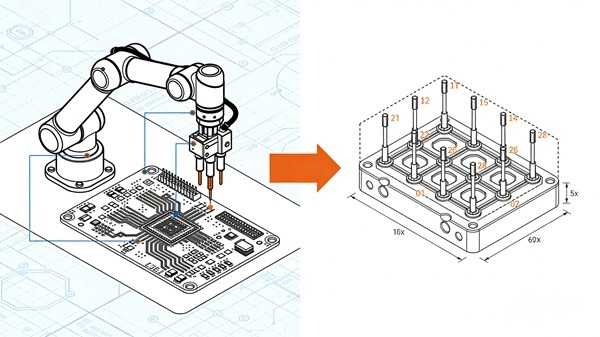
Flyvende probe vs. fixturbaseret test
Når der er behov for elektrisk testning, er det vigtigt at vælge den rigtige metode.
Vigtige beslutningsfaktorer
- Produktionsmængde
- Designstabilitet
- Omkostningsstruktur
- Tid til markedet
Sammenligningsguide:
Elektrisk test med flyvende probe vs. armatur
Inspektion vs. testning - forstå forskellen
| Aspekt | Inspektion | Testning |
|---|---|---|
| Fokus | Visuel og strukturel | Elektrisk funktion |
| Typiske metoder | AOI, røntgen | E-test |
| Registrerer åbninger/kortslutninger | Begrænset | Ja |
| Registrerer interne defekter | Kun røntgenbilleder | No |
| Forudsigelse af pålidelighed | No | No |
Begge dele er nødvendige, men de adresserer forskellige risici.
Sådan arbejder inspektion og test sammen
Et komplet PCB-kvalitetssystem følger typisk denne rækkefølge:
- AOI til tidlig opdagelse af overfladefejl
- Røntgeninspektion af interne strukturer (når det er nødvendigt)
- Elektrisk test til verifikation af tilslutningsmuligheder
- Pålidelighedstest for langsigtet ydeevne (selektiv)
Link til pålidelighed:
PCB-pålidelighedstest forklaret
Overvejelser om omkostninger ved inspektion og testning
Inspektion og testning koster ekstra, men at springe dem over øger risikoen.
Omkostningerne påvirkes af:
- Bestyrelsens kompleksitet
- Volumen
- Inspektionsdybde
- Valg af testmetode
Omkostningsbalance:
Afvejning af omkostninger og kvalitet ved PCB-produktion
Når udvidet inspektion er nødvendig
Udvidet inspektion og test er især vigtigt for:
- PCB'er med høj densitet eller flere lag
- Nye designs eller materialer
- Anvendelser med høj spænding eller høj temperatur
- Produkter med lang levetid
I sådanne tilfælde er standardinspektion alene utilstrækkelig.
I sådanne tilfælde er standardinspektion alene utilstrækkelig.
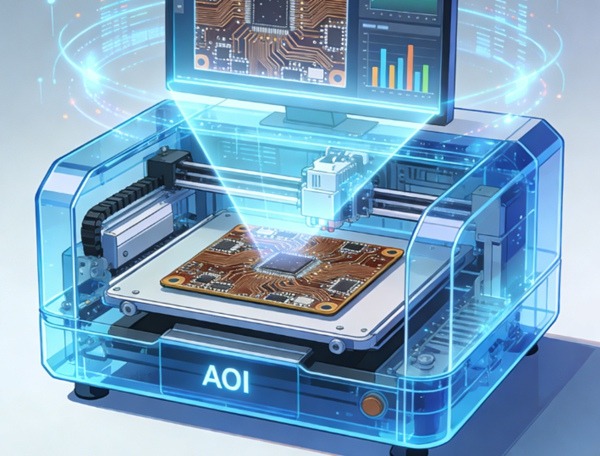
Hvordan producenter anvender inspektion i praksis
I virkelige produktionsmiljøer er inspektionsstrategier skræddersyet til:
- Designrisiko
- Volumenøkonomi
- Kundens krav
Hos TOPFAST vælges inspektions- og testmetoder på baggrund af risikoniveau og anvendelsesbehovDet sikrer både effektivitet og pålidelighed.
Konklusion
PCB-inspektion og -test er vigtige sikkerhedsforanstaltninger, der bygger bro mellem produktionsprocesser og ydeevne i den virkelige verden.
Ved at kombinere AOI, røntgeninspektion, elektrisk testning og passende teststrategier kan producenterne reducere risikoen for fejl betydeligt og forbedre den samlede PCB-kvalitet.
Denne side fungerer som den centrale reference for PCB-inspektion og -test emneklynge.
FAQ om PCB-inspektion og -test
Inspektion kan ikke bekræfte den elektriske forbindelse.
A: Nej. De registrerer forskellige typer af defekter.
Røntgen bruges typisk til komplekse designs.
Svar: Nej. Pålidelighedstest er nødvendig for langsigtet validering.
Svar: Kun til applikationer med lav risiko og lav kompleksitet.