Le forage est l'une des étapes les plus critiques de la production d'électricité. Fabrication de circuits imprimés. Chaque via, chaque trou de composant et chaque connexion intercouche dépendent de la précision et de la fiabilité du perçage.
Alors que les circuits imprimés deviennent de plus en plus denses, de nombreux ingénieurs sont confrontés à la même question :
Dois-je utiliser le perçage mécanique ou le perçage au laser ?
La réponse dépend taille du trou, structure de la couche, objectifs de coûts et exigences de l'application. Cet article explique le fonctionnement des deux méthodes de forage, leurs différences et la manière dont les fabricants, comme le TOPFAST décider de la procédure appropriée.
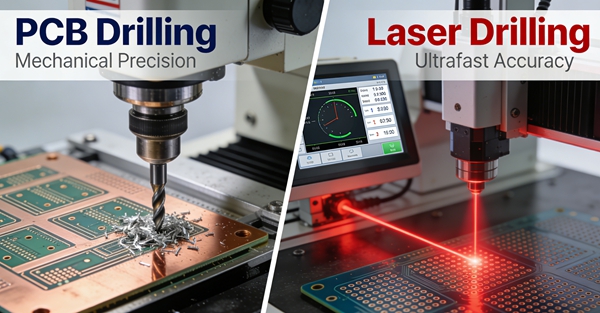
Table des matières
Qu'est-ce que le perçage mécanique des circuits imprimés ?
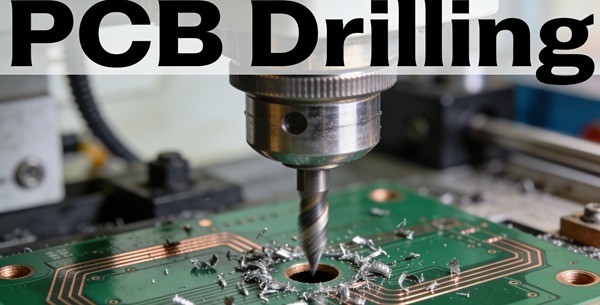
Utilisations du forage mécanique forets rotatifs pour créer des trous dans la pile de circuits imprimés.
Comment fonctionne le forage mécanique
- Machines de forage à commande numérique
- Mèches en carbure de tungstène
- Convient pour les trous de passage et les vias de grande taille
Le forage mécanique est le la méthode de forage la plus courante et la plus rentable dans la fabrication des circuits imprimés.
Capacités typiques du forage mécanique
- Taille minimale du trou : ~0,15-0,20 mm (en fonction de l'épaisseur)
- Convient pour les trous de passage
- Stable et évolutif pour une production de masse
Chez TOPFAST, le perçage mécanique est utilisé pour la majorité des conceptions de circuits imprimés rigides standard.
Qu'est-ce que le perçage laser de circuits imprimés ?
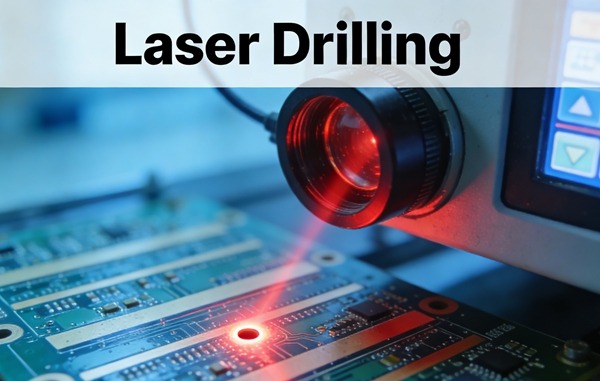
Le perçage au laser utilise un faisceau laser focalisé pour ablater la matière et créer de très petits trous.
Comment fonctionne le perçage au laser ?
- Impulsions laser à haute énergie
- Pas de contact physique
- Enlèvement de matière extrêmement précis
Le perçage au laser est principalement utilisé pour microvias dans Cartes de circuits imprimés HDI.
Capacités typiques du perçage au laser
- Taille du trou : jusqu'à 0,05-0,10 mm
- Utilisé pour les vias aveugles
- Profondeur de forage limitée (généralement une couche à la fois)
Le perçage au laser permet des interconnexions à haute densité que le perçage mécanique ne peut pas réaliser.
Principales différences entre le perçage mécanique et le perçage au laser
Capacité de dimensionnement des trous
- Forage mécanique : limité par la force du trépan
- Perçage au laser : permet de créer des microvias de très petite taille
Via Type Support
| Via Type | Mécanique | Laser |
|---|---|---|
| Trou de passage | ✅ | ❌ |
| Aveugle via | ⚠️ (limité) | ✅ |
| Enterré via | ⚠️ | ⚠️ |
| Microvia | ❌ | ✅ |
Limites du rapport d'aspect
- Perçage mécanique : limité par le diamètre du trou par rapport à l'épaisseur du panneau
- Perçage au laser : faible profondeur, faible rapport d'aspect
Les limites du rapport d'aspect sont un facteur important dans le choix de la méthode de forage.
Comparaison des coûts
- Perçage mécanique : coût moins élevé
- Perçage au laser : coût plus élevé en raison de l'équipement, du temps de traitement et du contrôle du rendement
Le perçage au laser devrait être utilisé uniquement lorsque les exigences de conception justifient le coût.
Quand le forage mécanique est le meilleur choix
Le forage mécanique est idéal lorsque :
- La taille des trous est ≥ 0,20 mm
- Les trous de passage sont acceptables
- L'efficacité des coûts est essentielle
- La conception ne nécessite pas de routage HDI
Pour la plupart des produits électroniques industriels, grand public et de puissance, le perçage mécanique reste la solution optimale.
Quand le perçage au laser est nécessaire
Le perçage au laser devient nécessaire lorsque :
- Des microvias sont nécessaires
- L'architecture de la carte de circuit imprimé HDI est utilisée
- La densité d'acheminement est extrêmement élevée
- La taille de la carte ou le nombre de couches doivent être réduits au minimum
Les applications les plus courantes sont les suivantes
- Smartphones
- Produits portables
- Dispositifs de communication à grande vitesse
Défis de fabrication du perçage au laser
Du point de vue du fabricant, le perçage au laser introduit.. :
- Complexité accrue des processus
- Exigences plus strictes en matière de compatibilité des matériaux
- Augmentation de l'effort d'inspection
- Sensibilité moindre au rendement
Chez TOPFAST, le perçage au laser est soigneusement évalué pour s'assurer qu'il fournit valeur fonctionnelle réelleIl ne s'agit pas d'une simple nouveauté en matière de design.
Conseils de conception pour optimiser les coûts de forage
Les concepteurs peuvent réduire les coûts de forage en
- Éviter les microvias inutiles
- Normalisation de la taille des trous
- Réduire le nombre total de forets
- Utilisation de trous de passage dans la mesure du possible
- Aligner la structure viaire sur la capacité de production
L'examen précoce de la DFM révèle souvent des possibilités de remplacer les vias percés au laser par des alternatives mécaniques.
Comment le choix du perçage affecte la fiabilité des circuits imprimés
- Une mauvaise qualité de perçage peut provoquer des fissures via
- Les parois irrégulières des trous affectent la fiabilité de la métallisation
- Les trous d'interconnexion à rapport d'aspect élevé augmentent le risque de stress thermique
Le forage mécanique permet généralement plus forte grâce à la fiabilité pour les panneaux plus épais, tandis que le perçage au laser favorise la densité mais nécessite un contrôle minutieux du processus.
Point de vue du fabricant : comment TOPFAST choisit les méthodes de forage
Chez TOPFAST, le choix de la méthode de forage est basé sur :
- Exigences électriques
- Fiabilité structurelle
- Stabilité du rendement
- Coût total de fabrication
Plutôt que d'adopter par défaut des processus avancés, TOPFAST se concentre sur les points suivants des solutions efficaces sur le plan de la fabrication qui répondent aux besoins de performance sans coûts inutiles.
Conclusion
Le perçage mécanique et le perçage au laser jouent tous deux un rôle essentiel dans la fabrication moderne des circuits imprimés.
- Les offres de forage mécanique la rentabilité, l'évolutivité et la fiabilité
- Le perçage au laser permet conceptions à haute densité et microvias
La compréhension des points forts et des limites de chaque méthode permet aux concepteurs de prendre des décisions éclairées qui concilient la performance, la fiabilité et le coût.
Avec une orientation axée sur la fabrication, TOPFAST aide les clients à choisir la technologie de perçage adaptée à chaque application de circuits imprimés..
Lire aussi
Le processus de fabrication des PCB expliqué étape par étape
Explication de la fabrication des couches internes : La base de la fabrication des PCB
FAQ sur le perçage mécanique et le perçage au laser
R : Le forage mécanique utilise des mèches physiques, tandis que le forage laser utilise l'énergie laser focalisée pour créer des microvias.
Le perçage au laser n'est nécessaire que pour les vias de très petite taille et les conceptions HDI, et il est plus coûteux.
R : Typiquement autour de 0,15-0,20 mm, en fonction de l'épaisseur du carton et du rapport d'aspect.
R : Le perçage au laser est utilisé lorsque des microvias ou une densité de routage très élevée sont nécessaires.
R : Le perçage au laser augmente les coûts de fabrication en raison de l'équipement spécialisé et de la tolérance de rendement plus faible.