L'inspection et l'essai des circuits imprimés sont des étapes essentielles pour s'assurer qu'un circuit imprimé répond à la fois aux exigences de qualité et aux exigences fonctionnelles.
Alors que l'inspection se concentre sur la détection des défautsLes tests permettent de vérifier intégrité et performance électriques.
Ensemble, ils constituent la dernière barrière de qualité avant l'assemblage ou l'expédition des circuits imprimés.
Cette page centrale présente une vue d'ensemble des principales méthodes d'inspection et de test des PCB et des liens vers des articles techniques détaillés pour chacune d'entre elles.
Fondation pour la qualité :
Explication de la qualité et de la fiabilité des circuits imprimés
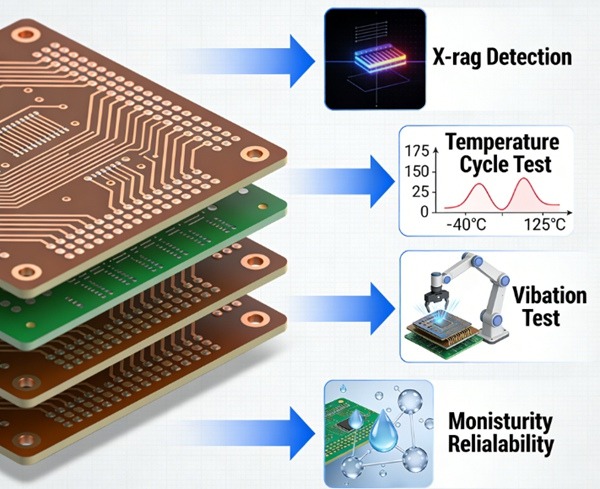
Table des matières
L'importance de l'inspection et de l'essai des circuits imprimés
Même avec des processus de fabrication robustes, des défauts peuvent toujours se produire.
L'inspection et l'essai contribuent à :
- Détecter rapidement les erreurs de fabrication
- Empêcher les cartes défectueuses d'arriver jusqu'à l'assemblage
- Fournir un retour d'information pour l'amélioration des processus
- Réduire la fiabilité et le risque de défaillance sur le terrain
Ils ne remplacent pas une bonne conception ou un bon contrôle des processus, mais ils réduisent considérablement les risques.
Inspection optique automatisée (AOI)
L'AOI est la méthode d'inspection la plus couramment utilisée dans la fabrication des circuits imprimés.
Ce que l'AOI fait bien
- Détecte les défauts au niveau de la surface
- Identifie visuellement les ouvertures et les courts-circuits
- Amélioration de la rapidité et de la cohérence des inspections
Limites de l'AOI
- Impossible de détecter les défauts internes
- Impossible de vérifier les performances électriques
Plongée en profondeur :
Inspection AOI dans la fabrication des circuits imprimés
Inspection par rayons X
L'inspection par rayons X permet de visualiser les structures internes d'un circuit imprimé.
Ce que les rayons X détectent
- Via et trous de placage
- Désalignement de la couche interne
- Décollement et vides dans la résine
Limites des rayons X
- Coût plus élevé
- Vitesse d'inspection réduite
- Généralement basé sur l'échantillonnage
Détails techniques :
Inspection par rayons X dans la fabrication des circuits imprimés
Test électrique des circuits imprimés
L'essai électrique est la seule méthode permettant de vérifier directement la connectivité.
Ce que confirment les essais électriques
- Continuité de tous les filets
- Absence de short
- Connexions correctes au réseau
Ce qu'il ne peut pas faire
- Prévoir la fiabilité à long terme
- Détecter les vides internes ou l'épaisseur du placage
Aperçu de la méthode :
Explication du contrôle électrique des PCB
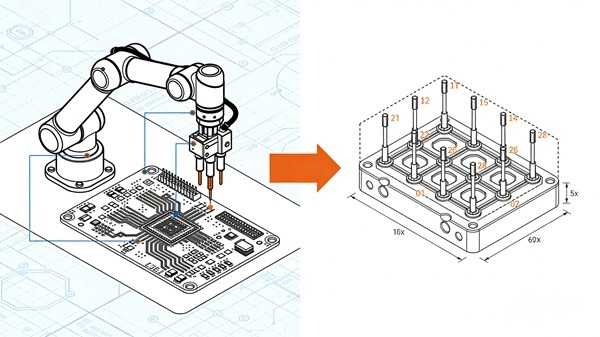
Sonde volante ou test sur montage
Lorsque des essais électriques sont nécessaires, le choix de la bonne méthode devient critique.
Facteurs clés de décision
- Volume de production
- Stabilité de la conception
- Structure des coûts
- Délai de mise sur le marché
Guide de comparaison :
Test électrique à l'aide d'une sonde volante ou d'un appareil
Inspection et essais - Comprendre la différence
| Aspect | L'inspection | Essais |
|---|---|---|
| Focus | Visuel et structurel | Fonction électrique |
| Méthodes typiques | AOI, rayons X | E-Test |
| Détecte les ouvertures et les courts-circuits | Limitée | Oui |
| Détecte les défauts internes | Rayons X uniquement | No |
| Prévision de fiabilité | No | No |
Ces deux mesures sont nécessaires, mais elles portent sur des risques différents.
Comment l'inspection et les essais fonctionnent ensemble
Un système complet de qualité des circuits imprimés suit généralement cette séquence :
- AOI pour la détection précoce des défauts de surface
- Inspection par rayons X des structures internes (si nécessaire)
- Essais électriques pour la vérification de la connectivité
- Essai de fiabilité pour une performance à long terme (sélectif)
Lien de fiabilité :
Explication des tests de fiabilité des circuits imprimés
Considérations sur les coûts de l'inspection et des essais
L'inspection et les essais augmentent les coûts, mais les ignorer accroît les risques.
Le coût est influencé par :
- Complexité du conseil d'administration
- Volume
- Profondeur d'inspection
- Sélection de la méthode d'essai
Équilibre des coûts :
Compromis entre coût de fabrication et qualité des circuits imprimés
Quand une inspection renforcée est nécessaire
Une inspection et des tests renforcés sont particulièrement importants pour :
- Circuits imprimés haute densité ou multicouches
- Nouveaux modèles ou matériaux
- Applications à haute tension ou à haute température
- Produits à longue durée de vie
Dans ce cas, l'inspection standard ne suffit pas.
Dans ce cas, l'inspection standard ne suffit pas.

Comment les fabricants appliquent l'inspection dans la pratique
Dans les environnements de production réels, les stratégies d'inspection sont adaptées :
- Risque lié à la conception
- Économie en volume
- Exigences du client
Chez TOPFAST, les méthodes d'inspection et de test sont sélectionnées sur la base des éléments suivants le niveau de risque et les besoins de l'applicationgarantissant à la fois l'efficacité et la fiabilité.
Conclusion
L'inspection et le test des circuits imprimés sont des mesures de protection essentielles qui font le lien entre les processus de fabrication et les performances réelles.
En combinant l'AOI, l'inspection par rayons X, les tests électriques et les stratégies de test appropriées, les fabricants peuvent réduire de manière significative le risque de défaut et améliorer la qualité globale des circuits imprimés.
Cette page pivot sert de référence centrale pour le site web de la Inspection et test des circuits imprimés groupe de thèmes.
FAQ sur l'inspection et le test des PCB
R : Non. L'inspection ne permet pas de vérifier la connectivité électrique.
R : Non. Ils détectent différents types de défauts.
R : Non. Les rayons X sont généralement utilisés pour les conceptions complexes.
R : Non. Les essais de fiabilité sont nécessaires pour la validation à long terme.
R : Uniquement pour les applications à faible risque et à faible complexité.