قد يبدو عرض أسعار لوحات الدوائر المطبوعة (PCB) بسيطًا على الورق.
تقوم بتقديم ملفات جيربر، وتحديد سماكة اللوحة ووزن النحاس، وتأكيد نوع التشطيب السطحي، ثم تتلقى عرض السعر ومدة التسليم.
ولكن هناك سؤال آخر تزداد أهميته يوماً بعد يوم:
هل ستكون مادة لوحات الدوائر المطبوعة (PCB) المطلوبة متوفرة فعليًّا عند الموعد المقرر لبدء الإنتاج؟
بالنسبة للوحات FR-4 القياسية، عادةً ما يكون شراء المواد أمرًا بسيطًا نسبيًا. وقد يختلف الوضع عندما يتطلب المشروع رقائق ذات درجة حرارة زجاجية (Tg) عالية، أو مواد منخفضة الخسارة، أو سماكات غير معتادة، أو نحاسًا كثيفًا، أو علامة تجارية محددة للمواد.
وهنا يمكن أن يصبح توفر المواد بنفس أهمية عملية تصنيع لوحات الدوائر المطبوعة (PCB) نفسها.
في عام 2026، أصبحت هذه المشكلة أكثر بروزًا مع ارتفاع تكاليف المواد الخام واستمرار نمو الطلب على الألواح المركبة عالية الأداء.
بالنسبة لمشتري لوحات الدوائر المطبوعة (PCB)، فإن التحقق من توفر المواد في مرحلة مبكرة قد يمنع في بعض الأحيان حدوث مشكلة أكبر بكثير في مرحلة لاحقة من دورة الإنتاج.
جدول المحتويات
السعر ليس المخاطرة الوحيدة في مجال المشتريات
عند شراء لوحات الدوائر المطبوعة (PCB)، من الشائع التركيز على ثلاثة أرقام:
- سعر لوحات الدوائر المطبوعة
- موك
- المهلة الزمنية
وتعد توفر المواد العامل الأساسي وراء هذه العوامل الثلاثة جميعها.
إذا كان اللامينيت المطلوب متوفراً بالفعل، فقد يتمكن مصنع لوحات الدوائر المطبوعة من تحويل الطلب إلى مرحلة الهندسة والإنتاج بسرعة نسبية.
أما إذا كان من الضروري شراء المواد خصيصًا لهذا المشروع، فإن الوضع يختلف.
قد يتعين على الشركة المصنعة القيام بما يلي:
- تأكد من توفر المواد لدى مورد الألواح المصفحة.
- قم بتقديم طلب شراء المواد.
- انتظر وصول الشحنة.
- إجراء الفحص الكامل للبضائع الواردة.
- تحديد الجدول الزمني لإنتاج لوحات الدوائر المطبوعة.
قد لا يستغرق تصنيع لوحة الدوائر المطبوعة (PCB) نفسها سوى بضعة أيام، لكن شراء المواد قد يستغرق وقتًا إضافيًا قبل أن يبدأ التصنيع أصلاً.
ويكتسب هذا الأمر أهمية خاصة في حالات تصنيع النماذج الأولية العاجلة وجداول الإنتاج التي تتضمن مواعيد تسليم محددة.
لا تتطابق مادة FR-4 القياسية مع المواد الخاصة
من أسهل الأخطاء التي ترتكب في مجال شراء لوحات الدوائر المطبوعة (PCB) هو اعتبار جميع مواد الرقائق قابلة للتبادل.
ليسوا كذلك.
FR-4 القياسي
تتوفر مادة FR-4 القياسية على نطاق واسع وهي مناسبة للعديد من الاستخدامات:
- ألواح التحكم الصناعيةالقضاء على الشقوق العمياء
- الإلكترونيات الاستهلاكية
- الأنظمة المدمجة
- الدوائر الرقمية العامة
بالنسبة لهذه التطبيقات، عادةً ما تكون مسألة توفر المواد أقل تعقيدًا.
FR-4 عالي Tg-4
غالبًا ما يتم اختيار المواد ذات درجة حرارة التحول الزجاجي (Tg) العالية عندما يتطلب التصميم أداءً حراريًا أفضل أو موثوقية أعلى.
وهي تُستخدم عادةً في:
- إلكترونيات السيارات
- تركيب المعدات الصناعيةتركيب المعدات الصناعية يكمن في:القيمة الأساسية
- إلكترونيات الطاقة
- المنتجات المعرضة لدورات حرارية متكررة
إذا حدد أحد المشاريع مادة معينة ذات درجة حرارة انصهار عالية (Tg)، فيجب التأكد من توفرها قبل البدء في الإنتاج.
المواد عالية التردد
تتطلب الألواح المركبة عالية التردد مزيدًا من العناية.
قد تتميز المواد المستخدمة في تطبيقات الترددات اللاسلكية (RF) والتطبيقات عالية السرعة بخصائص محددة:
- Dk
- Df
- رقائق النحاس
- أنظمة الراتنجات
- تفاوتات السماكة
قد لا يكون الاستبدال المباشر مقبولاً لأن تغيير المادة قد يؤثر على المعاوقة وأداء الإشارة.
تستحق لوحات الدوائر المطبوعة ذات عدد الطبقات الكبير مزيدًا من الاهتمام
تزداد أهمية توفر المواد كلما ازدادت تعقيد لوحات الدوائر المطبوعة.
قد تستخدم لوحة الدوائر المطبوعة المكونة من 4 طبقات تصميمًا قياسيًا نسبيًا.
قد تتضمن لوحة الدوائر المطبوعة المكونة من 20 طبقة ما يلي:
- أنواع متعددة من المواد المُسبقة التشكيل
- سمك قلب مختلف
- عدة أوزان نحاسية
- سمك عازل كهربائي مُحكَم
- مراحل تصفيح متعددة
قد يؤدي نقص مادة ما في جزء واحد فقط من طبقات اللوحة إلى تأخير إنتاج اللوحة بأكملها.
ولهذا السبب، فإن المشترين الذين يعملون على لوحات الدوائر المطبوعة ذات 12 طبقة، أو 16 طبقة، أو 18 طبقة، أو 20 طبقة، أو 24 طبقة ينبغي التأكد من توفر المواد خلال مرحلة تقديم عرض الأسعار، وليس بعد إصدار أمر الشراء.
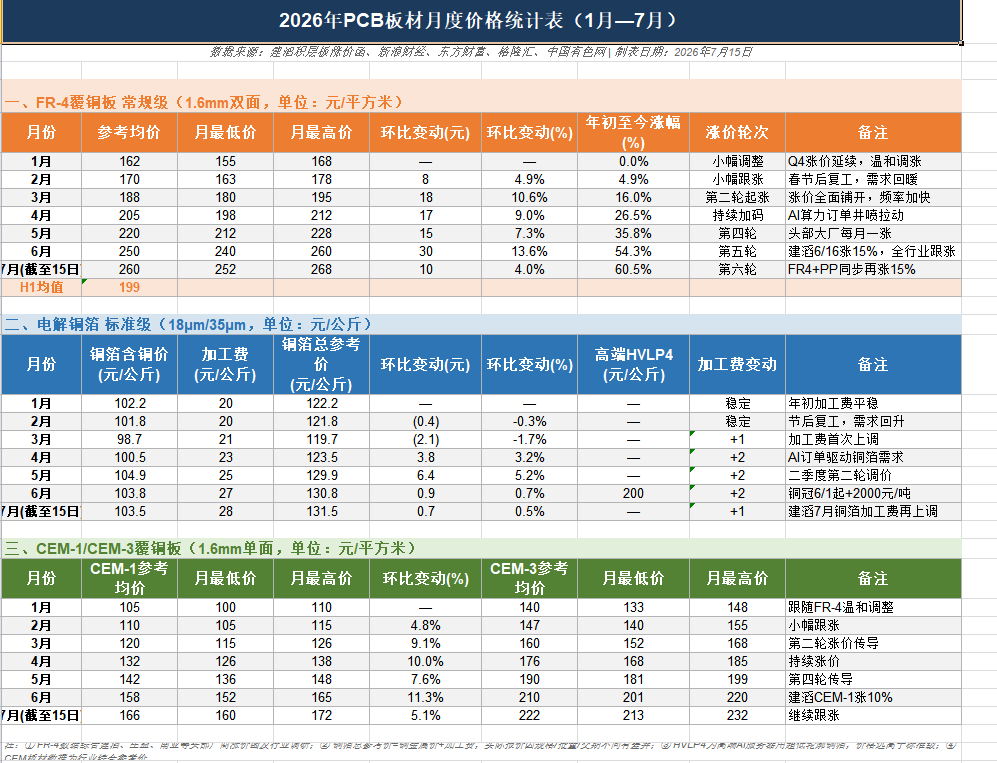
ماذا تخبرنا بيانات الأسعار لعام 2026
تشير بيانات أسعار المواد المقدمة في هذا المقال إلى أن الارتفاع لم يقتصر على فئة واحدة من المواد.
على سبيل المثال، انتقل السعر المرجعي لرقائق FR-4 القياسية ذات الوجهين بسماكة 1.6 ملم من حوالي من 162 يوانًا صينيًّا للمتر المربع في يناير إلى 260 يوانًا صينيًّا للمتر المربع بحلول 15 يوليو 2026.
وهذا يمثل زيادة بنحو 60.5%.
كما شهدت أسهم شركات CEM تقلبات كبيرة.
| المواد | مرجع شهر يناير | مرجع شهر يوليو* | تغيير |
|---|---|---|---|
| FR-4 | 162 يوان صيني للمتر المربع | 260 يوان صيني للمتر المربع | +60.5% |
| CEM-1 | 105 يوان صيني للمتر المربع | 166 يوان صيني للمتر المربع | +58.1% |
| CEM-3 | 140 يوان صيني للمتر المربع | 222 يوان صيني للمتر المربع | +58.6% |
*تشمل بيانات شهر يوليو الفترة حتى 15 يوليو.
أما رقائق النحاس فقد سجلت ارتفاعًا أكثر اعتدالًا:
| يناير | يوليو* | |
|---|---|---|
| رقائق النحاس | 122.2 يوان صيني/كجم | 131.5 يوان صيني/كجم |
وهذا يمثل زيادة تبلغ حوالي 7.6%.
هذه الأرقام هي بيانات مرجعية للسوق وليست عروض أسعار ثابتة للوحات الدوائر المطبوعة (PCB).
النقطة المهمة هي أن تتباين وتيرة ارتفاع تكاليف المواد، مما يجعل التحقق المادي المبكر أكثر فائدةً.
لماذا يمكن أن يؤثر مخزون المواد على مدة إنجاز لوحات الدوائر المطبوعة (PCB)؟
تخيل طلبين لوحات الدوائر المطبوعة متطابقين في جميع النواحي.
الطلب أ
المادة FR-4 المطلوبة متوفرة بالفعل.
يمكن أن تنتقل العملية من:
الهندسة → الإنتاج → الفحص → الشحن
الأمر (ب)
الرقائق المحددة غير متوفرة حاليًا.
وتصبح العملية كما يلي:
الهندسة → شراء المواد → تسليم المواد → فحص الواردات → الإنتاج → الفحص → الشحن
لم تتغير عملية تصنيع لوحات الدوائر المطبوعة (PCB) في حد ذاتها.
الفرق يكمن في ما يحدث قبل بدء الإنتاج.
ولهذا السبب، فإن الاكتفاء بالسؤال عن:
"كم يوماً يستغرق إنتاج لوحات الدوائر المطبوعة (PCB)؟"
قد لا تعطيكم الصورة الكاملة.
والسؤال الأفضل هو:
"هل المواد متوفرة حالياً، وهل تم تضمينها في المهلة الزمنية المذكورة في عرض الأسعار؟"
المواد التي يجب فحصها قبل الإنتاج
بالنسبة لمعظم المشاريع، أوصي بالتحقق من توفر المواد التالية.
رقائق ذات درجة حرارة زجاجية عالية (Tg)
خاصةً عندما يكون هناك حاجة إلى علامة تجارية أو درجة جودة معينة.
اللامينيت عالي التردد
قد يكون التوافر أكثر أهمية لأن استبدال المواد قد يتطلب إجراء تحقق كهربائي.
نحاس ثقيل
يجب فحص اللوحات التي تستخدم أوزان نحاس تبلغ 3 أونصات أو 4 أونصات أو أكثر بشكل منفصل.
سمك لوح غير معتاد
على سبيل المثال:
- لوحات رقيقة جدًّا متعددة الطبقات
- لوحات الدوائر المطبوعة فائقة السُمك
- تصميمات عازلة خاصة
تركيبات ذات عدد طبقات مرتفع
كلما زادت تعقيد عملية التجميع، زادت أهمية التخطيط للمواد.
ما الأسئلة التي يجب أن تطرحها على مورد لوحات الدوائر المطبوعة (PCB)؟
بدلاً من الاكتفاء بطلب عرض أسعار فقط، قم بتضمين بعض الأسئلة المتعلقة بالمواد.
1. هل المادة المحددة متوفرة حالياً في المخزون؟
هذا هو السؤال الأبسط والأكثر فائدة.
2. هل تم حجز المادة لطلبي؟
قد يكون لدى المورد مواد متوفرة، لكنها قد لا تكون بالضرورة كافية لتغطية احتياجاتك الإنتاجية بالكامل.
3. هل تشمل المدة الزمنية المحددة في عرض الأسعار عملية شراء المواد؟
وهذا يمنع حدوث أي لبس لاحقًا.
4. هل تتوفر مادة مكافئة؟
إذا كانت المادة التي حددتها غير متوفرة، فاسأل عما إذا كان هناك بديل يمكنه تلبية نفس المتطلبات الفنية.
5. هل سيتطلب استبدال المواد الحصول على موافقة؟
بالنسبة للمنتجات ذات المعاوقة المُحكَمة، ومنتجات الترددات اللاسلكية، ومنتجات قطاع السيارات، ومنتجات قطاع الطيران، وغيرها من المنتجات المؤهلة، ينبغي عادةً التعامل مع الإجابة بحذر.
متى يكون شراء المواد مسبقًا خيارًا منطقيًّا؟
شراء المواد مسبقًا ليس بالضرورة القرار الصحيح.
يصبح الأمر أكثر منطقية عندما تتوافر عدة شروط.
الطلب المؤكد على الإنتاج
إذا كنت تعلم مسبقًا أن دورة إنتاج معينة ستتم، فإن تأمين المواد في وقت مبكر يمكن أن يقلل من حالة عدم اليقين.
دورات التأهيل الطويلة
قد تتطلب المنتجات الخاصة بقطاعات السيارات والطب والفضاء والصناعة وقتًا طويلاً لإجراء عمليات التحقق من صحتها.
قد يؤدي نقص المواد بعد عدة أسابيع إلى مشكلة أكبر بكثير في الجدولة.
المتطلبات الخاصة بالمواد
إذا كانت لوحة الدوائر المطبوعة (PCB) تستخدم مادة مصفحة معينة لا تتوفر عادةً في المخزون، فإن التخطيط المبكر يصبح أكثر أهمية.
حجم إنتاج كبير
في حالة الكميات الكبيرة من لوحات الدوائر المطبوعة (PCB)، يمكن حتى لأي تغير طفيف في سعر المواد أن يكون له تأثير ملموس على القيمة الإجمالية للطلب.
متى لا ينبغي عليك شراء المواد مسبقًا؟
وهناك أيضًا حالات قد لا يكون فيها الاحتفاظ بالمخزون أمرًا منطقيًّا.
على سبيل المثال:
- لا يزال تصميم لوحة الدوائر المطبوعة (PCB) قيد التغيير.
- كمية الإنتاج غير مؤكدة.
- لم يجتز المشروع عملية التحقق من صحة البيانات.
- قد تتغير مواصفات المواد.
- سيكون وقت التخزين طويلاً للغاية.
في هذه الحالات، قد يكون من الأفضل التأكد من التوافر والسعر دون شراء المواد قبل الأوان.
الهدف ليس مجرد شراء المواد في وقت مبكر.
الهدف هو الحد من مخاطر الشراء غير الضرورية.
كيفية التحقق من توفر المواد قبل طلب لوحة دوائر مطبوعة (PCB)
الخطوة 1: إرسال تصميم لوحة الدوائر المطبوعة (PCB)
يرجى تقديم ملفات جربر، وكذلك رسم التراص إن كان متوفراً.
الخطوة 2: تحديد المواد الحيوية
حدد:
- نوع اللامينيت
- العلامة التجارية للمواد
- Tg
- سُمك اللوح
- وزن النحاس
- متطلبات الترددات العالية
الخطوة 3: الاستفسار عن التوافر الحالي
اسأل عما إذا كانت المادة:
- متوفر
- متوفر جزئيًا
- متوفر بعد الشراء
- غير متوفر حاليًا
الخطوة 4: تأكيد مهلة التسليم
تأكد من أن مدة الإنتاج المذكورة تميز بوضوح بين:
مدة شراء المواد و مدة تصنيع لوحات الدوائر المطبوعة (PCB).
الخطوة 5: تقييم البدائل
في حالة عدم توفر المادة الأصلية، يجب تحديد ما إذا كانت هناك مادة أخرى يمكن أن تفي بالمتطلبات الكهربائية والميكانيكية.
قائمة مخزون المواد لدى TOPFAST
بالنسبة لمواد ومشاريع لوحات الدوائر المطبوعة (PCB) المحددة، تحتفظ شركة TOPFAST بمخزون لتلبية متطلبات الإنتاج.
قد يكون هذا مفيدًا عندما يكون لدى العملاء:
- جداول الإنتاج المرتقبة
- اللوحات ذات عدد الطبقات الكبير
- متطلبات درجة حرارة التحول الزجاجي العالية (Tg)
- مواد عالية الترددات
- تصميمات نحاسية ثقيلة
إذا كان لديك بالفعل مشروع لوحات الدوائر المطبوعة (PCB) مخطط له، فيمكنك إرسال ملفات جربر، أو ترتيب الطبقات، أو مواصفات المواد اتصل بـ TOPFAST واطلب منا التحقق من توفر المواد حالياً.
ليس هناك داعٍ للانتظار حتى يتم الانتهاء من إعداد أمر الإنتاج لطرح السؤال.
كيف يمكن أن يؤثر توفر المواد على تكلفة لوحات الدوائر المطبوعة (PCB) الخاصة بك
تكلفة المواد ليست سوى جزء واحد من المعادلة.
كما يمكن أن يؤدي نقص المواد إلى تكاليف غير مباشرة.
على سبيل المثال:
المادة غير متوفرة
↓
تأخر الإنتاج
↓
تأثر جدول أعمال الجمعية
↓
تأخر تسليم المنتج
↓
يلزم تسريع العمليات اللوجستية أو الإنتاجية
وبالتالي، قد يكون الأثر المالي أكبر بكثير من الفرق الأصلي في أسعار المواد.
بالنسبة لمشاريع لوحات الدوائر المطبوعة (PCB) ذات الأهمية الحاسمة للإنتاج، ينبغي التعامل مع مسألة توفر المواد باعتبارها جزءًا من تخطيط التوريد، وليس مجرد الشراء.
قائمة مرجعية عملية لشراء لوحات الدوائر المطبوعة (PCB)
قبل إصدار أمر الإنتاج، يرجى التأكد من النقاط التالية:
- تم الانتهاء من وضع مواصفات المواد
- تم التحقق من توفر الألواح الخشبية المركبة
- الكمية المطلوبة متوفرة
- تم تضمين مدة شراء المواد في الجدول الزمني
- وقد تمت الموافقة الفنية على أي مادة بديلة
- تم التأكد من وزن النحاس
- تم التأكد من سماكة اللوح
- تمت مراجعة «Stackup»
- يعتمد السعر النهائي للوحة الدوائر المطبوعة على المواد المؤكدة
يمكن لهذا الفحص البسيط أن يمنع حدوث العديد من المفاجآت التي يمكن تجنبها.
الأسئلة الشائعة
ج: لأن إنتاج لوحات الدوائر المطبوعة (PCB) لا يمكن أن يبدأ دون توفر المواد المطلوبة من الرقائق والنحاس. وإذا كان لا بد من شراء مادة ما بشكل خاص، فقد يؤدي وقت الشراء إلى إطالة الجدول الزمني الإجمالي للتسليم.
ج: نعم. تُعد تكلفة المواد أحد مكونات تسعير لوحات الدوائر المطبوعة (PCB)، ويمكن أن تؤثر التغيرات في السوق على السعر النهائي. وعادةً ما يكون هذا التأثير أكثر وضوحًا في اللوحات ذات الطبقات الكثيرة، وذات الترددات العالية، واللوحات التي تحتوي على كميات كبيرة من النحاس.
ج: في بعض الأحيان، لكن ذلك يعتمد على التطبيق. بالنسبة للتصاميم ذات المعاوقة المُتحكَّم فيها أو التصاميم عالية التردد، يجب تقييم خصائص المواد مثل Dk وDf والسماكة قبل إجراء الاستبدال.
ج: ليس بالضرورة. يكون الشراء المسبق أكثر فائدة عندما يكون الطلب على الإنتاج مؤكدًا، وتكون المواد صعبة المنال أو عرضة لتقلبات كبيرة في الأسعار.
ج: نعم. بالنسبة للمواد المحددة، يمكن لشركة TOPFAST التحقق من المخزون الحالي استنادًا إلى مواصفات لوحات الدوائر المطبوعة (PCB)، وتركيب الطبقات، ودرجة جودة المواد، والكمية المطلوبة.
الخاتمة
لم يعد شراء لوحات الدوائر المطبوعة (PCB) يقتصر على البحث عن أقل عرض سعر أولي، بل أصبح الأمر يتعلق أكثر بفهم سلسلة التوريد بأكملها التي تقف وراء هذا العرض.
قد يؤثر توفر المواد على كليهما التكلفة وموعد التسليم، لا سيما بالنسبة للوحات الدوائر المطبوعة (PCB) ذات عدد الطبقات الكبير، والتردد العالي، ودرجة حرارة الزجاج العالية (Tg)، والغنية بالنحاس.
تُظهر بيانات السوق لعام 2026 الأسباب التي تجعل هذا الأمر يستحق الاهتمام. فقد ارتفعت الأسعار المرجعية القياسية لمادة FR-4 ارتفاعًا كبيرًا خلال النصف الأول من العام، في حين تعرضت فئات مواد لوحات الدوائر المطبوعة الأخرى أيضًا لضغوط على التكاليف.
بالنسبة للمشترين الذين لديهم خطط إنتاج مؤكدة، فإن النهج العملي بسيط:
تأكد من توفر المادة في وقت مبكر. تحقق مما إذا كانت متوفرة فعليًّا. تأكد مما إذا كانت مدة الشراء مشمولة في المهلة الزمنية المذكورة في عرض الأسعار.
إذا كان لديك طلب قادم لشراء لوحات الدوائر المطبوعة (PCB)، فيُرجى إرسال ملفات جيربر أو متطلبات المواد إلى شركة TOPFAST و يرجى الطلب منا التحقق من توفر المواد الحالية والمخزون قبل تحديد موعد الإنتاج.