Un preventivo per un circuito stampato può sembrare semplice sulla carta.
È sufficiente fornire i file Gerber, specificare lo spessore della scheda e il peso del rame, confermare la finitura superficiale e riceverete un preventivo e i tempi di consegna.
Ma c'è un'altra questione che sta assumendo sempre maggiore importanza:
Il materiale necessario per il circuito stampato sarà effettivamente disponibile quando è previsto l'inizio della produzione?
Per le schede FR-4 standard, l'approvvigionamento dei materiali è solitamente relativamente semplice. La situazione può essere diversa quando un progetto richiede un laminato ad alto Tg, un materiale a bassa perdita, spessori insoliti, uno strato di rame spesso o una marca specifica di materiale.
È proprio in questo ambito che la disponibilità dei materiali può diventare importante tanto quanto il processo di produzione dei circuiti stampati stesso.
Nel 2026, il problema è diventato più evidente a causa dell'aumento dei costi delle materie prime e della continua crescita della domanda di laminati ad alte prestazioni.
Per chi acquista circuiti stampati, verificare tempestivamente la disponibilità dei materiali può talvolta evitare che insorgano problemi ben più gravi nelle fasi successive del ciclo produttivo.
Indice per materie
Il prezzo non è l'unico rischio legato agli appalti
Quando si acquistano circuiti stampati, è normale prestare attenzione a tre valori:
- Prezzo dei circuiti stampati
- MOQ
- Tempi di consegna
La disponibilità dei materiali è alla base di tutti e tre questi aspetti.
Se il laminato richiesto è già disponibile, un produttore di circuiti stampati potrebbe essere in grado di trasferire l'ordine alla fase di progettazione e produzione in tempi relativamente brevi.
Se il materiale deve essere acquistato appositamente per il progetto, la situazione cambia.
Il produttore potrebbe dover:
- Verificare la disponibilità del materiale con il fornitore di laminati.
- Effettua un ordine di materiale.
- Attendere la consegna.
- Effettuare il controllo completo in entrata.
- Pianificare la produzione dei circuiti stampati.
La produzione del circuito stampato in sé può richiedere solo alcuni giorni, ma l'approvvigionamento dei materiali può comportare tempi aggiuntivi prima ancora che la produzione abbia inizio.
Ciò è particolarmente importante per la realizzazione urgente di prototipi e per i programmi di produzione con scadenze fisse.
Il FR-4 standard e i materiali speciali non sono la stessa cosa
Uno degli errori più comuni nell'approvvigionamento dei circuiti stampati è quello di considerare tutti i materiali laminati come intercambiabili.
Non lo sono.
Norma FR-4
Il FR-4 standard è facilmente reperibile e adatto a molte applicazioni:
- Schede di controllo industriale
- Elettronica di consumo
- Sistemi integrati
- Circuiti digitali generali
Per queste applicazioni, la disponibilità dei materiali è solitamente meno complessa.
FR-4 ad alto Tg
I materiali ad alto Tg vengono spesso scelti quando un progetto richiede prestazioni termiche o affidabilità superiori.
Sono comunemente utilizzati in:
- Elettronica per autoveicoli
- Attrezzature industriali
- elettrotecnica
- Prodotti sottoposti a cicli termici ripetuti
Se un progetto prevede l'utilizzo di un particolare materiale ad alto Tg, è necessario verificarne la disponibilità prima di avviare la produzione.
Materiali ad alta frequenza
I laminati ad alta frequenza richiedono maggiore attenzione.
I materiali utilizzati per applicazioni RF e ad alta velocità possono presentare caratteristiche specifiche:
- Dk
- Df
- Foglio di rame
- Sistemi a base di resina
- Tolleranze di spessore
Una sostituzione diretta potrebbe non essere accettabile, poiché la modifica del materiale può influire sull'impedenza e sulle prestazioni del segnale.
I circuiti stampati con un numero elevato di strati meritano maggiore attenzione
La disponibilità dei materiali assume un'importanza sempre maggiore man mano che il circuito stampato diventa più complesso.
Un PCB a 4 strati può presentare una struttura relativamente standard.
Un circuito stampato a 20 strati può comportare:
- Diversi tipi di preimpregnati
- Spessori del nucleo diversi
- Diversi pesi in rame
- Spessore dielettrico controllato
- Fasi multiple di laminazione
Una carenza di materiale che riguarda anche solo una parte dello stackup può causare ritardi nella produzione dell'intera scheda.
Per questo motivo, gli acquirenti che lavorano su Circuiti stampati a 12, 16, 18, 20 o 24 strati È opportuno verificare la disponibilità dei materiali già in fase di preventivazione, piuttosto che dopo l'emissione dell'ordine di acquisto.
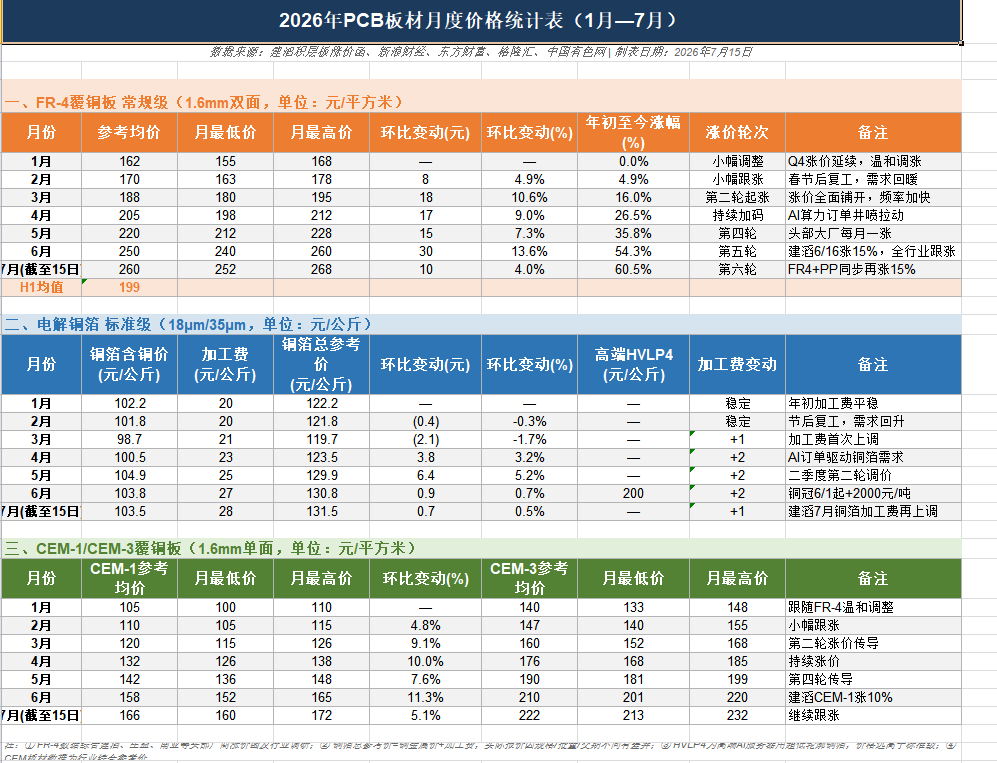
Cosa ci rivelano i dati sui prezzi del 2026
I dati sui prezzi dei materiali forniti per questo articolo dimostrano che l'aumento non si è limitato a una sola categoria di materiali.
Ad esempio, il prezzo di riferimento per il FR-4 standard a doppia faccia da 1,6 mm è passato da circa Da 162 RMB/m² a gennaio a 260 RMB/m² entro il 15 luglio 2026.
Si tratta di un aumento di circa 60.5%.
Anche i materiali CEM hanno registrato un andamento significativo.
| materiale | Riferimento di gennaio | Riferimento di luglio* | Modifica |
|---|---|---|---|
| FR-4 | 162 RMB/m² | 260 RMB/m² | +60.5% |
| CEM-1 | 105 RMB/m² | 166 RMB/m² | +58.1% |
| CEM-3 | 140 RMB/m² | 222 RMB/m² | +58.6% |
*I dati relativi a luglio si riferiscono al periodo fino al 15 luglio.
La lamina di rame ha registrato un aumento più moderato:
| Gennaio | Luglio* | |
|---|---|---|
| Foglio di rame | 122,2 RMB/kg | 131,5 RMB/kg |
Ciò rappresenta un aumento di circa 7.6%.
Questi importi sono dati di riferimento di mercato e non preventivi fissi per i circuiti stampati.
Il punto fondamentale è che i costi dei materiali stanno evolvendo a ritmi diversi, il che rende sempre più utile la conferma tempestiva del materiale.
Perché le scorte di materiali possono influire sui tempi di consegna dei circuiti stampati
Immaginate due ordini di circuiti stampati per il resto identici.
Ordine A
Il materiale FR-4 richiesto è già disponibile.
Il processo può passare da:
Progettazione → Produzione → Controllo qualità → Spedizione
Ordine B
Il laminato indicato non è attualmente disponibile.
Il processo diventa:
Progettazione → Approvvigionamento dei materiali → Consegna dei materiali → Controllo in entrata → Produzione → Controllo → Spedizione
Il processo di produzione dei circuiti stampati in sé non è cambiato.
La differenza sta proprio in ciò che accade prima dell'inizio della produzione.
Ecco perché limitarsi a chiedere:
«Quanti giorni ci vogliono per produrre un PCB?»
potrebbe non fornirti un quadro completo della situazione.
Una domanda più appropriata è:
“Il materiale è già disponibile e rientra nei tempi di consegna indicati?”
Materiali da verificare prima della produzione
Per la maggior parte dei progetti, consiglierei di verificare la disponibilità dei seguenti materiali.
Laminato ad alto Tg
Soprattutto quando è richiesta una marca o una qualità specifica.
Laminato ad alta frequenza
La disponibilità può essere più importante, poiché la sostituzione dei materiali potrebbe richiedere una verifica elettrica.
Rame pesante
Le schede con spessori di rame pari a 3 oz, 4 oz o superiori devono essere controllate separatamente.
Spessore insolito del pannello
Ad esempio:
- Circuiti stampati multistrato molto sottili
- Circuiti stampati extra-spessi
- Strutture dielettriche speciali
Assemblaggi con elevato numero di strati
Più la struttura è complessa, più diventa importante la pianificazione dei materiali.
Cosa dovresti chiedere al tuo fornitore di circuiti stampati?
Invece di chiedere solo un preventivo, includi alcune domande relative ai materiali.
1. Il materiale indicato è attualmente disponibile a magazzino?
Questa è la domanda più semplice e utile.
2. Il materiale è riservato al mio ordine?
Un fornitore potrebbe avere del materiale disponibile, ma non necessariamente in quantità sufficiente a coprire l'intero fabbisogno produttivo.
3. I tempi di consegna indicati includono l'approvvigionamento dei materiali?
In questo modo si evita di creare confusione in seguito.
4. Esiste un materiale equivalente?
Se il materiale da voi indicato non è disponibile, chiedete se esiste un'alternativa in grado di soddisfare gli stessi requisiti tecnici.
5. La sostituzione dei materiali richiederà un’approvazione?
Per i prodotti a impedenza controllata, RF, per il settore automobilistico, aerospaziale e altri prodotti certificati, la risposta dovrebbe normalmente essere valutata con attenzione.
Quando è opportuno acquistare il materiale in anticipo?
L'acquisto anticipato di materiale non è necessariamente la decisione giusta.
Ha più senso quando si verificano diverse condizioni.
Domanda di produzione confermata
Se si sa già che verrà avviata una produzione in serie, procurarsi il materiale in anticipo può ridurre l’incertezza.
Cicli di qualificazione lunghi
I prodotti dei settori automobilistico, medico, aerospaziale e industriale possono richiedere tempi considerevoli per la validazione.
Una carenza di materiali che si verifichi diverse settimane dopo può causare un problema di pianificazione molto più grave.
Requisiti relativi ai materiali speciali
Se il circuito stampato utilizza un laminato specifico che non è comunemente disponibile a magazzino, una pianificazione tempestiva assume maggiore importanza.
Elevato volume di produzione
Nel caso di grandi quantità di circuiti stampati, anche una minima variazione del prezzo dei materiali può incidere in modo significativo sul valore complessivo dell'ordine.
Quando è meglio non acquistare il materiale in anticipo?
Ci sono anche situazioni in cui tenere delle scorte potrebbe non avere senso.
Ad esempio:
- La progettazione del circuito stampato è ancora in fase di modifica.
- La quantità prodotta è incerta.
- Il progetto non ha superato la fase di convalida.
- Le specifiche del materiale potrebbero subire variazioni.
- Il tempo di conservazione sarebbe eccessivo.
In questi casi, potrebbe essere preferibile verificare la disponibilità e i prezzi senza procedere all’acquisto del materiale prima del tempo.
L'obiettivo non è semplicemente quello di acquistare i materiali in anticipo.
L'obiettivo è quello di ridurre i rischi superflui legati agli appalti.
Come verificare la disponibilità dei materiali prima di ordinare un PCB
Fase 1: Inviare il progetto del circuito stampato
Fornire i file Gerber e, se disponibile, il disegno dello stackup.
Fase 2: Individuare i materiali critici
Specificare:
- Tipo di laminato
- Marchio del materiale
- Tg
- Spessore del pannello
- Peso del rame
- Requisiti relativi alle alte frequenze
Fase 3: Verifica la disponibilità attuale
Verificare se il materiale:
- Disponibile
- Disponibile solo in parte
- Disponibile dopo l'acquisto
- Al momento non disponibile
Fase 4: Confermare i tempi di consegna
Assicurati che i tempi di produzione indicati distinguano chiaramente tra:
tempi di approvvigionamento dei materiali nonché Tempi di produzione dei circuiti stampati.
Fase 5: Valutare le alternative
Se il materiale originale non è disponibile, verificare se un altro materiale sia in grado di soddisfare i requisiti elettrici e meccanici.
Inventario dei materiali TOPFAST
Per determinati materiali per circuiti stampati e progetti specifici, TOPFAST mantiene delle scorte per soddisfare le esigenze di produzione.
Ciò può rivelarsi utile quando i clienti:
- Prossimi programmi di produzione
- Schede con elevato numero di strati
- Requisiti relativi a un Tg elevato
- Materiali ad alta frequenza
- Disegni in rame pesante
Se hai già in programma un progetto di PCB, puoi inviare il File Gerber, stackup o specifiche dei materiali a TOPFAST e chiedeteci di verificare la disponibilità attuale dei materiali.
Non è necessario aspettare che l'ordine di produzione sia definitivo per porre la domanda.
In che modo la disponibilità dei materiali può influire sul costo dei tuoi PCB
Il costo dei materiali è solo una parte dell'equazione.
Una carenza di materiali può anche comportare costi indiretti.
Ad esempio:
Materiale non disponibile
↓
Ritardo nella produzione
↓
Modifiche al calendario delle sedute
↓
Ritardo nella consegna del prodotto
↓
È necessaria una logistica o una produzione accelerata
L'impatto finanziario potrebbe quindi essere molto maggiore rispetto alla differenza di prezzo iniziale dei materiali.
Per i progetti di circuiti stampati (PCB) critici per la produzione, la disponibilità dei materiali dovrebbe essere considerata parte integrante di pianificazione delle forniture, non limitarsi ad acquistare.
Una lista di controllo pratica per l'approvvigionamento di circuiti stampati
Prima di emettere un ordine di produzione, verificare i seguenti punti:
- Le specifiche dei materiali sono state definite
- È stata verificata la disponibilità del laminato
- La quantità richiesta è disponibile
- I tempi di approvvigionamento dei materiali sono inclusi nel programma
- Qualsiasi materiale alternativo è stato approvato dal punto di vista tecnico
- Il peso del rame è stato confermato
- Lo spessore del pannello è stato confermato
- Stackup è stato recensito
- Il prezzo finale del PCB dipende dal materiale confermato
Questo semplice controllo può evitare molte sorprese che si potrebbero evitare.
falco
R: Perché la produzione dei circuiti stampati non può iniziare senza i materiali necessari, ovvero il laminato e il rame. Se un materiale deve essere procurato appositamente, i tempi di approvvigionamento potrebbero allungare i tempi di consegna complessivi.
A: Sì. Il costo dei materiali è una delle componenti del prezzo dei circuiti stampati e le variazioni di mercato possono influire sul preventivo finale. L'impatto è solitamente più evidente nel caso di schede con un numero elevato di strati, ad alta frequenza e con elevato spessore di rame.
A: A volte, ma dipende dall’applicazione. Per i progetti a impedenza controllata o ad alta frequenza, prima di procedere alla sostituzione è necessario valutare le proprietà dei materiali, quali Dk, Df e lo spessore.
A: Non necessariamente. L’acquisto anticipato è particolarmente utile quando la domanda di produzione è confermata e il materiale è difficile da reperire o soggetto a notevoli fluttuazioni di prezzo.
A: Sì. Per alcuni materiali, TOPFAST può verificare le disponibilità attuali in magazzino in base alle specifiche del PCB, alla struttura a strati, alla qualità del materiale e alla quantità richiesta.
conclusioni
L'approvvigionamento dei circuiti stampati sta diventando sempre meno una questione di ricerca del preventivo iniziale più basso e sempre più una questione di comprensione dell'intera catena di approvvigionamento che sta dietro a quel preventivo.
La disponibilità dei materiali può influire sia su costo e tempi di consegna, in particolare per i circuiti stampati con un elevato numero di strati, ad alta frequenza, con Tg elevato e con spessi strati di rame.
I dati di mercato relativi al 2026 dimostrano perché questo aspetto meriti attenzione. I prezzi di riferimento standard del FR-4 hanno registrato un aumento sostanziale nel corso del primo semestre dell’anno, mentre anche altre categorie di materiali per circuiti stampati hanno subito pressioni sui costi.
Per gli acquirenti con piani di produzione confermati, l'approccio pratico è semplice:
Confermare tempestivamente il materiale. Verificare se è effettivamente disponibile. Accertarsi che i tempi di approvvigionamento siano inclusi nei tempi di consegna indicati nel preventivo.
Se avete un ordine di circuiti stampati in programma, inviate i file Gerber o le specifiche dei materiali a TOPFAST e chiedeteci di verificare la disponibilità attuale dei materiali e le scorte prima di programmare la produzione.