La distinzione tra Fabbricazione di PCB nonché Gruppo PCB è fondamentale per ingegneri, progettisti e team di approvvigionamento.
La comprensione di entrambi i processi aiuta a:
- Riduzione degli errori di produzione
- Ottimizzazione dei costi e dei tempi di consegna
- Pianificazione dei test e del controllo qualità
In questo articolo analizzeremo le principali differenze, le sfide e le considerazioni chiave di La prospettiva di produzione professionale di PCB di TOPFAST.
Per una panoramica dettagliata dell'intero Processo di produzione dei PCB, consultate la pagina del nostro hub: Processo di produzione dei PCB
Indice per materie
Che cos'è la fabbricazione di PCB? (Lo scheletro)
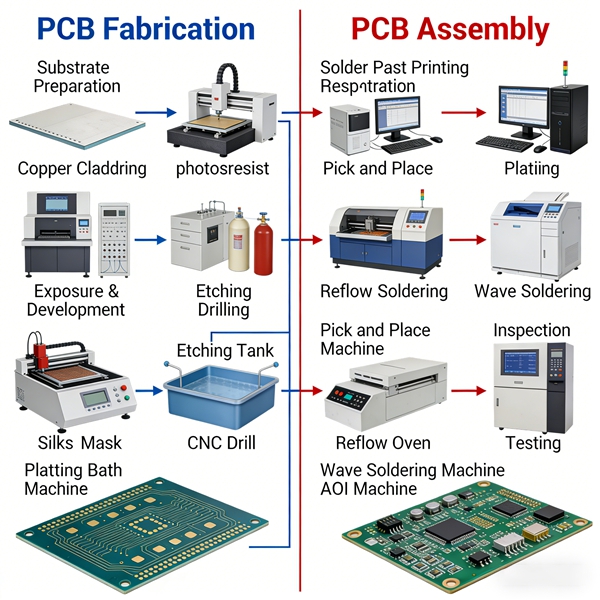
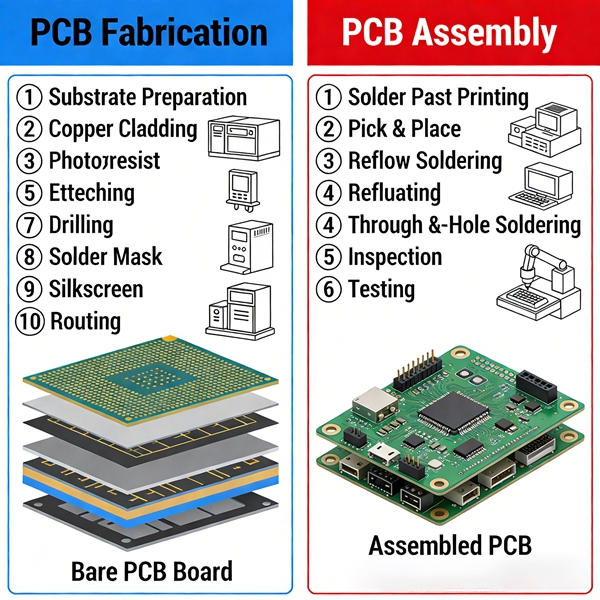
La fabbricazione di PCB è il processo meccanico di creazione del circuito stampato nudo. Comprende:
- Selezione del materiale: Scegliere il substrato giusto da gestire costi di produzione.
- Laminazione e incisione: Creazione degli strati di rame conduttivo.
- Perforazione: Utilizzo di trapani meccanici o laser per Produzione di PCB HDI.
- Finitura superficiale: Applicazione di HASL o ENIG per proteggere il rame e garantire la saldabilità.
Che cos'è l'assemblaggio di PCB? (Il sistema nervoso)
L'assemblaggio di PCB è il processo di saldatura Componenti elettronici SMD e i componenti a foro passante sulla scheda fabbricata.
- Lavorazione SMT: Posizionamento automatico ad alta velocità di piccoli componenti.
- Saldatura a riflusso e a onda: Formazione di giunti elettrici permanenti.
- Prove: Utilizzo di metodi per condensatori di prova e la logica complessiva del circuito.

Differenze critiche in sintesi
| Caratteristica | Fabbricazione di PCB | Assemblaggio di PCB (PCBA) |
| Uscita | Scheda nuda (senza componenti) | Dispositivo elettronico funzionale |
| Obiettivo primario | Architettura fisica e connettività | Funzionalità e prestazioni elettriche |
| Materiali principali | Rame, FR-4, maschera di saldatura | Componenti SMD, Pasta per saldare |
| Controllo chiave | DFM (Design for Manufacturing) | DFA (Design for Assembly) |
Come passare senza problemi dalla fabbricazione all'assemblaggio
- Revisione DFM/DFA unificata
Assicuratevi che il vostro Decisioni di progettazione dei PCB tenere conto sia dei limiti di incisione del rame che delle distanze della macchina pick-and-place.
- Ottimizzazione della distinta base
Fornire una distinta dei materiali (BOM) completa con i numeri di parte esatti del produttore per evitare errori di corrispondenza dei componenti.
- Coordinare l'accatastamento
Abbina il tuo Progettazione di stack-up di PCB con i requisiti termici del forno di saldatura a rifusione.
- Strategia di pannellizzazione
Utilizzate pannelli di dimensioni tali da massimizzare l'utilizzo del materiale nella produzione, pur rimanendo compatibili con i trasportatori SMT.
- Tracciabilità della qualità
Implementare i numeri di serie sulla scheda nuda durante la fabbricazione per tracciare la Elaborazione di PCBA storia.
Domande frequenti sulla fabbricazione di PCB e sull'assemblaggio di PCB
A: Assolutamente sì. L'ENIG è preferibile per il passo fine Componenti SMDmentre l'HASL è una scelta economicamente vantaggiosa per progetti più grandi e meno complessi.
R: Strati disallineati, foratura insufficiente o problemi di placcatura possono causare difetti di saldatura, posizionamento errato dei componenti e stress termico durante l'assemblaggio.
A: Sì, ma l'utilizzo di un fornitore "chiavi in mano" come Topfast riduce gli errori di comunicazione e velocizza l'intero processo. budget di produzione gestione.
R: La progettazione con spaziatura, dimensioni delle piazzole e bilanciamento del rame adeguati garantisce la producibilità e riduce la perdita di rendimento sia nella fabbricazione che nell'assemblaggio.
R: TOPFAST applica un una prospettiva orientata alla produzionecontrollando la qualità, la resa e l'affidabilità del processo dalla fabbricazione all'assemblaggio finale.
A: Pad di impronta non corretti. Se il cuscinetto di fabbricazione è troppo piccolo, la Elaborazione di PCBA si otterranno giunzioni di saldatura scadenti o "tombstoning".
A: Utilizziamo AOI, raggi X e test funzionali. È inoltre possibile condensatori di prova durante la fase di debug del prototipo.
A: In generale, il PCBA è più costoso a causa del costo del Componenti elettronici SMD e le attrezzature specializzate di precisione necessarie.
conclusioni
Comprendere la distinzione tra Fabbricazione nonché Montaggio consente una migliore pianificazione del progetto e un migliore controllo dei costi. Noi di Topfast colmiamo questo divario offrendo un'elevata affidabilità e senza soluzione di continuità. Servizi di assemblaggio di PCB.
Siete pronti a passare dalla progettazione all'hardware funzionale? Richiedete un preventivo per PCB e PCBA unificati da Topfast oggi stesso.