A delaminação de placas de circuito impresso é um dos modos de falha mais destrutivos e frequentemente irreversíveis nas placas de circuito impresso.
Ao contrário dos defeitos de superfície, a delaminação ocorre no interior da estrutura da placa de circuito impressoseparando camadas de cobre ou materiais dieléctricos e comprometendo a resistência mecânica, o isolamento elétrico e a fiabilidade a longo prazo.
Este artigo explica-o:
- O que é a delaminação de PCB
- Porque é que ocorre
- Como é que os fabricantes o detectam e previnem
A delaminação de placas de circuito impresso é um dos modos de falha mais destrutivos e frequentemente irreversíveis nas placas de circuito impresso.
Ao contrário dos defeitos de superfície, a delaminação ocorre no interior da estrutura da placa de circuito impressoseparando camadas de cobre ou materiais dieléctricos e comprometendo a resistência mecânica, o isolamento elétrico e a fiabilidade a longo prazo.
Este artigo explica-o:
- O que é a delaminação de PCB
- Porque é que ocorre
- Como é que os fabricantes o detectam e previnem
Índice
O que é a delaminação de PCB?
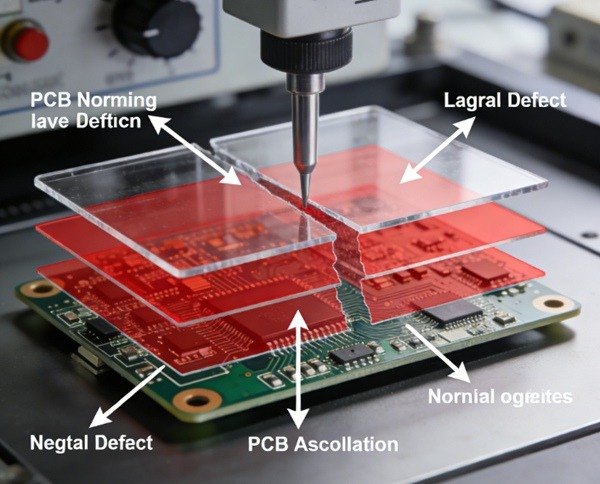
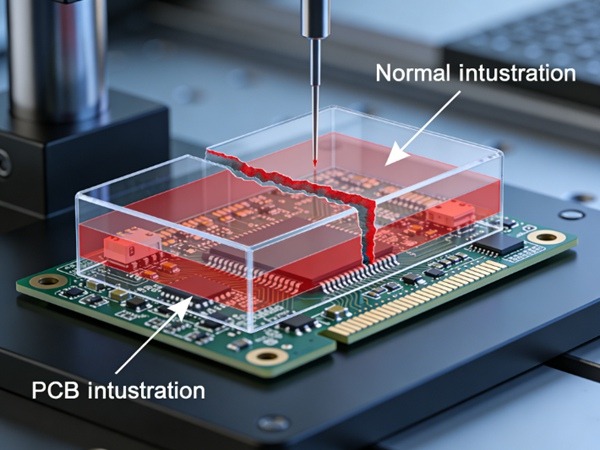
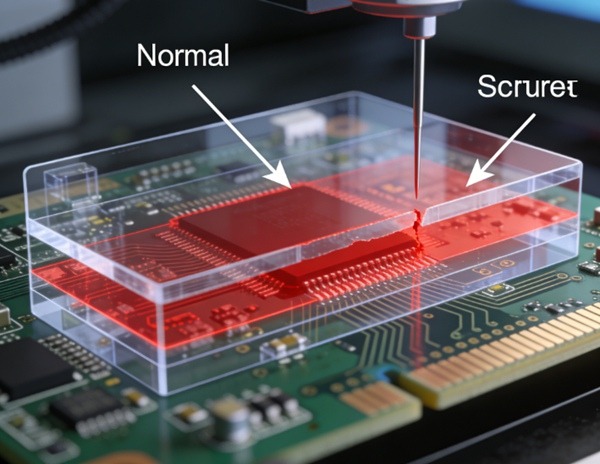
A delaminação de PCB refere-se à perda de aderência entre camadas dentro de um PCB.
Pode ocorrer entre:
- Folha de cobre e dielétrico
- Camadas dieléctricas adjacentes
- Interfaces de resina e fibra de vidro
Uma vez iniciada a delaminação, esta propaga-se frequentemente sob tensão térmica ou mecânica.
Sintomas comuns de delaminação de PCB
A delaminação pode nem sempre ser visível à primeira vista.
Sintomas típicos
- Formação de bolhas ou borbulhas após a soldadura
- Vazios internos detectados por raios X
- Queda súbita da resistência de isolamento
- Deficiência mecânica durante a montagem
Métodos de deteção:
Inspeção por raios X no fabrico de PCB
Principais causas de delaminação de PCB
H3: Absorção excessiva de humidade
A humidade retida nos materiais de PCB expande-se rapidamente durante a soldadura ou o refluxo.
Esta expansão cria uma pressão interna que pode separar as camadas.
Os factores que contribuem para isso são:
- Armazenamento incorreto do material
- Ambientes com elevada humidade
- Exposição longa antes da montagem
Parâmetros de laminação incorrectos
A laminação é um processo crítico no fabrico de PCB multicamadas.
A delaminação pode resultar de:
- Pressão de laminação insuficiente
- Fluxo de resina inadequado
- Temperatura ou tempo de cura incorrectos
Síntese do processo:
Explicação do processo de laminação de PCB
Incompatibilidade de materiais
Nem todos os materiais de PCB se ligam igualmente bem.
Os factores de risco incluem:
- Mistura de materiais com diferentes temperaturas de transição vítrea (Tg)
- Folhas de cobre com baixa resistência ao descasque
- Fraca adesão da resina ao vidro
A seleção do material influencia fortemente o risco de delaminação.
Stress térmico e aquecimento repetido
Os ciclos térmicos repetidos provocam:
- Tensão de expansão do eixo Z
- Fadiga nas interfaces cobre-resina
As placas com elevado número de camadas são especialmente vulneráveis.
Ligação de fiabilidade:
Teste de fiabilidade térmica de PCB
Factores de conceção que aumentam o risco de delaminação
As decisões de conceção ampliam frequentemente o risco de delaminação.
Práticas de conceção de alto risco
- Camadas dieléctricas muito finas
- Desequilíbrio de alta densidade de cobre
- Grandes planos de cobre sem relevo
- Espaçamento inadequado perto dos bordos da placa
A revisão antecipada do DFM ajuda a mitigar estes riscos.
Como é detectada a delaminação de PCB
Métodos de deteção comuns
- Inspeção por raios X
- Análise de secções transversais
- Ensaios de stress térmico
- Inspeção visual após a soldadura
Cubo de inspeção:
Explicação da inspeção e dos testes de PCB
Prevenção da delaminação de PCB
Armazenamento controlado de materiais
- Embalagem selada a vácuo
- Monitorização da temperatura e da humidade
- Procedimentos corretos de cozedura
Controlo optimizado da laminação
- Perfis de pressão verificados
- Fluxo de resina controlado
- Ciclos de cura consistentes
Práticas de conceção para fiabilidade
- Distribuição equilibrada de cobre
- Espessura dieléctrica adequada
- Verificação da compatibilidade dos materiais
Relação entre delaminação e outras falhas de PCB
A delaminação desencadeia frequentemente falhas secundárias:
- Através da fissuração
- Formação de CAF
- Avaria no isolamento
Falhas relacionadas:
Explicação das falhas comuns de PCB
Perspetiva da indústria sobre o controlo da delaminação
No fabrico moderno de PCB, a prevenção da delaminação é abordada através de:
- Qualificação dos materiais
- Controlo da janela de processo
- Circuitos de retorno da inspeção
Fabricantes como a TOPFAST tratam a delaminação como um problema de fiabilidade a nível do sistemae não apenas um único defeito de processo.
Perspetiva da indústria sobre o controlo da delaminação
No fabrico moderno de PCB, a prevenção da delaminação é abordada através de:
- Qualificação dos materiais
- Controlo da janela de processo
- Circuitos de retorno da inspeção
Fabricantes como a TOPFAST tratam a delaminação como um problema de fiabilidade a nível do sistemae não apenas um único defeito de processo.
Conclusão
A delaminação de PCB é um modo de falha complexo influenciado pelos materiais, pela conceção e pelas condições de fabrico.
Embora nem sempre possa ser eliminada, pode ser efetivamente controlado através de:
- Manuseamento correto dos materiais
- Processos de laminação optimizados
- Decisões de conceção ponderadas
Compreender os mecanismos de delaminação é essencial para construir PCBs fiáveis e duradouros.
FAQ sobre delaminação de PCB
R: Não. Quando ocorre a delaminação, o PCB fica normalmente inutilizável.
R: Reduz o risco, mas não o elimina.
R: Sim, especialmente em caso de ciclos térmicos ou de humidade elevada.
R: Sim, devido a uma maior tensão interna.
R: Muitas vezes, só depois de um esforço ou de uma inspeção avançada.