A distinção entre Fabrico de placas de circuito impresso e Montagem de PCB é fundamental para engenheiros, projectistas e equipas de aquisição.
A compreensão de ambos os processos ajuda-nos:
- Reduzir os erros de fabrico
- Otimização dos custos e dos prazos de entrega
- Planeamento dos ensaios e do controlo de qualidade
Neste artigo, exploraremos as principais diferenças, os desafios e as principais considerações sobre Perspetiva de fabrico profissional de PCB da TOPFAST.
Para uma panorâmica pormenorizada da Processo de fabrico de PCBver a nossa página de hub: Processo de fabrico de PCB
Índice
O que é o fabrico de PCB? (O esqueleto)
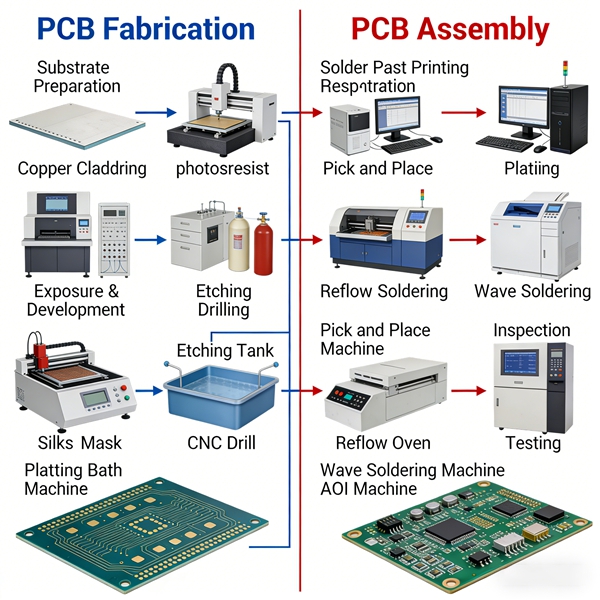
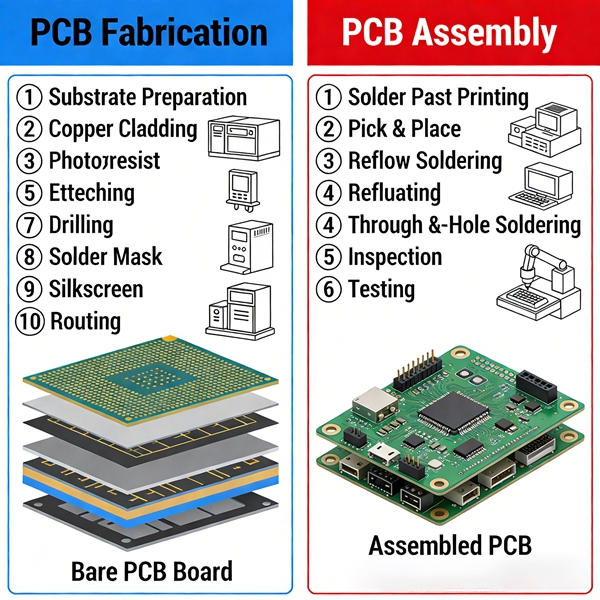
O fabrico de placas de circuitos impressos é o processo mecânico de criação de uma placa de circuitos impressos nua. Envolve:
- Seleção de materiais: Escolher o substrato certo para gerir custos de fabrico.
- Laminação e gravura: Criação das camadas condutoras de cobre.
- Perfuração: Utilização de brocas mecânicas ou a laser para Fabrico de placas de circuito impresso HDI.
- Acabamento da superfície: Aplicação de HASL ou ENIG para proteger o cobre e garantir a soldabilidade.
O que é a montagem de PCB? (O Sistema Nervoso)
A montagem de PCB é o processo de soldar Componentes electrónicos SMD e peças de furo passante na placa fabricada.
- Processamento SMT: Colocação automatizada a alta velocidade de componentes minúsculos.
- Soldadura por refluxo e por onda: Formação de juntas eléctricas permanentes.
- Testes: Utilizar métodos para condensadores de ensaio e a lógica global do circuito.

Diferenças críticas num relance
| Caraterística | Fabrico de PCB | Montagem de PCB (PCBA) |
| Saída | Placa nua (sem componentes) | Dispositivo eletrónico funcional |
| Objetivo principal | Arquitetura física e conetividade | Funcionalidade e desempenho eléctricos |
| Materiais principais | Cobre, FR-4, máscara de solda | Componentes SMD, pasta de solda |
| Verificação das chaves | DFM (Conceção para fabrico) | DFA (Design for Assembly) |
Como fazer uma transição suave do fabrico para a montagem
- Revisão unificada do DFM/DFA
Assegurar que o seu Decisões de conceção de PCB ter em conta tanto os limites de gravação do cobre como as folgas da máquina de recolha e colocação.
- Otimização da lista técnica
Fornecer uma lista de materiais (BOM) completa com os números exactos das peças do fabricante para evitar incompatibilidades de componentes.
- Coordenar o empilhamento
Combine o seu Conceção de empilhamento de PCB com os requisitos térmicos do forno de soldadura por refluxo.
- Estratégia de painelização
Utilizar tamanhos de painéis que maximizem a utilização de material no fabrico, mantendo-se compatíveis com os transportadores SMT.
- Rastreabilidade da qualidade
Implementar números de série na placa nua durante o fabrico para controlar o Processamento de PCBA história.
Fabrico de PCB vs Montagem de PCB FAQ
A: Sem dúvida. A ENIG é preferida para a afinação fina Componentes SMDenquanto o HASL é uma opção económica para projectos maiores e menos complexos.
R: Camadas desalinhadas, perfurações deficientes ou problemas de revestimento podem causar defeitos de soldadura, deslocação de componentes e stress térmico durante a montagem.
A: Sim, mas a utilização de um fornecedor chave-na-mão como a Topfast reduz os erros de comunicação e acelera o processo global orçamento de fabrico gestão.
R: A conceção com espaçamento adequado, tamanhos de almofada e equilíbrio de cobre garante a capacidade de fabrico e reduz a perda de rendimento no fabrico e na montagem.
R: O TOPFAST aplica um perspetiva da produção em primeiro lugarcontrolar a qualidade, o rendimento e a fiabilidade do processo, desde o fabrico até à montagem final.
A: Almofadas de impressão incorrectas. Se a almofada de fabrico for demasiado pequena, o Processamento de PCBA resultará em juntas de solda pobres ou "tombstoning".
A: Utilizamos AOI, raios X e testes funcionais. Também pode efetuar manualmente condensadores de ensaio durante a fase de depuração do seu protótipo.
A: Geralmente, o PCBA é mais caro devido ao custo de Componentes electrónicos SMD e o equipamento de precisão especializado necessário.
Conclusão
Compreender a distinção entre Fabrico e Montagem permite um melhor planeamento do projeto e controlo dos custos. Na Topfast, nós preenchemos essa lacuna oferecendo um serviço de alta confiabilidade Serviços de montagem de PCB.
Pronto para passar do design ao hardware funcional? Obter um orçamento unificado de PCB e PCBA da Topfast hoje.