Inspektion och testning av kretskort är viktiga steg för att säkerställa att ett kretskort uppfyller både kvalitets- och funktionskrav.
Medan inspektionen fokuserar på upptäcka defekter, testning verifierar elektrisk integritet och prestanda.
Tillsammans utgör de den sista kvalitetskontrollen innan kretskortet monteras eller skickas iväg.
Den här sidan ger en översikt över de viktigaste inspektions- och testmetoderna för mönsterkort och länkar till fördjupade tekniska artiklar för varje metod.
Grundläggande kvalitet:
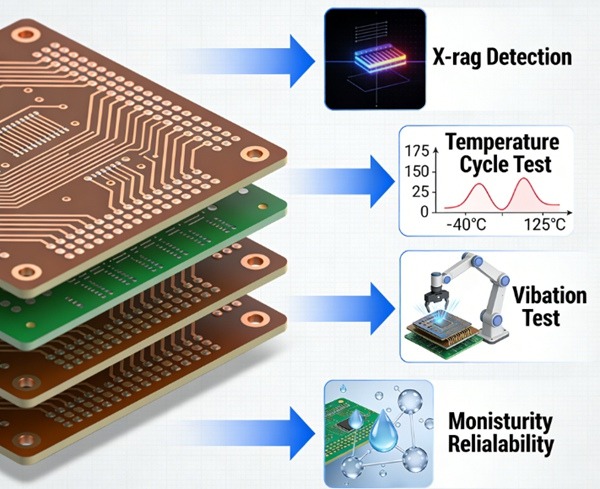
Förklaring av PCB-kvalitet och tillförlitlighet
Innehållsförteckning
Varför är inspektion och testning av mönsterkort viktigt?
Även med robusta tillverkningsprocesser kan fel ändå uppstå.
Inspektion och provning hjälper till att:
- Upptäck tillverkningsfel tidigt
- Förhindra att defekta kort når monteringen
- Ge feedback för processförbättring
- Minska risken för driftsäkerhet och fel på fältet
De ersätter inte god design eller processtyrning, men de minskar riskerna avsevärt.
Automatiserad optisk inspektion (AOI)
AOI är den vanligaste inspektionsmetoden vid tillverkning av mönsterkort.
Vad AOI gör bra
- Upptäcker defekter på ytnivå
- Identifierar öppningar och kortslutningar visuellt
- Förbättrar inspektionens hastighet och konsekvens
AOI Begränsningar
- Kan inte upptäcka interna defekter
- Kan inte verifiera elektrisk prestanda
Djupdykning:
AOI-inspektion vid tillverkning av mönsterkort
Inspektion med röntgenstråle
Röntgeninspektion gör det möjligt att se de interna strukturerna på ett mönsterkort.
Vad röntgen upptäcker
- Via- och hålpläteringshål
- Felinriktning av inre lager
- Delaminering och hålrum i harts
Begränsningar för röntgenstrålning
- Högre kostnad
- Långsammare inspektionshastighet
- Vanligtvis provtagningsbaserad
Tekniska detaljer:
Röntgeninspektion vid tillverkning av mönsterkort
Elektrisk testning av kretskort
Elektrisk provning är den enda metod som direkt verifierar anslutningsmöjligheterna.
Vad elektrisk provning bekräftar
- Kontinuitet i alla nät
- Avsaknad av shorts
- Korrekta nätanslutningar
Vad den inte kan göra
- Förutsägelse av långsiktig tillförlitlighet
- Detektera inre hålrum eller pläteringstjocklek
Metodöversikt:
Elektrisk testning av kretskort förklaras
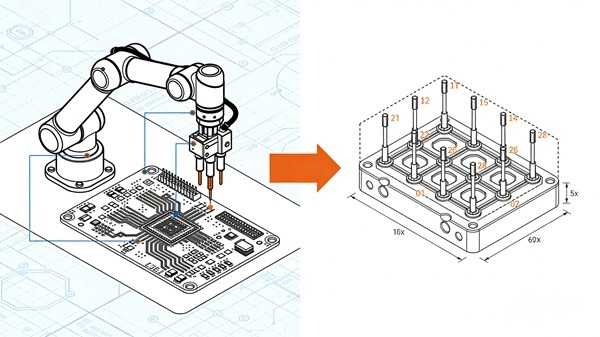
Flying Probe vs fixturbaserad testning
När elektrisk provning krävs blir det avgörande att välja rätt metod.
Viktiga beslutsfaktorer
- Produktionsvolym
- Stabilitet i konstruktionen
- Kostnadsstruktur
- Tid till marknad
Jämförelseguide:
Elektrisk provning med flygande sond eller fixtur
Inspektion och provning - Förstå skillnaden
| Aspekt | Inspektion | Testning |
|---|---|---|
| Fokus | Visuell och strukturell | Elektrisk funktion |
| Typiska metoder | AOI, röntgen | E-test |
| Detekterar öppningar/shorts | Begränsad | Ja |
| Upptäcker interna defekter | Endast röntgen | Nej |
| Förutsägelse av tillförlitlighet | Nej | Nej |
Båda är nödvändiga, men de hanterar olika risker.
Hur inspektion och provning fungerar tillsammans
Ett komplett kvalitetssystem för mönsterkort följer normalt denna sekvens:
- AOI för tidig upptäckt av ytdefekter
- Röntgeninspektion av interna strukturer (vid behov)
- Elektrisk provning för verifiering av anslutningsmöjligheter
- Tillförlitlighetstest för långsiktig prestanda (selektivt)
Länk till tillförlitlighet:
Förklaring av tillförlitlighetstestning av kretskort
Kostnadsöverväganden vid inspektion och provning
Inspektion och provning medför kostnader, men om man hoppar över dem ökar riskerna.
Kostnaden påverkas av:
- Styrelsens komplexitet
- Volym
- Inspektionsdjup
- Val av testmetod
Kostnadsbalans:
Avvägningar mellan kostnad och kvalitet vid tillverkning av mönsterkort
När utökad inspektion är nödvändig
Förbättrad inspektion och testning är särskilt viktigt för:
- Kretskort med hög densitet eller flera lager
- Nya konstruktioner eller material
- Högspännings- eller högtemperaturtillämpningar
- Produkter med lång livslängd
I sådana fall är enbart standardinspektion otillräcklig.
I sådana fall är enbart standardinspektion otillräcklig.

Hur tillverkare tillämpar inspektion i praktiken
I verkliga produktionsmiljöer är inspektionsstrategierna skräddarsydda för att:
- Designrisk
- Ekonomi i volym
- Krav från kunder
Hos TOPFAST väljs inspektions- och testmetoder baserat på risknivå och tillämpningsbehovvilket garanterar både effektivitet och tillförlitlighet.
Slutsats
Inspektion och testning av mönsterkort är viktiga skyddsåtgärder som överbryggar tillverkningsprocesser och prestanda i verkligheten.
Genom att kombinera AOI, röntgeninspektion, elektrisk testning och lämpliga teststrategier kan tillverkare avsevärt minska risken för defekter och förbättra den övergripande mönsterkortskvaliteten.
Den här sidan fungerar som en central referens för Inspektion och testning av kretskort ämneskluster.
Vanliga frågor om PCB-inspektion och testning
S: Nej. Inspektion kan inte verifiera elektrisk anslutning.
S: Nej, de upptäcker olika typer av defekter.
Nej, röntgen används vanligtvis för komplexa konstruktioner.
Svar: Nej. Tillförlitlighetstest krävs för långsiktig validering.
S: Endast för tillämpningar med låg risk och låg komplexitet.