Skillnaden mellan Tillverkning av kretskort och Montering av kretskort är avgörande för ingenjörer, konstruktörer och upphandlingsteam.
Förståelse för båda processerna hjälper till:
- Minska antalet tillverkningsfel
- Optimering av kostnader och ledtider
- Planering för test och kvalitetskontroll
I den här artikeln kommer vi att utforska de viktigaste skillnaderna, utmaningarna och de viktigaste övervägandena från TOPFAST:s professionella perspektiv på PCB-tillverkning.
För en detaljerad översikt av den övergripande Tillverkningsprocess för kretskort, se vår hubbsida: Tillverkningsprocess för kretskort
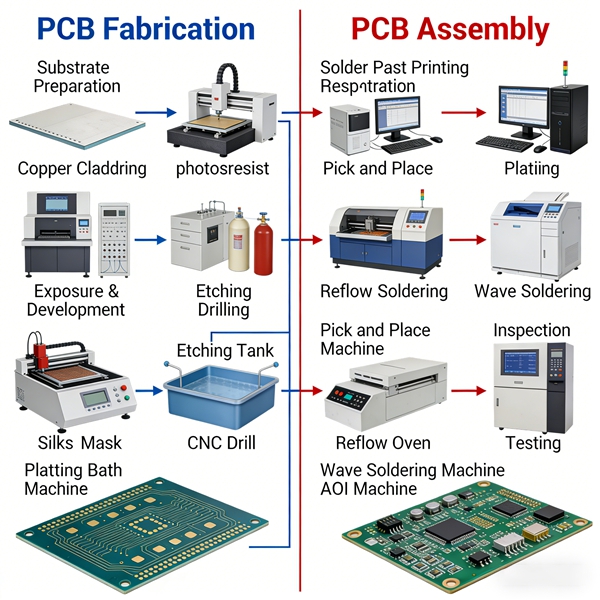
Innehållsförteckning
Vad är PCB-fabrikation? (Skelettet)
PCB-tillverkning är den mekaniska processen för att skapa det nakna kretskortet. Det innebär:
- Materialval: Välja rätt substrat att hantera tillverkningskostnader.
- Laminering och etsning: Skapande av de ledande kopparlagren.
- Borrning: Använda mekaniska borrar eller laserborrar för HDI PCB-tillverkning.
- Ytfinish: Applicering av HASL eller ENIG för att skydda kopparn och säkerställa lödbarheten.
Vad är PCB-montering? (Nervsystemet)
PCB-montering är processen för lödning SMD elektroniska komponenter och håltagning av delar på det tillverkade kortet.
- SMT-bearbetning: Automatiserad höghastighetsplacering av små komponenter.
- Återflödes- och våglödning: Utformning av permanenta elektriska fogar.
- Testar: Använda metoder för att testa kondensatorer och övergripande kretslogik.

Kritiska skillnader i korthet
| Funktion | Tillverkning av kretskort | Montering av kretskort (PCBA) |
| Utgång | Bar kretskort (inga komponenter) | Funktionell elektronisk enhet |
| Primärt mål | Fysisk arkitektur och anslutningsmöjligheter | Elektrisk funktionalitet och prestanda |
| Huvudmaterial | Koppar, FR-4, lödmask | SMD-komponenter, Lödpasta |
| Nyckelkontroll | DFM (Design för tillverkning) | DFA (Design för montering) |
Hur man smidigt övergår från tillverkning till montering
- Enhetlig DFM/DFA-granskning
Se till att din Beslut om PCB-design ta hänsyn till både kopparetsningsgränserna och pick-and-place-maskinens spelrum.
- BOM-optimering
Tillhandahåll en komplett materialförteckning (BOM) med exakta tillverkarartiklar för att undvika felmatchningar av komponenter.
- Samordna uppställningen
Matcha din Design av PCB-stack-up med de termiska kraven i lödugnen för återflödeslödning.
- Paneliseringsstrategi
Använd panelstorlekar som maximerar materialanvändningen i tillverkningen samtidigt som de är kompatibla med SMT-transportörer.
- Spårbarhet för kvalitet
Implementera serienummer på det nakna kortet under tillverkningen för att spåra PCBA-bearbetning historia.
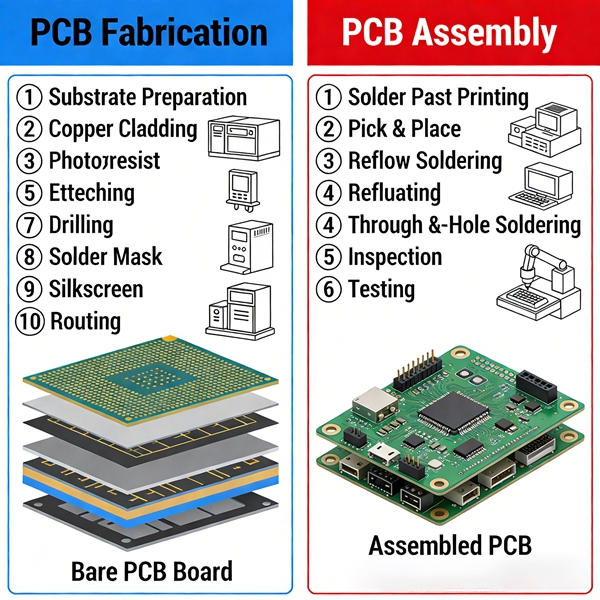
Vanliga frågor om tillverkning av kretskort och montering av kretskort
A: Ja, absolut. ENIG är att föredra för fine-pitch SMD-komponentermedan HASL är ett kostnadseffektivt val för större, mindre komplexa konstruktioner.
S: Felriktade skikt, dålig borrning eller pläteringsproblem kan orsaka lödfel, felplacering av komponenter och termisk stress under monteringen.
A: Ja, men att använda en nyckelfärdig leverantör som Topfast minskar kommunikationsfelen och snabbar upp hela processen. tillverkningsbudget ledning.
S: Design med rätt avstånd, padstorlekar och kopparbalans säkerställer tillverkningsbarhet och minskar avkastningsförlusterna vid både tillverkning och montering.
A: TOPFAST tillämpar en perspektivet tillverkning i första handoch kontrollerar processkvalitet, avkastning och tillförlitlighet från tillverkning till slutmontering.
A: Felaktiga fotavtrycksdynor. Om tillverkningsplattan är för liten, kommer PCBA-bearbetning kommer att resultera i dåliga lödfogar eller "tombstoning".
A: Vi använder AOI, röntgen och funktionstestning. Du kan också manuellt testa kondensatorer under felsökningsfasen av din prototyp.
A: PCBA är i allmänhet dyrare på grund av kostnaden för SMD elektroniska komponenter och den specialiserade precisionsutrustning som krävs.
Slutsats
Förstå skillnaden mellan Tillverkning och Montering möjliggör bättre projektplanering och kostnadskontroll. På Topfast överbryggar vi detta gap genom att erbjuda sömlös, hög tillförlitlighet Tjänster för PCB-montering.
Är du redo att gå från design till funktionell hårdvara? Få en offert på enhetliga PCB & PCBA från Topfast idag.