PCB inspection and testing are essential steps in ensuring that a printed circuit board meets both quality and functional requirements.
While inspection focuses on detecting defects, testing verifies electrical integrity and performance.
Together, they form the final quality gate before PCB assembly or shipment.
This hub page provides an overview of the most important PCB inspection and testing methods and links to in-depth technical articles for each.
Quality foundation:
PCB Quality & Reliability Explained
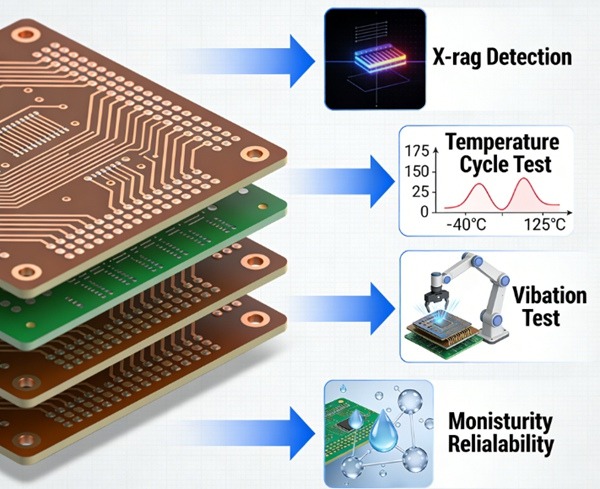
Table of Contents
Why PCB Inspection and Testing Matter
Even with robust manufacturing processes, defects can still occur.
Inspection and testing help to:
- Detect manufacturing errors early
- Prevent defective boards from reaching assembly
- Provide feedback for process improvement
- Reduce reliability and field failure risk
They do not replace good design or process control, but they significantly reduce risk.
Automated Optical Inspection (AOI)
AOI is the most commonly used inspection method in PCB manufacturing.
What AOI Does Well
- Detects surface-level defects
- Identifies opens and shorts visually
- Improves inspection speed and consistency
AOI Limitations
- Cannot detect internal defects
- Cannot verify electrical performance
Deep dive:
AOI Inspection in PCB Manufacturing
X-Ray Inspection
X-ray inspection enables visibility into the internal structures of a PCB.
What X-Ray Detects
- Via and hole plating voids
- Internal layer misalignment
- Delamination and resin voids
X-Ray Limitations
- Higher cost
- Slower inspection speed
- Typically sampling-based
Technical details:
X-Ray Inspection in PCB Manufacturing
PCB Electrical Testing
Electrical testing is the only method that directly verifies connectivity.
What Electrical Testing Confirms
- Continuity of all nets
- Absence of shorts
- Correct net connections
What It Cannot Do
- Predict long-term reliability
- Detect internal voids or plating thickness
Method overview:
PCB Electrical Testing Explained
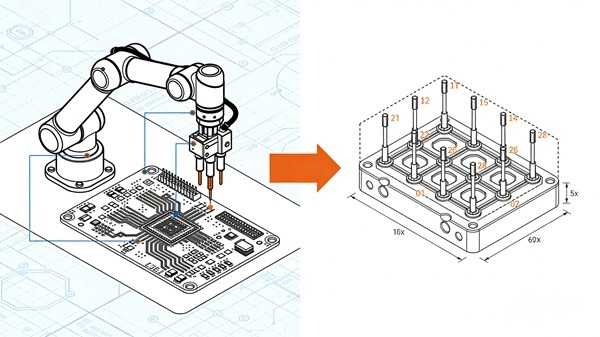
Flying Probe vs Fixture-Based Testing
Once electrical testing is required, choosing the right method becomes critical.
Key Decision Factors
- Production volume
- Design stability
- Cost structure
- Time-to-market
Comparison guide:
Flying Probe vs Fixture Electrical Testing
Inspection vs Testing — Understanding the Difference
| Aspect | Inspection | Testing |
|---|---|---|
| Focus | Visual and structural | Electrical function |
| Typical methods | AOI, X-ray | E-Test |
| Detects opens/shorts | Limited | Yes |
| Detects internal defects | X-ray only | No |
| Reliability prediction | No | No |
Both are necessary, but they address different risks.
How Inspection and Testing Work Together
A complete PCB quality system typically follows this sequence:
- AOI for early surface defect detection
- X-ray inspection for internal structures (when required)
- Electrical testing for connectivity verification
- Reliability testing for long-term performance (selective)
Reliability link:
PCB Reliability Testing Explained
Cost Considerations in Inspection and Testing
Inspection and testing add cost, but skipping them increases risk.
Cost is influenced by:
- Board complexity
- Volume
- Inspection depth
- Test method selection
Cost balance:
PCB Manufacturing Cost vs Quality Trade-offs
When Enhanced Inspection Is Necessary
Enhanced inspection and testing are especially important for:
- High-density or multilayer PCBs
- New designs or materials
- High-voltage or high-temperature applications
- Long service-life products
In such cases, standard inspection alone is insufficient.
In such cases, standard inspection alone is insufficient.
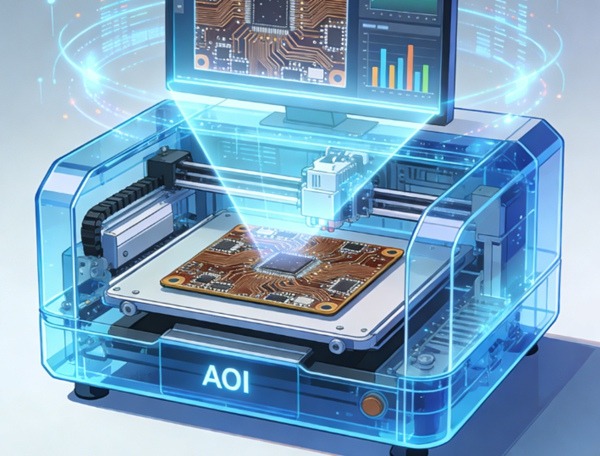
How Manufacturers Apply Inspection in Practice
In real production environments, inspection strategies are tailored to:
- Design risk
- Volume economics
- Customer requirements
At TOPFAST, inspection and testing methods are selected based on risk level and application needs, ensuring both efficiency and reliability.
Conclusion
PCB inspection and testing are essential safeguards that bridge manufacturing processes and real-world performance.
By combining AOI, X-ray inspection, electrical testing, and appropriate test strategies, manufacturers can significantly reduce defect risk and improve overall PCB quality.
This hub page serves as the central reference for the PCB Inspection & Testing topic cluster.
PCB Inspection & Testing FAQ
A: No. Inspection cannot verify electrical connectivity.
A: No. They detect different types of defects.
A: No. X-ray is typically used for complex designs.
A: No. Reliability testing is required for long-term validation.
A: Only for low-risk, low-complexity applications.