Bendable · Flexible · Reliable

Flexible
Printed Circuit
Boards

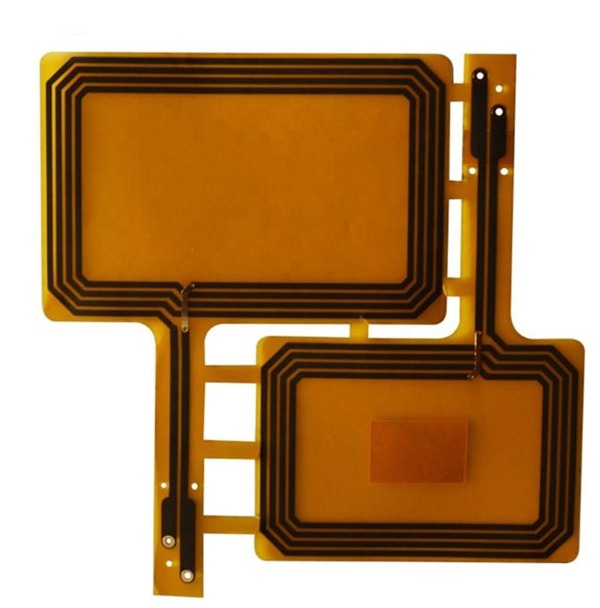
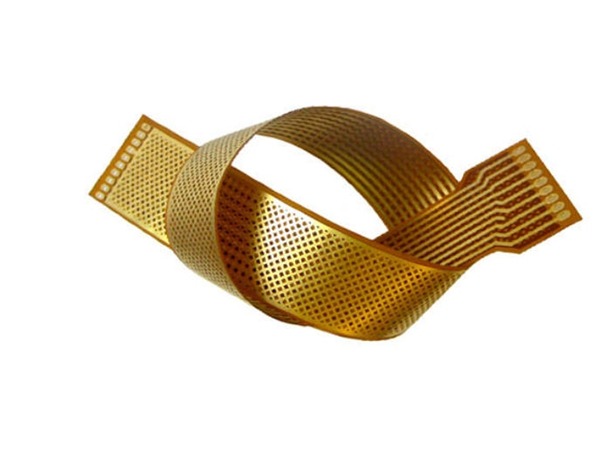
High-quality flexible and rigid-flex PCBs engineered for dynamic applications where space, weight and movement matter.

Flexible PCB
0.075mmMin Trace
1–10Layers
Home /Flexible PCB
IPC-6013Flex/Rigid-Flex Performance
IPC-2223Sectional Design Standard
ISO 9001Quality Management
RoHSHazardous Substance Free
UL 94Flammability Rating
ISO 14001Environmental Management
Product Range

Flex PCB Types

Four flexible circuit technologies — choose the one engineered for your application

Single Layer Flex PCB
01

Single Layer Flex

The most cost-effective flex circuit — one conductive layer on polyimide, ideal for high-volume consumer electronics, keyboards and dynamic bend zones.

  • Most affordable option
  • Excellent tight bend radii
  • Ultra-lightweight
Request Quote
Double Layer Flex PCB
02

Double Layer Flex

Two copper layers with plated vias for higher circuit density — the go-to choice for wearables and medical devices.

  • Via interconnections
  • Better signal routing
Request Quote
Multilayer Flex PCB
03

Multilayer Flex

3+ layer circuits for complex assemblies requiring EMI shielding, power planes and high interconnect density.

  • Enhanced EMI shielding
  • Power & ground planes
Request Quote
Rigid-Flex PCB
04

Rigid-Flex PCB

Hybrid construction merging rigid FR4 zones with flexible polyimide regions — eliminating connectors and enabling true 3D packaging for aerospace, military and advanced consumer devices.

  • 3D packaging capability
  • Fewer connectors & solder joints
  • Space and weight reduction
Request Quote
Capabilities

Technical Specifications

Our flexible PCB manufacturing parameters at a glance

1–10
Flex Layers
Single to multilayer
0.075mm
Min Line/Space
Trace width & spacing
0.1mm
Min Hole Size
Flex laminate drilling
±0.1mm
Bend Radius
Minimum dynamic bend
0.05–0.3mm
Base Thickness
Available flex substrate
1–2oz
Copper Weight
Rolled annealed copper
Substrates

Flex PCB Materials

Side-by-side substrate comparison — find the optimal material for your operating environment

Property PIPolyimide PETPolyester PENPolyethylene Naphthalate LCPLiquid Crystal Polymer
Temp Range −65°C to 260°C −40°C to 105°C −50°C to 155°C −200°C to 240°C
Dielectric Constant 3.4 – 3.5 3.3 3.2 2.9 – 3.2
Moisture Absorption 2.5 – 3.0% 0.4% 0.3% <0.04%
Tensile Strength 180 MPa 180 MPa 220 MPa 200 MPa
Flex Endurance
RF Performance
Cost Level
Best For Standard flex circuits, aerospace Consumer electronics, disposables Automotive, industrial RF, microwave, 5G antenna

● Green = performance level  ·  Amber = relative cost (more dots = higher cost)  ·  LCP column highlighted as premium RF substrate

Online Quote
How It's Made

Manufacturing Process

Precision steps engineered specifically for flexible PCB production

01

Material Preparation

Flexible laminates are precision-cut to format. Thickness is verified to ±5 µm and surface cleanliness confirmed before any subsequent process step begins.

PolyimidePETLCP
02

Flex-Specific Drilling

Laser or mechanical drilling creates micro-vias and through-holes without tearing the substrate. Hole size down to 0.1 mm with positional accuracy ±25 µm.

Laser Drill0.1mm Min±25µm
03

Circuit Pattern Transfer

Photoimaging with UV-collimated exposure transfers the circuit pattern to the copper foil. Fine-line etching achieves minimum 0.075 mm trace/space.

Photoimaging0.075mm LinesChemical Etch
04

Coverlay Application

Flexible polyimide coverlay film is laminated under controlled temperature and pressure, providing durable circuit protection that flexes repeatedly without cracking.

PI CoverlayPressure BondFlex-Safe
Catalog

Flexible PCB Products

Professional flexible PCB manufacturing for diverse application sectors

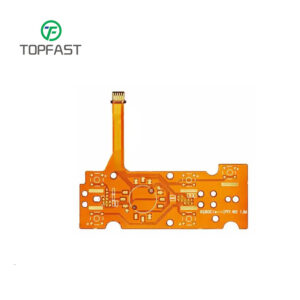
4-Layer Flexible PCB
FlexiblePCBQuality

4-Layer Flexible PCB

This article introduces Topfast’s 4-layer flexible PCBs, highlighting their high-density routing, dynamic bendability, impedance control,…

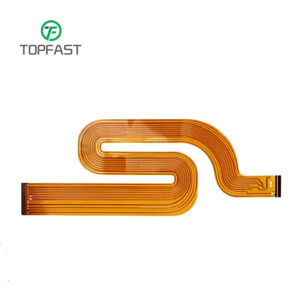
Single-Sided Flexible PCB
FlexiblePCBQuality

Single-Sided Flexible PCB

This article introduces Topfast’s professional single-sided flexible PCB products, highlighting their advantages, technical specifications, applications,…

Multilayer Flexible PCB
FlexiblePCBQuality

Multilayer Flexible PCB

Multilayer Flexible Printed Circuit Boards (Multilayer FPCs) are high-performance interconnect components composed of alternating layers…

Double-Sided Flexible PCB
FlexiblePCBQuality

Double-Sided Flexible PCB

Double-Sided Flexible PCBs, known for their lightweight, bendable properties, and dual-layer routing capabilities, have become…

FAQ

  • What certifications do PCB factories have?

    All of our products are IPC rated with ISO 14001; ISO 9001; CE; ROHS certificates, etc. Our products are widely used in communication, medical equipment, industrial control, power supply, consumer electronics and aerospace, automotive industry and other fields.

  • What types of flexible PCBs do you offer?

    Topfast always adheres to the service concept of customer first and quality first, and provides diversified customized services, which can produce single-sided boards, double-sided boards, multilayer boards and so on.

  • What are the advantages of your flexible boards over other manufacturers?

    The company has world-class production equipment (laser drilling machine, VCP through-hole filling line, blind hole AOI testing equipment, ceramic grinding line, vertical vacuum resin blocking machine, etc.), first-class technical team, mature product line, perfect service flow, to provide one-stop PCB services from design, sampling to mass production and assembly.

  • What is the lead time for PCB boards?

    We can deliver double-sided samples in 24 hours at the earliest, but we need to evaluate the delivery time according to the design file and the quantity.

  • What are the main applications of flexible circuit boards?

    The products are widely used in communication (cell phones, computers, etc.), medical equipment (blood analyzers, hearing aids, etc.), industrial control, power supply, consumer electronics and aerospace, automotive industry and other fields.

  • What materials are used in flexible PCBs?

    Flexible PCBs typically use copper as the conductive layer and polyimide as the insulating material. In addition, adhesives and reinforcing ribs are used to bond and support the layers.

  • What is the typical thickness of a flexible PCB?

    The typical thickness range for a 2-layer flexible PCB is 0.11 mm to 0.2 mm.

  • Can flexible PCBs be customized for specific applications?

    Yes, flexible PCBs can be fully customized in terms of size, shape, layer count, and materials to meet the specific requirements of your application.

  • Can flexible PCBs withstand high temperatures?

    Flexible PCBs are designed to withstand a wide range of temperatures, making them suitable for automotive, aerospace, and industrial applications where thermal management is critical.
Knowledge Hub

Latest News

Technical articles and industry insights on flexible PCB manufacturing

Ready to start?

Launch Your Flex PCB Project Today

Upload your Gerber files for an instant quote with complimentary DFM review, or speak directly with our flex PCB engineering team.

✓ Free Flex Design Review ✓ 1-Hour Quotation ✓ No Hidden Costs ✓ IPC-6013 Certified