Description
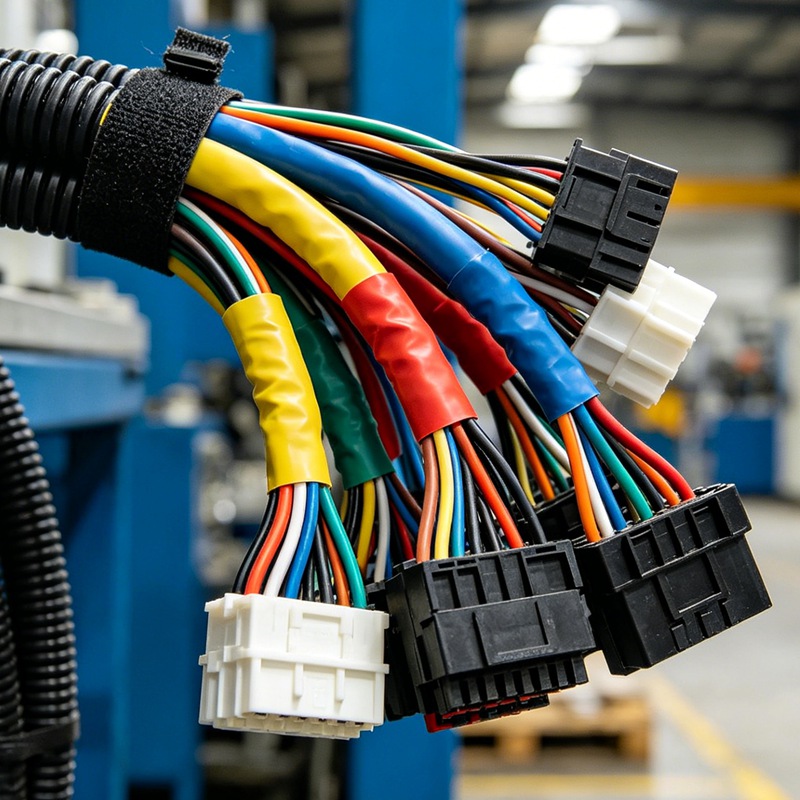
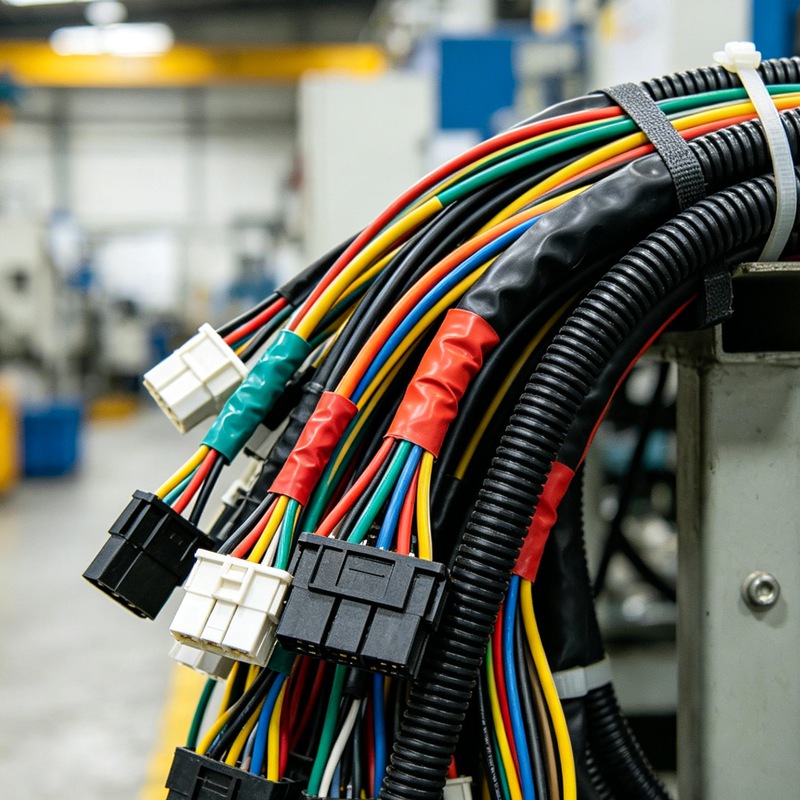
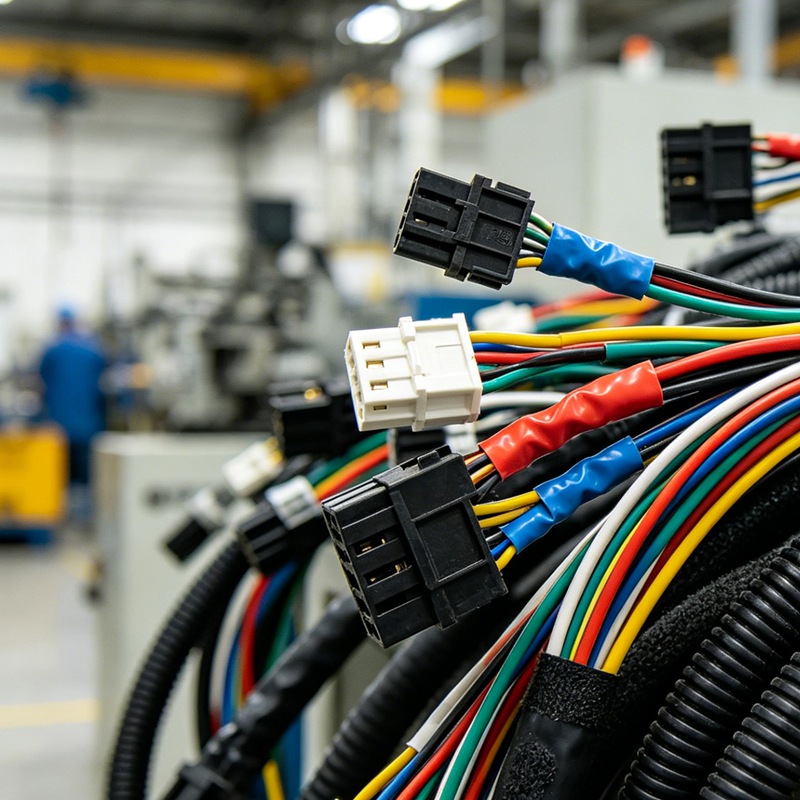
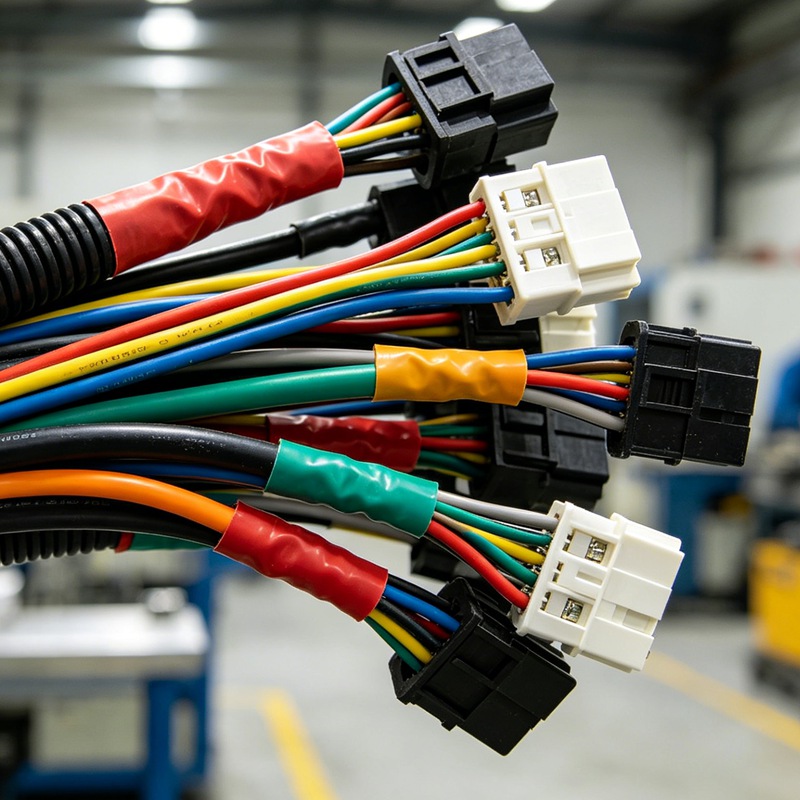
Industrial equipment depends on stable electrical connectivity to maintain operational reliability, automation accuracy, and long-term safety. An industrial wiring harness integrates cables, connectors, terminals, and protective materials into a structured assembly that simplifies electrical distribution and signal transmission across complex systems.
TOPFAST provides custom industrial wiring harness manufacturing for automation systems, industrial machinery, robotics, energy equipment, transportation systems, and intelligent control applications. Our production focuses on electrical stability, environmental durability, and manufacturing consistency for demanding industrial environments.
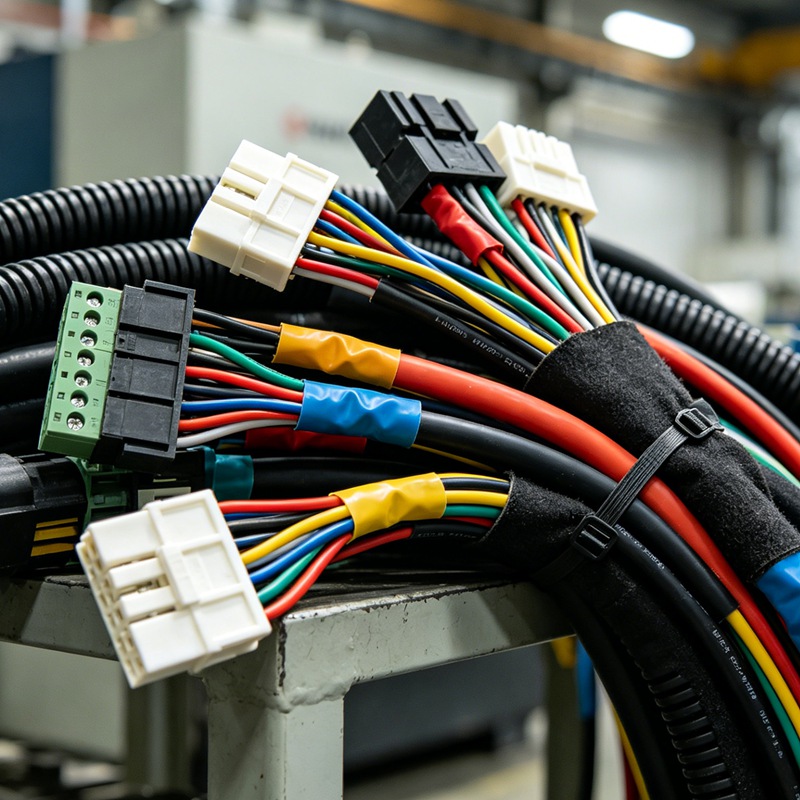
Industrial Wiring Harness Manufacturing Capabilities
We support custom cable harness production for both prototype and mass-production projects.
Supported Harness Types
- Industrial control wiring harness
- Equipment power harness
- Automation cable assembly
- Sensor wiring harness
- Servo motor cable assembly
- PLC control harness
- Industrial signal harness
- Robotics wiring harness
- Waterproof cable harness
- Custom machinery cable assembly
Supported Cable & Connector Options
Different industrial applications require different electrical and mechanical specifications.
Available options include:
- Shielded cables
- High-flex cables
- Silicone wires
- High-temperature cables
- Drag chain cables
- Waterproof connectors
- Circular connectors
- Terminal block assemblies
- Braided shielding
- Corrugated tube protection
For integrated electronic projects, many customers also combine harness production with our PCB Assembly Services and Turnkey PCB Assembly Solutions services.
Key Features of Industrial Wiring Harness Solutions
Stable Signal Transmission
Industrial systems often operate in electrically noisy environments. Proper shielding and routing help reduce signal interference and communication instability.
Resistance to Harsh Environments
Industrial harnesses are commonly exposed to:
- Heat
- Oil
- Dust
- Moisture
- Chemical exposure
- Mechanical vibration
Proper material selection improves long-term operational stability.
Flexible Routing Structure
Complex industrial equipment requires organized cable routing to simplify installation, maintenance, and future upgrades.
Long-Term Reliability
Industrial systems often run continuously for extended periods. Consistent crimp quality, insulation stability, and connector reliability are critical factors.
Industrial Wiring Harness Applications
Industrial cable harnesses are widely used across manufacturing and automation sectors.
Industrial Automation Equipment
Automation systems require stable signal communication between sensors, controllers, actuators, and power systems.
Applications include:
- PLC systems
- Automated production lines
- Industrial robots
- Motion control systems
Robotics Systems
Robotics applications often require flexible and high-cycle cable assemblies capable of handling repeated movement.
Energy & Power Equipment
Industrial harnesses are used in:
- Power distribution systems
- Energy storage equipment
- Charging systems
- Monitoring devices
Transportation & Heavy Equipment
Industrial vehicles and heavy machinery require reinforced harness structures for vibration resistance and environmental durability.
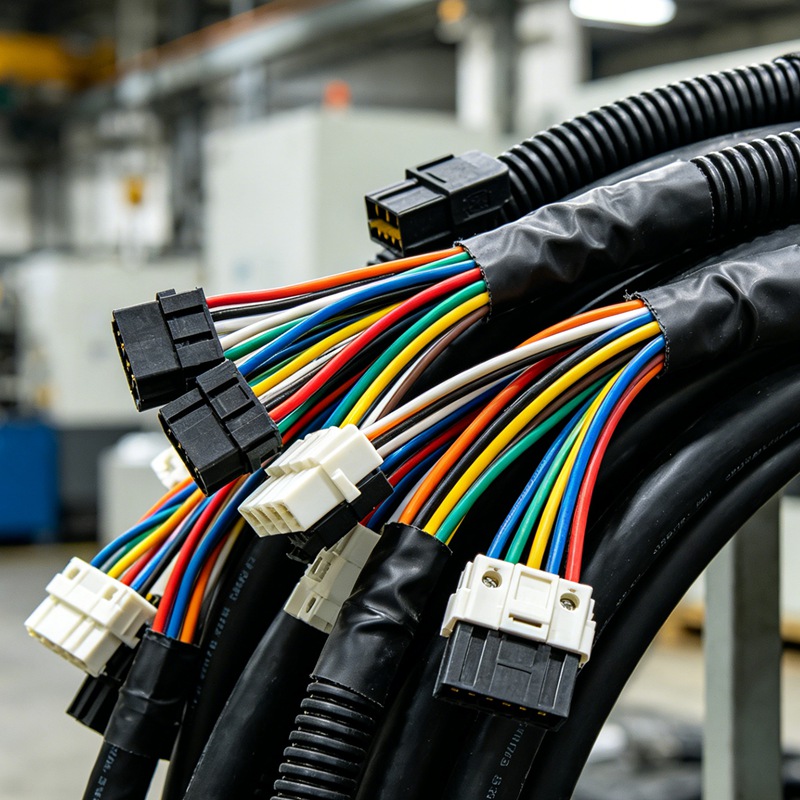
Industrial Wiring Harness Manufacturing Process
Reliable manufacturing processes help ensure long-term harness performance.
Wire Cutting & Stripping
Automated processing equipment improves cutting precision and stripping consistency.
Terminal Crimping
Crimp quality directly affects electrical conductivity and operational reliability. Pull-force testing is commonly used for validation.
Connector Assembly
Connector positioning and locking integrity are checked during assembly to reduce installation failure risks.
Harness Bundling & Routing
Structured routing boards help maintain assembly consistency and improve installation efficiency.
Electrical Testing
Harness assemblies can undergo:
- Continuity testing
- Insulation resistance testing
- High-voltage testing
- Functional verification
Final Inspection
Final inspection verifies labeling, cable routing, connector installation, and protective materials before shipment.
Quality Control for Industrial Wiring Harnesses
Industrial applications require stable process management and product traceability.
TOPFAST focuses on:
- Incoming material inspection
- Process standardization
- Crimp quality validation
- Electrical testing
- Batch traceability
- Production consistency
Customers developing advanced industrial electronics also frequently use our Multilayer PCB Manufacturing and Rigid PCB Board Solutions capabilities.
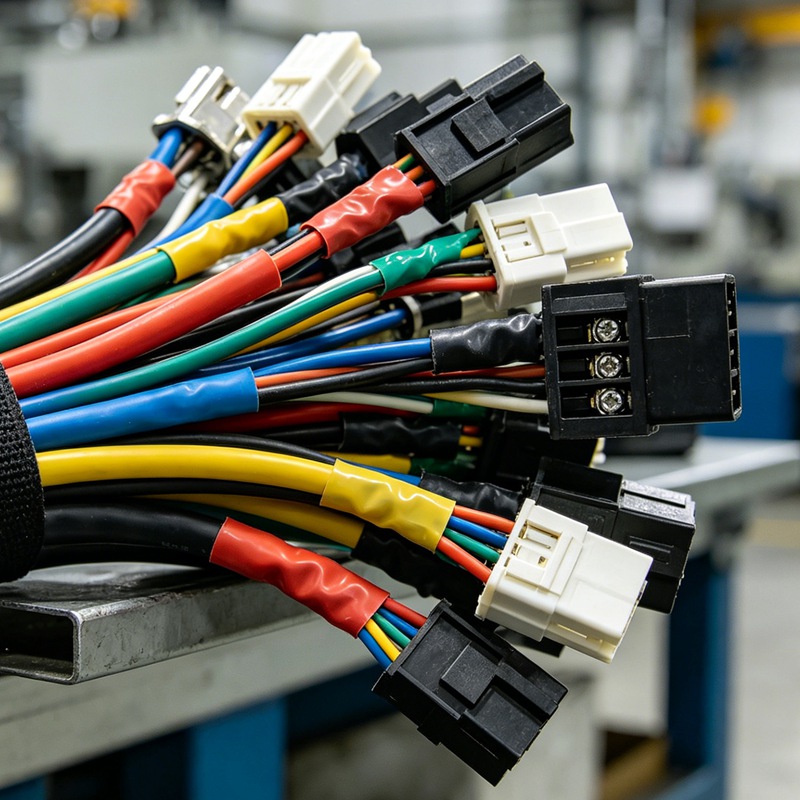
Important Design Considerations
Electrical Load Capacity
Proper wire gauge selection helps avoid overheating and voltage instability.
EMI Protection
Shielding design is important for industrial systems operating near motors, drives, and high-power equipment.
Environmental Protection
Applications exposed to moisture or contaminants often require waterproof connectors and sealed cable assemblies.
Flexibility Requirements
Dynamic motion applications require cables capable of repeated bending without failure.
Maintenance Accessibility
Organized harness layouts simplify troubleshooting and field servicing.
Why Industrial Harness Quality Matters
Poor-quality harness assemblies can lead to:
- Equipment downtime
- Signal instability
- Connector failure
- Maintenance costs
- Safety risks
Reliable manufacturing processes improve long-term operational stability and reduce system failure risks.
FAQ
What is an industrial wiring harness?
An industrial wiring harness is an organized assembly of wires, connectors, terminals, and protective materials used to distribute electrical power and signals within industrial equipment and systems.
What industries use industrial wiring harnesses?
Industrial wiring harnesses are widely used in automation systems, robotics, manufacturing equipment, transportation systems, energy equipment, and industrial control applications.
Can industrial wiring harnesses be customized?
Yes. Customization options include cable types, connector systems, shielding structures, routing layouts, voltage requirements, and environmental protection levels.
Why is shielding important in industrial cable assemblies?
Shielding helps reduce electromagnetic interference (EMI), improving signal stability and communication reliability in electrically noisy industrial environments.
Are waterproof industrial wiring harnesses available?
Yes. Waterproof harnesses use sealed connectors, protective sleeves, and specialized cable materials for moisture-prone or outdoor applications.
What tests are performed on industrial wiring harnesses?
Common tests include continuity testing, insulation resistance testing, high-voltage testing, crimp pull-force testing, and visual inspection.
Can industrial wiring harnesses integrate with PCB assemblies?
Yes. Many industrial systems combine cable harnesses with PCB assemblies, sensors, controllers, and embedded electronic modules.
What factors affect industrial harness reliability?
Reliability depends on cable quality, connector stability, crimp consistency, environmental protection, routing structure, and manufacturing process control.