La distinción entre Fabricación de placas de circuito impreso y Ensamblaje de PCB es fundamental para ingenieros, diseñadores y equipos de compras.
Comprender ambos procesos ayuda a:
- Reducir los errores de fabricación
- Optimización de costes y plazos
- Planificación de pruebas y control de calidad
En este artículo, exploraremos las principales diferencias, retos y consideraciones clave del La perspectiva profesional de TOPFAST en la fabricación de placas de circuito impreso.
Para una visión detallada del conjunto Proceso de fabricación de PCBconsulte nuestra página del centro: Proceso de fabricación de PCB
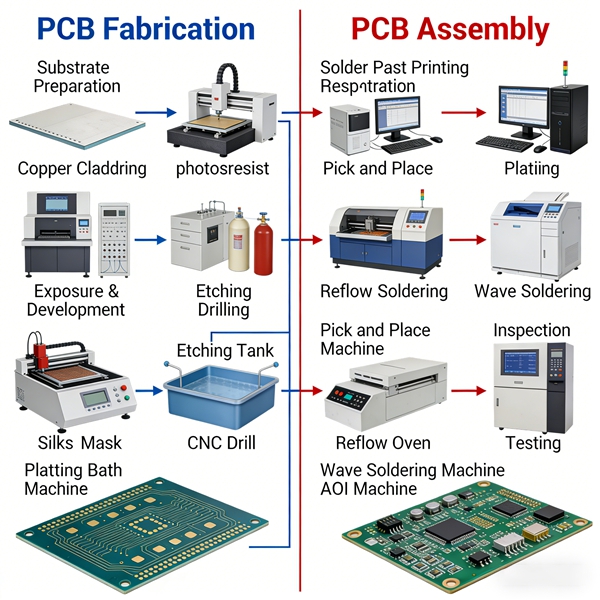
Tabla de contenidos
¿Qué es la fabricación de PCB? (El esqueleto)
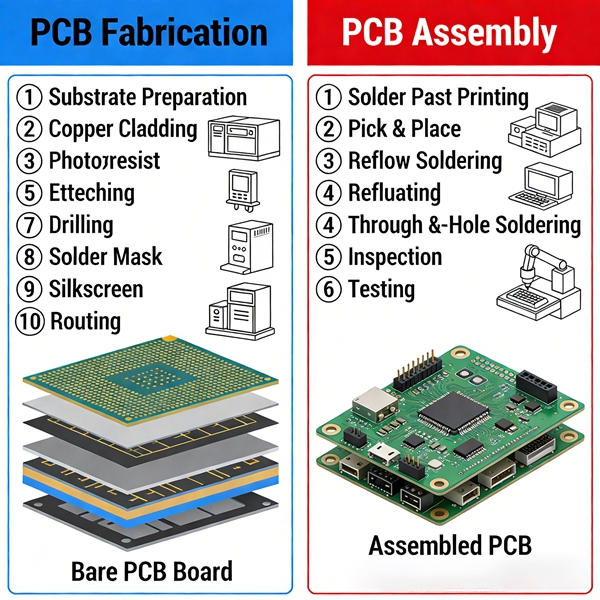
La fabricación de PCB es el proceso mecánico de creación de la placa de circuito impreso desnuda. Implica:
- Selección de materiales: Elegir el sustrato adecuado para gestionar costes de fabricación.
- Laminación y grabado: Creación de las capas conductoras de cobre.
- Perforación: Utilización de taladros mecánicos o láser para Fabricación de PCB de IDH.
- Acabado superficial: Aplicación de HASL o ENIG para proteger el cobre y garantizar la soldabilidad.
¿Qué es el montaje de PCB? (El sistema nervioso)
El montaje de PCB es el proceso de soldar Componentes electrónicos SMD y piezas pasantes en la placa fabricada.
- Procesamiento SMT: Colocación automatizada a alta velocidad de componentes diminutos.
- Soldadura por reflujo y por ola: Formación de uniones eléctricas permanentes.
- Pruebas: Utilizar métodos para condensadores de prueba y la lógica general del circuito.

Resumen de las diferencias críticas
| Característica | Fabricación de PCB | Montaje de PCB (PCBA) |
| Salida | Placa desnuda (sin componentes) | Dispositivo electrónico funcional |
| Objetivo principal | Arquitectura física y conectividad | Funcionalidad y rendimiento eléctricos |
| Materiales principales | Cobre, FR-4, Máscara de soldadura | Componentes SMDPasta de soldar |
| Comprobación de llaves | DFM (Diseño para la fabricación) | DFA (Diseño para montaje) |
Cómo pasar sin problemas de la fabricación al montaje
- Revisión unificada DFM/DFA
Asegúrese de que su Decisiones de diseño de PCB tener en cuenta tanto los límites de grabado del cobre como las holguras de la máquina de recoger y colocar.
- Optimización de la lista de materiales
Proporcione una lista completa de materiales (BOM) con los números exactos de las piezas del fabricante para evitar desajustes en los componentes.
- Coordinar el apilamiento
Haga coincidir su Diseño de apilamiento de placas de circuito impreso con los requisitos térmicos del horno de soldadura por reflujo.
- Estrategia de panelización
Utilice tamaños de panel que maximicen el uso de material en la fabricación sin dejar de ser compatibles con los transportadores SMT.
- Trazabilidad de la calidad
Implementar números de serie en la placa desnuda durante la fabricación para rastrear el Procesamiento de PCBA historia.
Fabricación de PCB vs Montaje de PCB FAQ
A: Absolutamente. La ENIG es preferible para el tono fino Componentes SMDmientras que HASL es una opción rentable para diseños más grandes y menos complejos.
R: Las capas desalineadas, el taladrado deficiente o los problemas de chapado pueden provocar defectos de soldadura, desplazamiento de componentes y tensiones térmicas durante el montaje.
A: Sí, pero utilizar un proveedor llave en mano como Topfast reduce los errores de comunicación y acelera el proceso general. presupuesto de fabricación gestión.
R: El diseño con el espaciado, el tamaño de las pastillas y el equilibrio de cobre adecuados garantiza la fabricación y reduce la pérdida de rendimiento tanto en la fabricación como en el montaje.
R: TOPFAST aplica un la fabricación como prioridadControlar la calidad del proceso, el rendimiento y la fiabilidad desde la fabricación hasta el montaje final.
A: Almohadillas de fabricación incorrectas. Si la almohadilla de fabricación es demasiado pequeña, el Procesamiento de PCBA dará lugar a malas juntas de soldadura o "tombstoning".
A: Utilizamos AOI, rayos X y pruebas funcionales. También puede manualmente condensadores de prueba durante la fase de depuración de su prototipo.
A: Generalmente, los PCBA son más caros debido al coste de Componentes electrónicos SMD y el equipo de precisión especializado necesario.
Conclusión
Comprender la distinción entre Fabricación y Montaje permite planificar mejor los proyectos y controlar mejor los costes. En Topfast, cubrimos este vacío ofreciendo un servicio sin fisuras y de alta fiabilidad. Servicios de montaje de PCB.
¿Listo para pasar del diseño al hardware funcional? Obtenga un presupuesto unificado de PCB y PCBA de Topfast hoy mismo.