Os defeitos de fabrico de PCB raramente são aleatórios.
A maioria dos defeitos tem origem em decisões de conceção, limitações de material ou instabilidade do processomuito antes da realização da inspeção final.
Embora a inspeção possa detetar muitos problemas visíveis, a prevenção de defeitos deve ocorrer mais cedo no processo de fabrico.
Este artigo explica os defeitos de fabrico de PCB mais comuns, as suas causas principais e estratégias práticas de prevenção numa perspetiva de fabrico.
Para conhecer os fundamentos da qualidade, ver: O que determina a qualidade dos PCB?
Índice
O que é considerado um defeito de fabrico de PCB?
Um defeito de fabrico de PCB é qualquer desvio que:
- Afecta o desempenho elétrico
- Compromete a integridade mecânica
- Reduz a fiabilidade a longo prazo
- Viola as especificações do IPC ou do cliente
Os defeitos podem ser visível, latente, ou progressivo, aparecendo apenas após tensão térmica ou mecânica.
Defeitos da camada interna
Defeitos comuns da camada interna
- Circuitos abertos
- Curto-circuitos
- Sobrecondicionamento ou subcondicionamento
- Registo incorreto entre camadas
Causas de base
- Imprecisões de imagiologia
- Variação do processo de gravura
- Mau alinhamento da camada interior
Uma vez que as camadas interiores são seladas durante a laminação, os defeitos nesta fase são irreversível.
Antecedentes do processo: Explicação do fabrico da camada interior
Defeitos relacionados com a perfuração
Defeitos típicos de perfuração
- Furos descentrados
- Rebarbas e manchas
- Brocas partidas
- Má qualidade da parede do furo
Causas de base
- Rácio de aspeto excessivo da broca
- Ferramentas gastas
- Avanço e velocidade incorrectos
- Método de perfuração inadequado
Os defeitos de perfuração afectam diretamente a qualidade do revestimento de cobre e a fiabilidade da via.
Comparação de métodos:
Perfuração de PCB vs Perfuração a laser
Defeitos de revestimento
Problemas comuns de galvanização
- Cobre fino em vias
- Vazios ou lacunas
- Cobre rugoso ou nodular
- Fraca aderência
Causas de base
- Preparação incorrecta da superfície
- Densidade de corrente inconsistente
- Desequilíbrio químico
- Vias de elevado rácio de aspeto
Os defeitos de revestimento são uma das principais causas de falhas intermitentes e problemas de ciclos térmicos.
Detalhe do processo: Processo de revestimento de cobre no fabrico de PCB
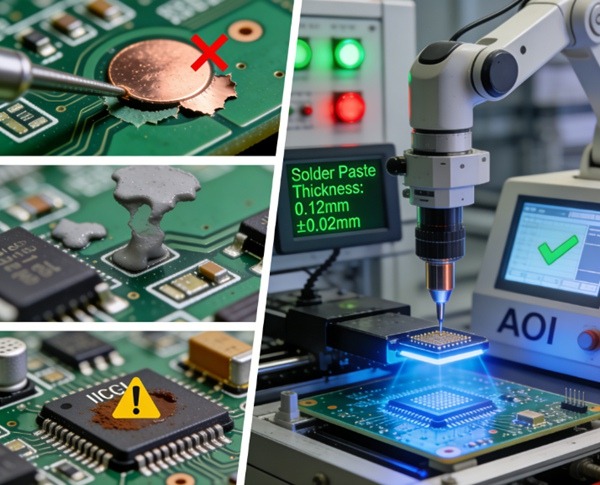
Defeitos de gravação
Defeitos típicos de gravura
- Traços excessivamente gravados
- Pontes de cobre com entalhe inferior
- Variação da largura da linha
- Traço do pescoço para baixo
Causas de base
- Espessura irregular do cobre
- Química agressiva do condicionador
- Compensação deficiente do processo
- Espaçamento apertado entre traços
À medida que a geometria dos traços se torna mais fina, os defeitos de gravação afectam cada vez mais o rendimento e a fiabilidade.
Análise centrada no rendimento: Processo de gravação de PCB e controlo de rendimento
Defeitos de laminação e delaminação
Problemas comuns de laminação
- Delaminação
- Formação de bolhas
- Vazios de resina
- Mudança de camada
Causas de base
- Pressão ou temperatura de laminação inadequadas
- Má seleção de pré-impregnados
- Absorção de humidade
- Empilhamento desequilibrado
Estes defeitos tornam-se frequentemente visíveis durante a montagem ou o ciclo térmico, e não durante os ensaios iniciais.
Relação material: Material da placa de circuito impresso e custo das camadas
Máscara de solda e defeitos de acabamento de superfície
Defeitos típicos
- Desalinhamento da máscara de soldadura
- Fraca aderência
- Furos
- Espessura irregular do acabamento da superfície
Causas de base
- Preparação inadequada da superfície
- Condições de cura incorrectas
- Contaminação do processo
Estes defeitos podem levar à formação de pontes de soldadura, corrosão e redução do prazo de validade.
Fugas de testes eléctricos e defeitos latentes
Nem todos os defeitos são detectados durante os ensaios eléctricos.
Os defeitos latentes podem:
- Passar nos testes iniciais
- Falha após tensão térmica
- Aparecem durante a operação no terreno
As causas mais comuns incluem:
- Espessura marginal do revestimento
- Microfissuras em vias
- Formação de CAF
Riscos de defeitos relacionados com a conceção
Alguns defeitos têm origem em escolhas de conceção e não em erros de fabrico.
Os factores de conceção de alto risco incluem:
- Traços e espaçamentos extremamente finos
- Vias de elevado rácio de aspeto
- Distribuição de cobre não equilibrada
- Tolerâncias demasiado apertadas
Ligação com qualidade de design: Factores de custo de conceção de PCB
Como evitar defeitos de fabrico de PCB
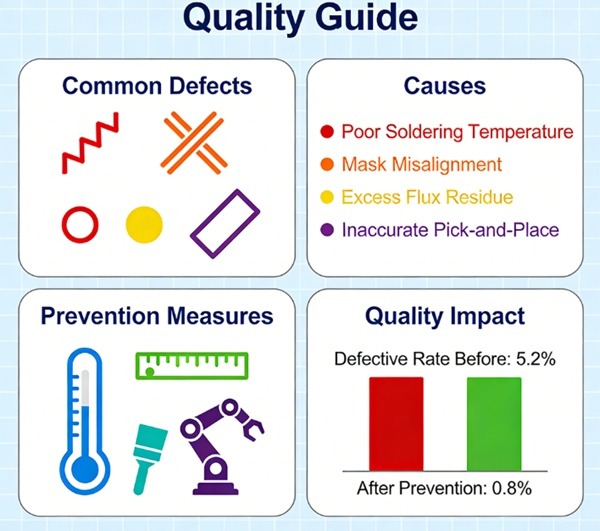
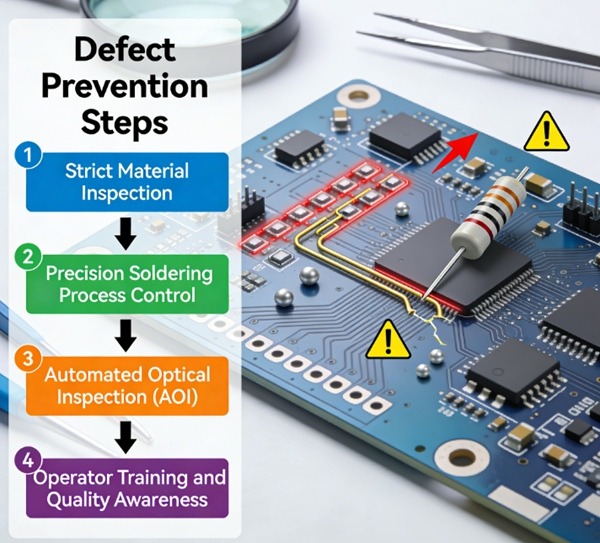
A prevenção eficaz de defeitos centra-se em estabilidade do processoe não apenas a inspeção.
As principais estratégias de prevenção incluem:
- Revisão antecipada do DFM
- Margens de conceção conservadoras
- Seleção de material qualificado
- Monitorização da capacidade do processo
- Análise dos dados de rendimento
Na TOPFAST, a prevenção de defeitos é orientada por controlo de processos a montante e feedback baseado em dadosreduzindo a dependência do rastreio de fim de linha.
Prevenção de defeitos vs. custo de fabrico
A prevenção de defeitos reduz frequentemente o custo total.
As vantagens incluem:
- Maior rendimento
- Menos retrabalho
- Menos atrasos
- Menor risco de falha no campo
Equilíbrio custo-qualidade: Explicação do custo de fabrico de PCB
Conclusão
Os defeitos de fabrico de PCB raramente são incidentes isolados.
São o resultado de interações entre conceção, materiais e controlo de processos.
Ao compreender os tipos de defeitos mais comuns e as suas causas principais, os engenheiros e os compradores podem tomar medidas proactivas para evitar defeitos e melhorar a fiabilidade a longo prazo.
Este artigo constitui um pilar fundamental do Qualidade e fiabilidade de PCB aglomerado.
FAQ: Defeitos de fabrico de PCB
R: Os defeitos relacionados com a gravura e os problemas de revestimento estão entre os mais comuns.
R: Não. A inspeção detecta defeitos mas não previne as suas causas.
R: O stress térmico durante a montagem pode revelar defeitos latentes introduzidos anteriormente.
R: Não. Muitos defeitos têm origem na conceção ou nas escolhas de materiais.
R: Através da revisão DFM e de uma conceção conservadora alinhada com a capacidade do processo.