Montagem de PCB (PCBA) é a etapa em que um A placa de circuito impresso nua transforma-se numa placa eletrónica funcionalO fabrico de placas de circuito impresso centra-se na fase de fabrico de placas nuas, que constitui a base de todo o fluxo de trabalho de fabrico de placas de circuito impresso. Envolve colocação de componentes, soldadura e testes rigorosos
A qualidade da montagem afecta diretamente:
- Funcionalidade eléctrica
- Fiabilidade do produto
- Rendimento da produção
Em TOPFAST, o conjunto é tratado como um processo orientado para o rendimentoAssegurar que os conselhos de administração são funcionais e sólidos.
Para mais informações sobre a relação entre a montagem de PCB e o fabrico, ver: Fabrico de PCB vs Montagem de PCB
Índice
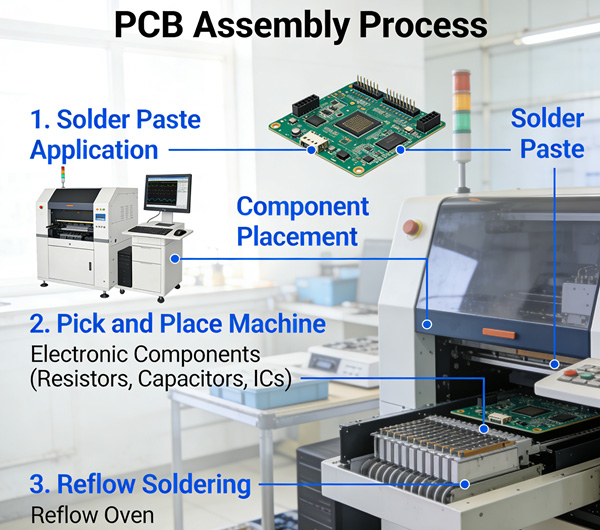
Tecnologia de montagem em superfície (SMT) Montagem
O que é a montagem SMT?
A montagem SMT envolve a montagem componentes de montagem em superfície diretamente sobre as placas de circuito impresso utilizando:
- Pasta de solda
- Máquinas Pick-and-place
- Soldadura por refluxo
SMT é rápido, preciso e adequado para placas de alta densidadeA tecnologia de ponta, normalmente utilizada em eletrónica de consumo, telecomunicações e dispositivos IoT.
Desafios da SMT
- Os componentes de passo fino requerem uma precisão de colocação extrema
- O stress térmico durante a refusão pode danificar os PCB se as camadas interiores ou o revestimento de cobre forem inconsistentes
- As placas de alta densidade aumentam a sensibilidade ao rendimento
Na TOPFAST, a montagem SMT é cuidadosamente coordenada com os dados de fabrico para minimizar os defeitos e melhorar o rendimento.
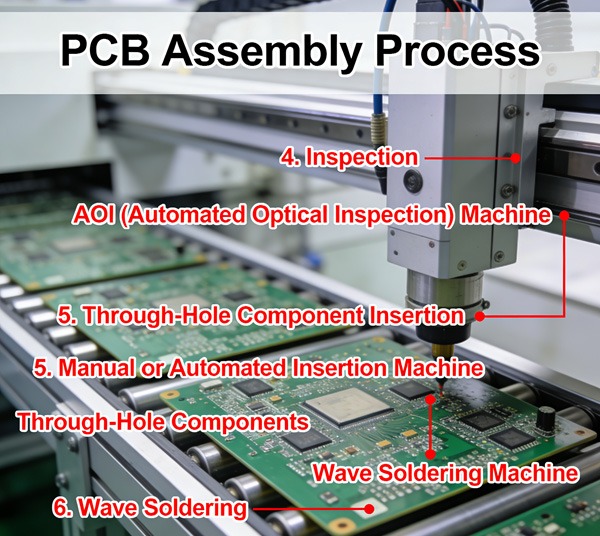
Montagem do furo passante
O que é a montagem de orifícios de passagem?
A montagem através de orifícios insere componentes com fios em orifícios perfurados e soldados utilizando:
- Soldadura por onda (soldadura em massa)
- Soldadura manual (para protótipos ou placas de baixo volume)
O furo passante ainda é amplamente utilizado para:
- Resistência mecânica
- Componentes de alta potência
- Conectores e embalagens grandes
Fluxo de trabalho de montagem de furos passantes
- Preenchimento de furos / Inserção de componentes - Introduzir os cabos dos componentes nos orifícios revestidos
- Soldadura - A soldadura por onda ou selectiva fixa os componentes
- Inspeção - Controlo visual ou AOI da qualidade da solda
A qualidade da perfuração e da galvanização é diretamente afetada por Perfuração de PCB vs Perfuração a lasere Explicação do processo de revestimento de cobre.
Desafios do furo passante
- Furos desalinhados ou mal revestidos reduzem a fiabilidade da junta de soldadura
- A montagem manual aumenta o custo da mão de obra e o potencial de erro humano
- Requer mais espaço na placa do que o SMT
TOPFAST combina perfuração e galvanização de precisão com otimização da montagem para maximizar o rendimento do furo.
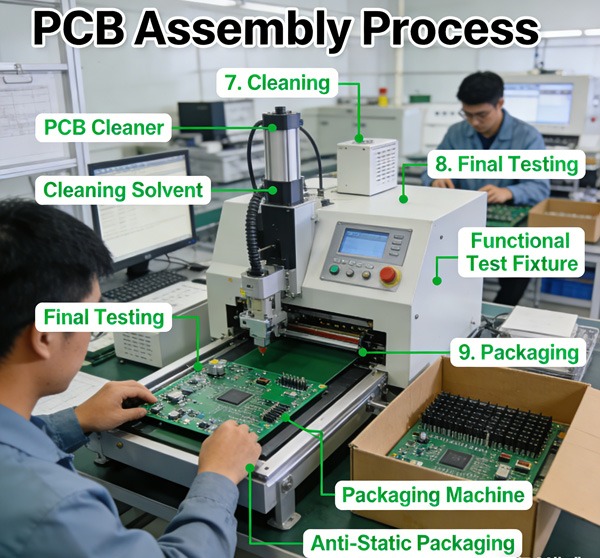
Testes e controlo de qualidade na montagem
Ensaios em circuito (ICT)
Controlos TIC
- Calções
- Abre
- Valores corretos dos componentes
Testes funcionais
Os testes funcionais simulam o funcionamento no mundo real para verificar se a placa funciona como foi projectada.
O teste é o ponto de controlo final que garante que as etapas de fabrico e montagem cumprem as especificações. Ver Explicação do processo de gravura e do controlo do rendimento para saber como a qualidade da fase inicial afecta os resultados dos testes.
Considerações sobre o rendimento da montagem
Rendimento
- Qualidade do fabrico (por exemplo, camadas interiores, perfuração, revestimento)
- Precisão na colocação de componentes
- Parâmetros de soldadura
- Conceção da placa (térmica, espaçamento, tamanho das almofadas)
A montagem de alto rendimento reduz:
- Retrabalho
- Sucata
- Custo global de produção
- Consultar Fabrico de PCB vs Montagem de PCB para saber como as considerações de rendimento abrangem ambos os processos.
Factores de custo na montagem
Principais factores de custo:
- Tipo de componente e embalagem
- Densidade da placa e número de camadas
- Volume de montagem (protótipo vs produção em massa)
- Requisitos de ensaio e inspeção
A otimização da montagem sem sacrificar a qualidade requer alinhamento estreito entre os processos de conceção, fabrico e montagem.
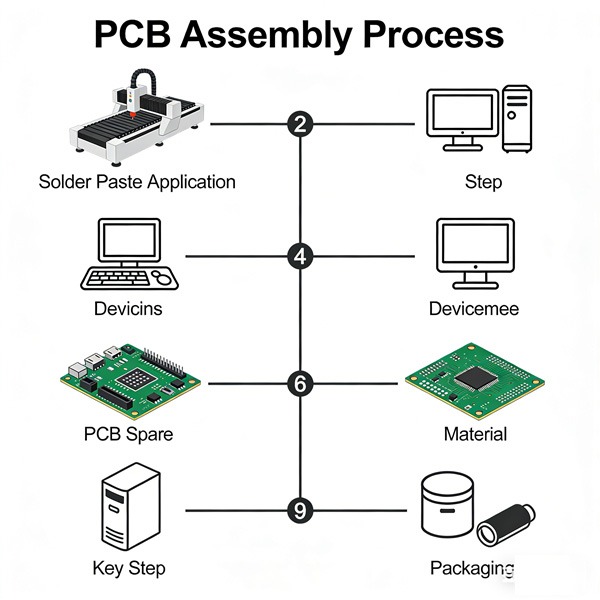
Conclusão
A montagem de PCB converte uma placa nua num produto eletrónico totalmente funcional.
Processos SMT e through-holecombinados com testes robustos, definem a fiabilidade do produto final.
A integração com a qualidade do fabrico é essencial para o conseguir:
- Alto rendimento
- Produção rentável
- Fiabilidade a longo prazo
Perguntas frequentes sobre o processo de montagem de PCB
R: A montagem de PCB envolve a montagem de componentes electrónicos numa PCB fabricada utilizando técnicas SMT ou de passagem, seguida de inspeção e ensaio.
R: O SMT monta os componentes na superfície da placa de circuito impresso, enquanto o orifício de passagem insere os cabos dos componentes em orifícios perfurados e solda-os.
R: Camadas desalinhadas, furos mal feitos ou revestimento inconsistente podem causar defeitos de soldadura e reduzir o rendimento da montagem.
R: A inspeção ótica automatizada (AOI), a inspeção por raios X, os ensaios em circuito (ICT) e os ensaios funcionais são normalmente utilizados.
R: A TOPFAST alinha os processos de fabrico e montagem, aplica inspecções automáticas e manuais e utiliza a otimização orientada para o rendimento para uma produção fiável