Die Unterscheidung zwischen PCB-Fertigung und PCB-Montage ist für Ingenieure, Designer und Beschaffungsteams von entscheidender Bedeutung.
Das Verständnis beider Prozesse hilft dabei:
- Reduzierung von Fertigungsfehlern
- Optimierung von Kosten und Vorlaufzeiten
- Planung für Prüfung und Qualitätskontrolle
In diesem Artikel werden wir die wichtigsten Unterschiede, Herausforderungen und Überlegungen von TOPFASTs Perspektive der professionellen PCB-Herstellung.
Für einen detaillierten Überblick über die gesamte PCB-Herstellungsprozessfinden Sie auf unserer Hub-Seite: PCB-Herstellungsprozess
Inhaltsübersicht
Was ist PCB-Fertigung? (Das Skelett)
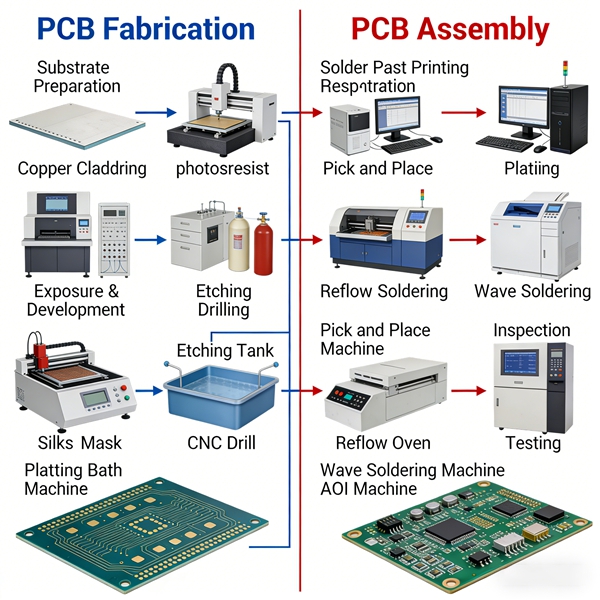
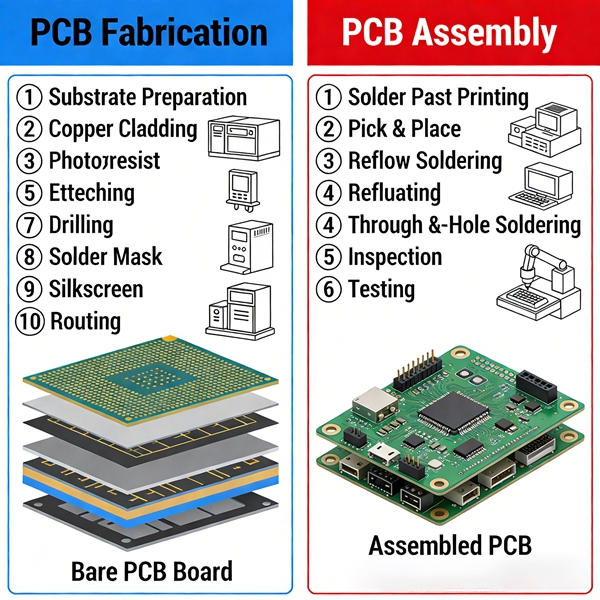
Die Leiterplattenfertigung ist der mechanische Prozess zur Herstellung der nackten Leiterplatte. Er umfasst:
- Auswahl der Materialien: Die Wahl des richtigen Substrats für die Verwaltung Herstellungskosten.
- Laminierung und Ätzung: Herstellung der leitenden Kupferschichten.
- Bohren: Einsatz von mechanischen oder Laserbohrern für HDI-Leiterplattenherstellung.
- Oberfläche: Auftragen von HASL oder ENIG zum Schutz des Kupfers und zur Gewährleistung der Lötbarkeit.
Was ist die PCB-Montage? (Das Nervensystem)
PCB-Montage ist der Prozess des Lötens Elektronische SMD-Bauteile und durchkontaktierte Teile auf der fertigen Leiterplatte.
- SMT-Verarbeitung: Automatisierte Hochgeschwindigkeits-Bestückung von winzigen Bauteilen.
- Reflow- und Wellenlöten: Herstellen von dauerhaften elektrischen Verbindungen.
- Prüfung: Verwendung von Methoden zur Testkondensatoren und die gesamte Schaltungslogik.

Kritische Unterschiede auf einen Blick
| Merkmal | PCB-Fertigung | PCB-Montage (PCBA) |
| Ausgabe | Nackte Platine (keine Komponenten) | Funktionelles elektronisches Gerät |
| Hauptziel | Physikalische Architektur und Konnektivität | Elektrische Funktionalität und Leistung |
| Wichtigste Materialien | Kupfer, FR-4, Lötstoppmaske | SMD-KomponentenLötpaste |
| Schlüsselkontrolle | DFM (Design für die Fertigung) | DFA (Design for Assembly) |
Der reibungslose Übergang von der Fertigung zur Montage
- Vereinheitlichte DFM/DFA-Überprüfung
Stellen Sie sicher, dass Ihr PCB-Design-Entscheidungen sowohl die Grenzen des Kupferätzens als auch die Abstände der Bestückungsmaschinen berücksichtigen.
- Stücklisten-Optimierung
Legen Sie eine vollständige Materialliste (BOM) mit den genauen Teilenummern der Hersteller vor, um Fehlanpassungen der Komponenten zu vermeiden.
- Koordinieren Sie den Stack-up
Passend zu deinem PCB Stack-Up Design mit den thermischen Anforderungen des Reflow-Lötofens.
- Panelisierungsstrategie
Verwenden Sie Plattengrößen, die den Materialverbrauch in der Fertigung maximieren und gleichzeitig mit SMT-Förderern kompatibel sind.
- Rückverfolgbarkeit der Qualität
Implementierung von Seriennummern auf der nackten Platine während der Herstellung zur Verfolgung der PCBA-Verarbeitung Geschichte.
PCB-Fertigung vs. PCB-Montage FAQ
A: Unbedingt. ENIG wird bevorzugt für Fine-Pitch SMD-Komponenten, während HASL eine kostengünstige Wahl für größere, weniger komplexe Konstruktionen ist.
A: Falsch ausgerichtete Schichten, schlechte Bohrungen oder Probleme mit der Beschichtung können zu Lötfehlern, Bauteilverschiebungen und thermischen Spannungen während der Montage führen.
A: Ja, aber die Nutzung eines schlüsselfertigen Anbieters wie Topfast reduziert Kommunikationsfehler und beschleunigt den gesamten Prozess. Produktionsbudget Verwaltung.
A: Ein Design mit den richtigen Abständen, Pad-Größen und einer ausgewogenen Kupferverteilung gewährleistet die Herstellbarkeit und reduziert den Ertragsverlust sowohl bei der Herstellung als auch bei der Montage.
A: TOPFAST wendet ein Perspektive für die FertigungKontrolle der Prozessqualität, Ausbeute und Zuverlässigkeit von der Herstellung bis zur Endmontage.
A: Falsche Aufstandsflächen. Wenn die Fertigungsunterlage zu klein ist, kann die PCBA-Verarbeitung führt zu schlechten Lötstellen oder "Tombstoning".
A: Wir verwenden AOI-, Röntgen- und Funktionstests. Sie können auch manuell Testkondensatoren während der Debugging-Phase Ihres Prototyps.
A: Im Allgemeinen ist die PCBA aufgrund der Kosten für die Elektronische SMD-Bauteile und die erforderliche spezielle Präzisionsausrüstung.
Schlussfolgerung
Verstehen der Unterscheidung zwischen Fabrikation und Montage ermöglicht eine bessere Projektplanung und Kostenkontrolle. Wir bei Topfast schließen diese Lücke, indem wir nahtlose, hochzuverlässige PCB Montage Dienstleistungen.
Sind Sie bereit, vom Design zur funktionalen Hardware überzugehen? Angebot für Unified PCB & PCBA einholen von Topfast heute.