What happens after a PCB is manufactured?
Once the bare board is ready, it moves to the next critical stage: assembly.
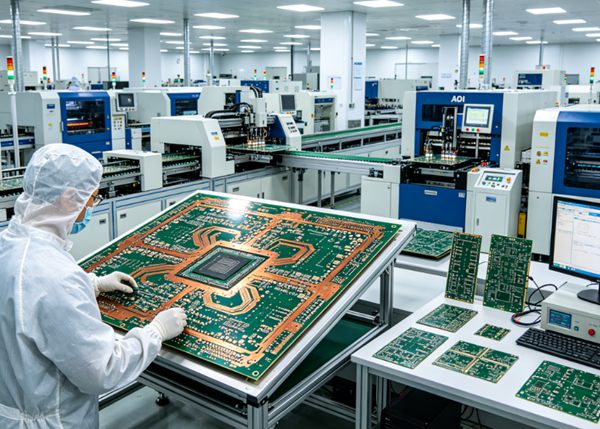
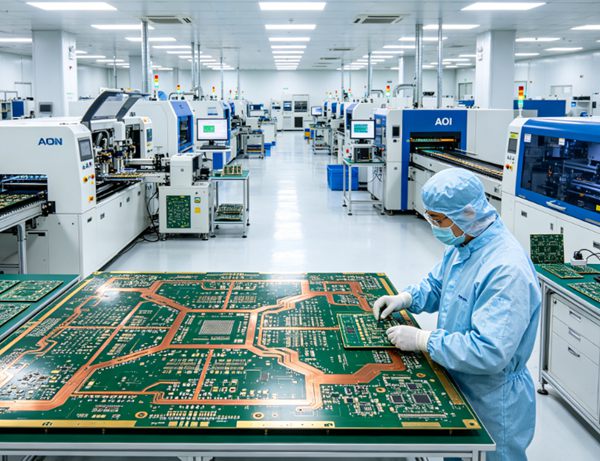
Inside a PCBA factory, Surface Mount Technology (SMT) is used to place and solder components onto the PCB with high precision and efficiency.
Understanding this process helps you:
- Evaluate PCBA suppliers
- improve product reliability
- reduce assembly-related defects
If you’re comparing manufacturing stages: PCB Factory vs PCBA Factory

Table of Contents
What Is SMT Assembly?
SMT (Surface Mount Technology) is a method of mounting electronic components directly onto the surface of a PCB.
Why SMT is widely used
- supports high-density designs
- enables automated production
- improves performance and reliability
Step-by-Step SMT Assembly Process
Step 1 — Solder Paste Printing
Solder paste is applied to the PCB pads using a stencil.
Key points
- Precise alignment is critical
- Paste volume affects solder quality
Common issues
- insufficient paste
- misalignment
Step 2 — Component Placement (Pick-and-Place)
Automated machines place components onto the PCB.
Features
- high-speed placement
- high accuracy
- supports thousands of components
Why it matters
Placement accuracy directly impacts assembly quality.
Step 3 — Reflow Soldering
The PCB passes through a reflow oven.
Process
- solder paste melts
- components are bonded to pads
Key control factors
- temperature profile
- heating zones
- cooling rate
Improper control may cause:
- cold solder joints
- component damage
Step 4 — AOI Inspection (Automated Optical Inspection)
After soldering, the board is inspected automatically.
Detects
- missing components
- misalignment
- solder defects
Inspection improves yield and reduces defects.
Step 5 — Manual Inspection and Rework
Technicians review boards and fix issues if needed.
Importance
- ensures quality before next steps
- catches defects machines may miss
Step 6 — Functional Testing
The assembled PCB is tested to ensure functionality.
Tests may include
- electrical testing
- signal verification
- functional simulation
Step 7 — Final Inspection and Packaging
Boards are inspected again before shipment.
Includes
- visual inspection
- packaging protection
Key Factors That Affect SMT Quality
1. Solder Paste Quality
Poor paste leads to weak solder joints.
2. Machine Accuracy
Placement precision is critical for small components.
3. Temperature Control
Reflow profile must match component requirements.
4. PCB Design
Design affects assembly success.
DFM reference: PCB Design for Manufacturing Guidelines
SMT vs Through-Hole Assembly
| Feature | SMT | Through-Hole |
|---|---|---|
| Density | High | Low |
| Automation | High | Moderate |
| Cost | Lower (volume) | Higher |
| Reliability | High | High (mechanical strength) |
Most modern designs use SMT, sometimes combined with through-hole.
How PCBA Factories Ensure Quality
Professional PCBA factories use:
- automated inspection systems
- process control
- trained technicians
Quality reference: PCB Quality and Reliability Guide
Common SMT Assembly Issues
Tombstoning
Component lifts during soldering.
Solder Bridging
Short circuits caused by excess solder.
Misalignment
Incorrect component placement.
Cold Solder Joints
Weak electrical connections.
How to Evaluate a PCBA Factory
Before choosing a partner, check:
- SMT line capability
- inspection systems (AOI, X-ray)
- engineering support
- experience with similar projects
Real-World Manufacturing Perspective
A reliable PCBA factory focuses not only on speed but also on consistency and process control.
At manufacturers such as TOPFAST, SMT assembly involves coordinated process control, inspection systems, and engineering support to ensure stable and repeatable production quality.
Conclusion
SMT assembly is a complex, high-precision process that plays a critical role in modern electronics manufacturing.
Understanding how SMT works helps engineers and buyers make better decisions, reduce risks, and ensure high-quality PCB assembly.
Choosing a capable PCBA factory ensures consistent results and reliable product performance.
FAQ
A: SMT is a method of mounting components directly onto the surface of a PCB.
A: It includes solder paste printing, component placement, reflow soldering, inspection, and testing.
A: It enables high-density, automated, and reliable PCB assembly.
A: SMT mounts components on the surface, while DIP uses through-hole insertion.
A: Common causes include poor solder paste, incorrect temperature, and misalignment.