How long does it take to manufacture a PCB?
This is one of the most common questions in electronics manufacturing—and one of the most important.
PCB lead time directly affects:
- product development schedules
- time-to-market
- supply chain planning
However, lead time is not a fixed number. It depends on multiple factors, including design complexity, materials, and production volume.
If you’re comparing production stages: PCB Prototype vs Production: Key Differences
Table of Contents
Typical PCB Lead Times
Prototype PCB Lead Time
- simple boards: 24–72 hours
- standard multilayer: 3–5 days
- complex boards (HDI): 5–7 days
Why prototypes are faster
- priority processing
- simplified production flow
- lower volume
Mass Production Lead Time
- standard production: 7–15 days
- complex PCBs: 2–4 weeks
- high-volume production: varies by order size
Why does production take longer
- process optimization
- batch scheduling
- quality control requirements
Key Factors That Affect PCB Lead Time
1. PCB Complexity
More complex designs require more processing steps.
Examples
- multilayer stackups
- HDI structures
- fine trace spacing
More processes = longer lead time.
2. Material Availability
Materials can significantly impact delivery time.
Common issues
- special laminates (Rogers, etc.)
- supply chain delays
- limited stock
3. Layer Count
Higher layer count increases:
- lamination cycles
- alignment complexity
This directly extends manufacturing time.
4. Drilling and Via Technology
Advanced via structures require additional processing.
Examples
- microvias (laser drilling)
- blind/buried vias
More details: PCB Drilling vs Laser Drilling
5. Surface Finish
Different finishes require different processing times.
- HASL → faster
- ENIG → slower but more precise
6. Order Quantity
Larger quantities require:
- more production cycles
- additional inspection
7. Engineering Review (DFM)
Before production begins, designs are reviewed.
DFM process: PCB Design for Manufacturing Guidelines
Impact
- good DFM → faster production
- design issues → delays
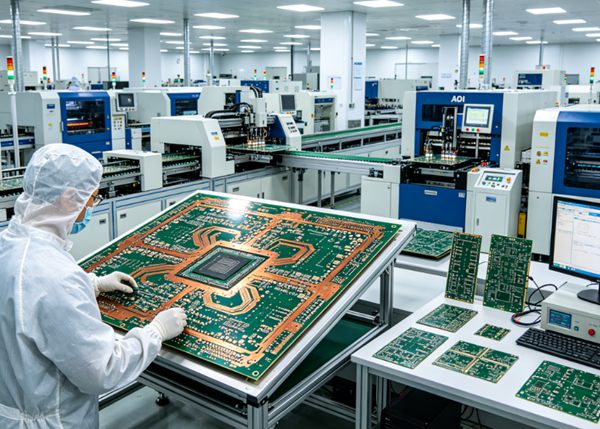
Prototype vs Production Lead Time Comparison
| Factor | Prototype | Production |
|---|---|---|
| Speed | Fast | Moderate |
| Quantity | Low | High |
| Process Optimization | Low | High |
| Flexibility | High | Low |
| Cost | High per unit | Low per unit |
How to Reduce PCB Lead Time
- 1. Simplify Your Design
Avoid unnecessary complexity:
. reduce layer count
. Use standard materials - 2. Use Standard Materials
Stock materials reduce waiting time.
- 3. Optimize Your PCB Design
DFM-compliant designs reduce rework.
- 4. Choose the Right PCB Factory
A capable factory offers:
. stable production scheduling
. efficient workflows
. faster turnaround
If you’re evaluating suppliers: How to Choose a PCB Factory - 5. Plan Ahead
Avoid last-minute changes that delay production.
Fast PCB Manufacturing: When Is It Possible?
Fast turnaround services are available for urgent projects.
Typical scenarios
- prototypes
- simple PCB designs
- standard materials
Limitations
- Complex boards cannot always be rushed
- quality must not be compromised
Common Causes of PCB Delays
Design issues
DFM violations require redesign.
Material shortages
Special materials may have long lead times.
Communication delays
Incomplete data slows down processing.
Production bottlenecks
High factory load may affect scheduling.
How PCB Factories Manage Lead Time
Professional PCB factories use:
- production planning systems
- process optimization
- priority scheduling
At PCB manufacturers such as TOPFAST, lead time is managed through coordinated engineering review, efficient process control, and optimized production workflows to ensure timely delivery.
Conclusion
PCB lead time depends on multiple factors, including design complexity, materials, and production volume.
While prototypes can be produced quickly, mass production requires more time due to process optimization and quality control.
By understanding these factors and planning, engineers and buyers can reduce delays and ensure efficient PCB manufacturing.
FAQ
A: Prototype PCBs can take 1–5 days, while production typically takes 1–3 weeks, depending on complexity.
A: Design complexity, material availability, and order quantity are the main factors.
A: Yes, by simplifying design, using standard materials, and choosing a capable manufacturer.
A: Yes, for simple designs. Complex boards may still require standard processing time.