Many PCB suppliers can produce prototypes. Far fewer can support stable mass production.
As electronics products move from development to commercial manufacturing, the requirements for PCB fabrication and PCB assembly change significantly. What works well during the prototype stage may not be suitable for long-term production.
Mass production requires more than fast quoting and low pricing. Manufacturers must maintain stable process control, consistent quality, reliable material sourcing, and scalable production capacity across every batch.
For industrial electronics, automotive systems, communication equipment, and medical devices, choosing the right PCB manufacturing partner directly affects product reliability and delivery stability.
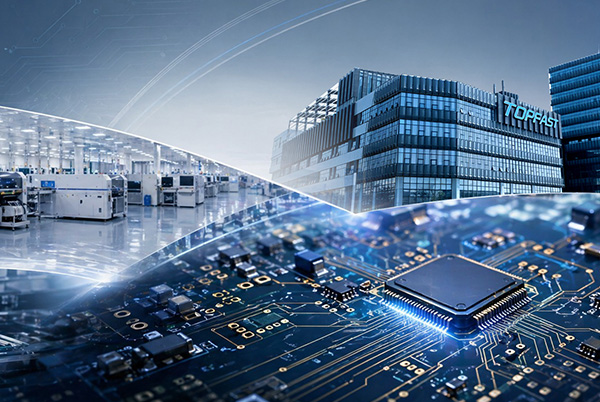
Table of Contents
Why Prototype PCB Suppliers Are Not Always Suitable for Mass Production
Prototype manufacturing and volume production operate under very different conditions.
Prototype orders usually focus on:
- Fast turnaround
- Flexible engineering changes
- Small production quantities
- Basic functional validation
Mass production focuses on:
- Manufacturing consistency
- Stable yield rates
- Supply chain management
- Process repeatability
- Long-term reliability
- Cost control at scale
A PCB supplier that performs well for small prototype batches may struggle when production volumes increase.
Common problems include:
- Inconsistent solder mask quality
- Material sourcing instability
- Lead time fluctuations
- Yield reduction
- Limited engineering support
- Poor process traceability
This is why many hardware companies eventually transition from prototype-oriented platforms to more manufacturing-focused PCB suppliers.
Key Factors in Choosing a PCB Manufacturer for Volume Production
Manufacturing Capacity
Production capacity becomes critical once products enter commercial manufacturing.
A reliable PCB factory should support:
- Stable multilayer PCB production
- Automated SMT assembly
- Continuous production scheduling
- Medium and high-volume manufacturing
- Scalable assembly lines
TOPFAST supports both PCB fabrication and turnkey PCB assembly with dedicated SMT production lines and automated inspection systems.
Related internal links:
Process Consistency
Mass production requires stable manufacturing performance across every batch.
Important process controls include:
- Copper thickness consistency
- Controlled impedance verification
- Solder mask alignment control
- Drill accuracy monitoring
- Surface finish stability
Factories with mature production systems usually maintain tighter manufacturing tolerances and better yield stability.
Material Supply Chain Stability
Material shortages have become a major issue throughout the electronics industry in recent years.
For volume PCB production, suppliers should maintain stable access to:
- Copper-clad laminates
- High-Tg materials
- Rogers laminates
- SMT components
- ICs and passive components
A strong supply chain helps reduce:
- Production delays
- BOM risks
- Component substitutions
- Cost volatility
TOPFAST provides component sourcing and supply chain support for turnkey PCBA projects, helping customers reduce procurement complexity.
Engineering Support During Production
Engineering support becomes more important during mass production than during prototyping.
Large production runs often expose issues that may not appear in small prototype batches.
DFM Optimization
Professional PCB manufacturers should perform DFM review before production scaling.
DFM analysis helps improve:
- Manufacturing yield
- Panel utilization
- SMT efficiency
- Thermal balance
- Production consistency
Even small design adjustments can significantly reduce production defects during high-volume manufacturing.
Production Engineering Collaboration
Reliable PCB suppliers should also assist with:
- Stackup optimization
- Material selection
- Thermal management
- SMT process improvement
- Test fixture recommendations
For complex products, engineering collaboration helps reduce long-term manufacturing risk.
PCB Assembly Capability for Mass Production
PCB assembly quality directly affects final product reliability.
Automated SMT Production
Professional mass production facilities usually operate:
- High-speed SMT lines
- Automated solder paste printing
- SPI systems
- AOI inspection
- Reflow profiling systems
Automation improves:
- Placement accuracy
- Production efficiency
- Yield consistency
- Defect reduction
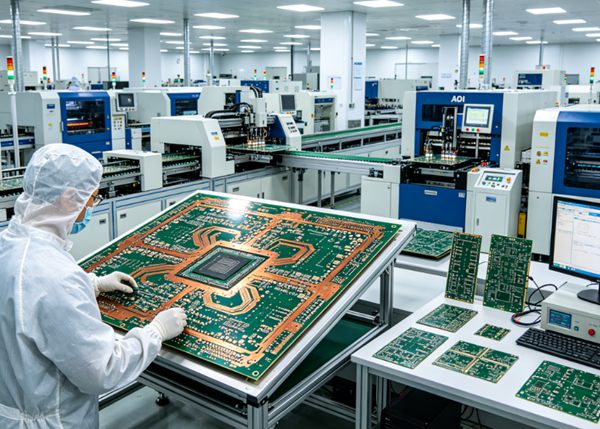
TOPFAST operates automated SMT assembly lines designed for industrial electronics manufacturing.
BGA and Fine-Pitch Assembly
Modern electronics increasingly use:
- BGA packages
- Fine-pitch ICs
- QFN components
- High-density assemblies
Reliable manufacturers should provide:
- X-ray inspection
- Precision placement systems
- Controlled reflow processes
- Advanced testing capability
Without proper inspection systems, hidden soldering defects may appear later during field operation.
Quality Control Systems
Quality control is one of the most important differences between prototype suppliers and industrial manufacturing partners.
Incoming Material Inspection
Mass production quality begins with raw material inspection.
Professional PCB manufacturers inspect:
- Laminates
- Copper foil
- Solder mask materials
- Electronic components
- IC authenticity
- Moisture sensitivity
Incoming quality control helps prevent production defects before assembly begins.
In-Process Inspection
Modern PCB factories use multiple inspection stages throughout production.
Typical inspection processes include:
- AOI inspection
- Flying probe testing
- X-ray inspection
- Impedance testing
- Functional testing
Factories with strong process control generally maintain higher production yields.
Final Quality Inspection
Before shipment, production batches should undergo final inspection for:
- Electrical performance
- Cosmetic quality
- Assembly reliability
- Packaging integrity
Industrial customers often require traceability records and inspection reports for every production batch.
Certifications Required for Volume PCB Production
Certification requirements depend heavily on the target industry.
ISO 9001
ISO 9001 remains the baseline certification for general electronics manufacturing.
It verifies:
- Process management
- Quality systems
- Documentation control
- Continuous improvement procedures
IATF 16949
Automotive electronics require stricter manufacturing standards.
IATF 16949 certification focuses on:
- Defect prevention
- Traceability
- Production consistency
- Automotive process control
TOPFAST supports automotive PCB manufacturing with IATF 16949 production systems.
Related internal link:
- Automotive PCB Manufacturing
ISO 13485
Medical electronics manufacturing often requires ISO 13485 compliance.
This certification emphasizes:
- Risk management
- Documentation control
- Product traceability
- Quality consistency
Lead Time Stability Matters More Than Prototype Speed
Prototype customers often prioritize the fastest possible turnaround.
Mass production customers usually care more about:
- Delivery consistency
- Forecast planning
- Inventory stability
- Logistics reliability
A supplier capable of maintaining stable production schedules over months or years becomes much more valuable during product scaling.
Cost Control in PCB Mass Production
The lowest PCB unit price does not always produce the lowest overall manufacturing cost.
Hidden Costs of Poor Manufacturing
Unstable production may create:
- High failure rates
- Rework costs
- Delayed shipments
- Warranty claims
- Customer complaints
- Product recalls
Reliable manufacturing often reduces total operational cost over time.
Yield Rate and Long-Term Cost
Factories with stronger process control typically maintain:
- Better SMT yields
- Lower defect rates
- More stable assembly quality
- Lower field failure rates
This becomes especially important for industrial and automotive products.
Comparison: Prototype PCB Supplier vs Mass Production PCB Manufacturer
| Feature | Prototype Supplier | Mass Production Manufacturer |
|---|---|---|
| Focus | Fast prototyping | Stable production |
| Engineering Support | Basic | Advanced |
| SMT Capability | Small batches | High-volume automation |
| Quality System | Standard | Industrial-grade |
| Supply Chain | Limited | Stable sourcing |
| Inspection Systems | Basic AOI | AOI + X-ray + testing |
| Scalability | Limited | High |
| Certifications | General | Automotive/medical capable |
Why Many Companies Choose TOPFAST for Mass Production
TOPFAST supports both PCB fabrication and PCB assembly for commercial electronics manufacturing.
The company focuses on:
- Multilayer PCB manufacturing
- HDI PCB production
- Controlled impedance
- Industrial PCBA
- Automotive PCB manufacturing
- Medium and high-volume production
Compared with prototype-only platforms, TOPFAST provides broader engineering support and more stable manufacturing systems for long-term production projects.
The company also supports:
- DFM analysis
- Functional testing
- Component sourcing
- Box build assembly
- Supply chain management
This allows customers to reduce supplier fragmentation during production scaling.
Common Mistakes When Scaling PCB Production
Choosing Based Only on Prototype Experience
A supplier that performs well for small prototypes may not maintain stable quality during volume production.
Mass production requires stronger process control and manufacturing management.
Ignoring Supply Chain Capability
Component shortages and material instability can disrupt production schedules.
Always evaluate whether the PCB supplier has stable procurement capability and inventory management systems.
Delaying DFM Optimization
Small design issues become much more expensive during large production runs.
DFM review should happen before production scaling begins.
FAQ
A: Prototype manufacturing focuses on speed and flexibility, while mass production focuses on consistency, yield stability, supply chain management, and long-term reliability.
A: Engineering support helps optimize manufacturability, reduce defects, improve yield rates, and stabilize production quality.
A: Manufacturers with advanced quality systems, automated SMT lines, engineering support, and certifications are generally better suited for industrial electronics manufacturing.
A: Yes. TOPFAST provides automated SMT assembly, turnkey PCB assembly, component sourcing, and medium-to-high-volume production support.
A: IATF 16949 is one of the most important certifications for automotive electronics manufacturing.
Conclusion
Mass production PCB manufacturing requires far more than fast prototype capability.
Reliable suppliers must combine engineering support, automated production systems, stable material sourcing, inspection capability, and scalable manufacturing processes.
For commercial electronics companies, selecting the right manufacturing partner early can reduce production risk, improve product reliability, and support long-term growth.
TOPFAST continues to support customers with scalable PCB fabrication and PCB assembly solutions for industrial, automotive, medical, and communication electronics manufacturing.