Fast PCB delivery has become a standard requirement in many industries. Hardware startups, industrial equipment companies, automotive developers, and electronics design teams often need prototypes or production boards within very tight schedules.
However, quick turnaround only works when manufacturing quality remains stable. Delays caused by engineering errors, poor communication, or failed inspections usually take longer than the original lead time.
Finding a PCB manufacturer that can consistently deliver both speed and reliability requires more than checking advertised turnaround times.

Table of Contents
Why Quick Turnaround Matters in PCB Manufacturing
Shorter product development cycles have increased demand for rapid PCB fabrication and assembly.
Quick-turn manufacturing is commonly used for:
- Prototype verification
- EVT and DVT stages
- Engineering testing
- Small-batch production
- Urgent replacement boards
- Market validation projects
In many cases, reducing PCB lead time helps shorten the entire product development schedule.
For complex multilayer designs, fast engineering review is especially important during stackup confirmation and impedance control planning. Related service: Multilayer PCB Manufacturing
Evaluate the Manufacturer’s Engineering Capability First
Fast production is difficult without strong engineering support.
Before placing an order, check whether the supplier can quickly review:
- Gerber files
- Stackup structures
- Drill files
- Impedance requirements
- DFM issues
- Material selection
Experienced PCB engineers should identify potential manufacturing risks before production starts.
A reliable supplier usually provides engineering feedback within a few hours for standard projects.
If communication is slow during quotation, production support may also become slow later.
Check Real Production Capacity
Some suppliers advertise fast turnaround but outsource production to multiple factories.
This often creates:
- Inconsistent quality
- Longer communication cycles
- Delivery uncertainty
- Process variation
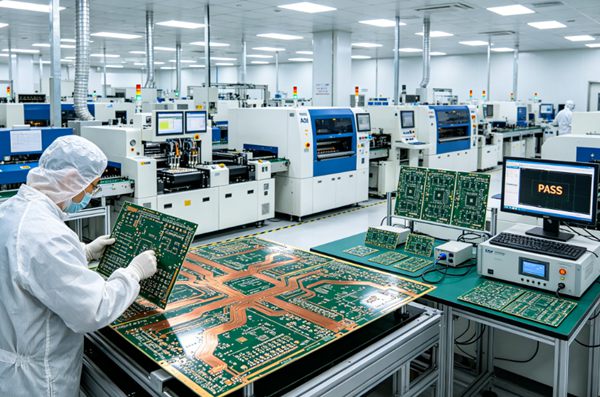
It is usually better to work with manufacturers that operate their own PCB fabrication and SMT production lines.
Important areas to evaluate include:
- Daily production capacity
- Number of SMT lines
- HDI capability
- Multilayer processing
- In-house testing equipment
- Assembly capability
You can also review: SMT Assembly Services
Look for Complete In-House Processes
Manufacturers with integrated production systems generally respond faster to urgent projects.
In-house capabilities may include:
- PCB fabrication
- SMT assembly
- DIP assembly
- X-ray inspection
- AOI inspection
- Electrical testing
- Functional testing
Factories that rely heavily on external subcontractors may struggle with schedule control.
For turnkey projects, integrated production usually reduces overall lead time and simplifies communication.
Related service: Turnkey PCB Assembly
Verify Quick-Turn Lead Time Categories
Professional PCB manufacturers normally separate turnaround capability into several categories.
Standard PCB Orders
Typical lead times:
- 2-layer PCB: 24–48 hours
- 4-layer PCB: 48–72 hours
- Multilayer PCB: 4–7 days
PCB Assembly Orders
Lead time depends on:
- Component availability
- SMT complexity
- BGA requirements
- Testing requirements
- Quantity
Quick-turn PCBA projects may still require several days if components are difficult to source.
HDI and Advanced PCB Projects
HDI boards, blind vias, buried vias, and high-frequency materials usually require additional process time.
Reliable suppliers should clearly explain realistic schedules instead of promising impossible delivery dates.
Quality Control Is More Important During Fast Production
Fast delivery should never bypass inspection procedures.
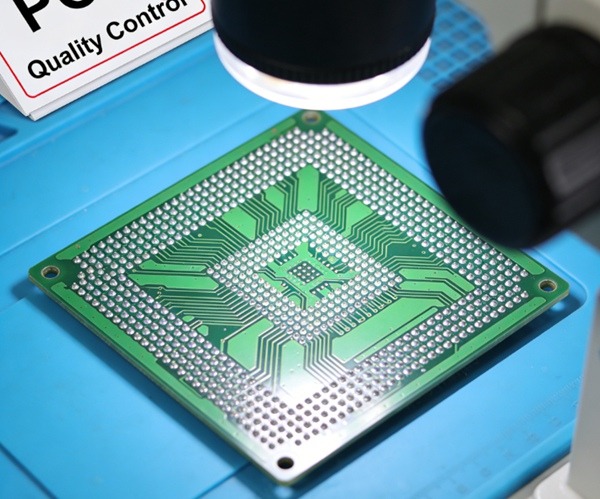
Reliable, quick-turn PCB manufacturers still maintain:
- AOI inspection
- Electrical testing
- X-ray verification
- Impedance testing
- Incoming material inspection
- Final quality control
Without proper inspection, urgent orders may create expensive assembly failures later.
Learn more about quality evaluation here: Reliable PCB Manufacturer Quality Standards
Review Material Inventory and Supply Chain Stability
Material shortages are one of the most common causes of PCB delays.
Factories with stable supply chains usually maintain inventory for common materials such as:
- FR4 laminates
- Standard copper weights
- Solder mask colors
- Surface finish chemicals
For PCB assembly projects, component sourcing capability also becomes important.
A supplier with strong purchasing channels can often reduce delays caused by component shortages.
Communication Speed Often Predicts Delivery Speed
Engineering communication is one of the easiest ways to evaluate a PCB supplier.
Professional manufacturers usually respond quickly to:
- Technical questions
- Stackup discussions
- DFM suggestions
- Quotation requests
- Production updates
Slow or unclear communication before production often leads to scheduling problems later.
Reliable PCB manufacturers typically assign both sales support and engineering contacts during the project.
Certifications Still Matter for Quick-Turn PCB Orders
Fast delivery should not come at the expense of manufacturing standards.
Important certifications include:
- IPC standards
- ISO 9001
- UL certification
- RoHS compliance
- IATF 16949 for automotive projects
Factories with mature quality systems are usually better prepared to manage urgent production schedules without sacrificing consistency.
Compare More Than Pricing
Low pricing sometimes hides limitations, such as:
- No electrical testing
- Outsourced assembly
- Low-grade materials
- Limited engineering support
- Weak inspection procedures
When evaluating suppliers, compare:
| Evaluation Area | What to Check |
|---|---|
| Engineering response | Speed and technical accuracy |
| Production capability | In-house fabrication and SMT |
| Inspection systems | AOI, X-ray, electrical testing |
| Delivery history | Stable lead time performance |
| Material sourcing | Inventory stability |
| Certifications | IPC, ISO, UL, RoHS |
A slightly higher manufacturing cost may significantly reduce overall project risk.
Questions to Ask Before Placing an Order
Before choosing a quick-turn PCB manufacturer, many engineers ask:
- What is the standard lead time for multilayer boards?
- Is electrical testing included?
- Can you support controlled impedance?
- Are SMT and PCB fabrication handled in-house?
- What materials are stocked locally?
- How are urgent orders prioritized?
- Can engineering questions be answered directly?
The answers often reveal whether the supplier has real fast-turn manufacturing capability.
Conclusion
Finding a PCB manufacturer with quick turnaround requires balancing speed, engineering support, and manufacturing quality.
Reliable suppliers usually combine:
- Strong engineering review
- Stable production systems
- In-house inspection capability
- Fast communication
- Controlled supply chains
- Consistent quality standards
For prototype and low-volume projects, choosing a manufacturer with mature quick-turn processes can reduce development delays and improve overall production efficiency.
FAQ
A: Quick-turn PCB manufacturing usually refers to prototype or small-batch PCB production completed within 24 hours to several days, depending on board complexity.
A: Yes, but lead time depends on layer count, material type, impedance requirements, and via structures.
A: Some suppliers outsource production or skip inspection procedures to reduce lead time. This may increase quality risks later.A:
A: In many cases, yes. Expedited production, urgent material sourcing, and priority scheduling usually increase manufacturing cost.
A: Common evaluation factors include engineering response speed, inspection capability, manufacturing certifications, communication quality, and real production capacity.