Consumer electronics is one of the fastest-moving sectors in the PCB industry.
Products such as:
- smart devices
- IoT equipment
- wearable electronics
- home electronics
- communication gadgets
require PCB manufacturing that combines:
- fast production
- stable quality
- cost efficiency
- scalable capacity
Unlike automotive or medical applications, consumer electronics projects often prioritize rapid product cycles and large production volumes.
Choosing the right PCB factory is essential for maintaining product competitiveness and a stable supply.
If you’re evaluating factory capability: PCB Factory Capabilities Explained
Table of Contents
Why Consumer Electronics PCB Manufacturing Is Different
Consumer electronics manufacturing focuses heavily on production efficiency and scalability.
Main characteristics
- short product lifecycle
- high-volume production
- strong cost pressure
- rapid design updates
PCB factories serving this market must balance speed, quality, and manufacturing cost.
Key Requirements for a Consumer Electronics PCB Factory
High-Volume Manufacturing Capability
Consumer electronics often require mass production.
Important factors
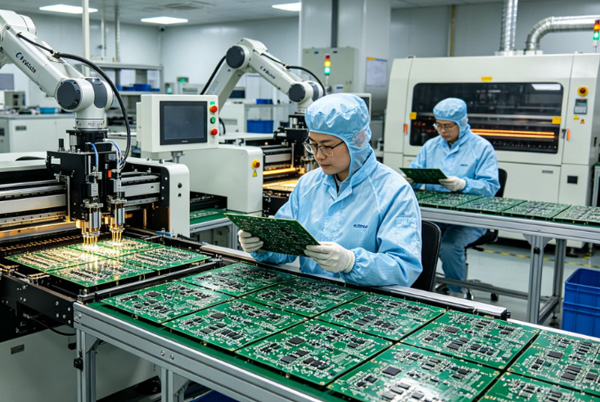
- automated production lines
- production scalability
- capacity stability
Factories without stable capacity may struggle during large-volume production.
Fast Turnaround Capability
Speed is critical in consumer electronics.
Why fast production matters
- faster product launch
- shorter development cycle
- rapid market response
Manufacturers must support both prototype and volume production efficiently.
Lead time reference: PCB Lead Time Explained
Cost Optimization Capability
Cost control is extremely important in consumer electronics manufacturing.
Common optimization methods
- panelization optimization
- yield improvement
- process automation
Efficient factories help reduce overall manufacturing costs.
Pricing guide: PCB Pricing Explained
Stable SMT Assembly Capability
Most consumer electronics rely heavily on SMT assembly.
Key requirements
- high-speed pick-and-place
- fine-pitch assembly
- stable reflow process
SMT consistency directly affects product yield.
Assembly process: Inside a PCBA Factory: SMT Assembly Process Explained
Consistent Quality Control
Although consumer electronics focus on cost, quality consistency is still essential.
Important inspection systems
- AOI inspection
- electrical testing
- solder joint verification
Stable quality reduces field returns and warranty risk.
Supply Chain Management
Component availability directly impacts production schedules.
Important factors
- component sourcing capability
- inventory management
- supplier coordination
Strong supply chain management improves delivery reliability.
Engineering and DFM Support
Consumer electronics often involve compact and complex PCB layouts.
Engineering support includes
- DFM analysis
- panelization optimization
- assembly review
DFM guide: PCB Design for Manufacturing Guidelines
Typical Consumer Electronics PCB Applications
Consumer electronics PCBs are commonly used in:
- smartphones
- wearable devices
- smart home systems
- IoT products
- audio equipment
- wireless communication devices
These products often require compact layouts and efficient mass production.
Common Risks in Consumer Electronics PCB Manufacturing
Production bottlenecks
Can delay product launch schedules.
Inconsistent SMT quality
May increase field failure rates.
Poor yield management
Can increase manufacturing cost.
Weak supply chain coordination
May create component shortages and delivery delays.
How to Evaluate a Consumer Electronics PCB Factory
- Step 1 — Verify production capacity
Review:
. SMT line quantity
. daily output capability
. automation level - Q: Step 2 — Evaluate turnaround capability
A: Fast prototype and production support are critical.
- Step 3 — Review quality systems
Ask about:
. AOI inspection
. process monitoring
. yield control
Quality reference: How PCB Factories Control Quality - Step 4 — Assess cost optimization capability
Efficient production processes reduce long-term cost.
- Step 5 — Review engineering support
Fast product cycles require strong engineering collaboration.
Why Manufacturing Efficiency Matters in Consumer Electronics
Consumer electronics markets move quickly.
A PCB factory with:
- slow response
- unstable capacity
- weak process management
can delay product launch and reduce market competitiveness.
Because of this, consumer electronics manufacturers often prioritize operational efficiency and scalable production capability.
Real Manufacturing Perspective
Consumer electronics PCB manufacturing requires fast production cycles, stable SMT assembly capability, and efficient process management.
At manufacturers such as TOPFAST, consumer electronics PCB projects are supported through automated production workflows, engineering review, SMT process control, and supply chain coordination to help maintain stable quality and efficient production performance.
Conclusion
Consumer electronics PCB manufacturing requires a balance between cost efficiency, production speed, and manufacturing consistency.
Choosing a PCB factory with strong SMT capability, scalable production capacity, engineering support, and stable quality systems is essential for supporting rapid product development and mass production success.
In consumer electronics manufacturing, operational efficiency and stable quality are both critical for long-term competitiveness.
FAQ
A: Consumer electronics products have short development cycles and fast market demand.
A: SMT assembly is widely used because it supports compact and automated production.
A: Consumer electronics markets are highly competitive and cost-sensitive.
A: AOI inspection and electrical testing are commonly used.
A: No, large-scale production requires sufficient automation and capacity management.