Power and energy electronics place unique demands on PCB manufacturing.
Unlike low-power consumer devices, power systems must handle:
- high current
- elevated temperatures
- continuous operation
- long product lifecycles
These conditions require PCB factories to maintain strong process control, thermal management capability, and stable manufacturing consistency.
Choosing the right PCB factory is critical for ensuring system reliability and operational safety.
If you’re evaluating general factory quality: What Makes a High-Quality PCB Factory
Table of Contents
Why Power & Energy PCBs Are More Demanding
Power electronics generate more heat and electrical stress than standard PCB applications.
Common applications
- renewable energy systems
- industrial power supplies
- battery management systems
- charging infrastructure
- power conversion equipment
Main manufacturing challenges
- thermal dissipation
- high-current handling
- copper reliability
- insulation stability
Because of these requirements, power PCBs often need specialized manufacturing capability.
Key Requirements for a Power & Energy PCB Factory
Heavy Copper Manufacturing Capability
Power applications often require thicker copper layers.
Why heavy copper matters
- supports higher current
- improves thermal performance
- increases reliability
Heavy copper manufacturing requires precise process control.
Thermal Management Capability
Thermal performance is critical in power electronics.
Important factors
- copper thickness
- board structure
- thermal vias
- heat dissipation design
Poor thermal control can reduce product lifespan.
Stable Copper Plating Process
Copper plating quality directly affects conductivity and durability.
Key control points
- plating uniformity
- adhesion strength
- hole wall reliability
Process reference: Copper Plating Process in PCB Manufacturing
Reliable Material Selection
Power applications require durable materials with strong thermal performance.
Common material considerations
- high Tg laminates
- thermal conductivity
- insulation resistance
Material quality impacts long-term stability.
Electrical Reliability Testing
Power PCBs require strict electrical verification.
Common testing methods
- electrical testing
- insulation testing
- impedance verification
Testing reduces operational risk.
Process Consistency for Long-Term Production
Power and energy equipment often remains in service for many years.
Why consistency matters
- stable electrical performance
- replacement compatibility
- long-term reliability
Manufacturing variation may create field failures.
Engineering and DFM Support
Engineering review helps optimize manufacturability and reliability.
Includes
- thermal optimization
- current-carrying analysis
- stackup design
DFM reference: PCB Design for Manufacturing Guidelines
Typical Power & Energy PCB Applications
Power-related PCBs are widely used in:
- solar inverters
- EV charging systems
- industrial power control
- energy storage systems
- UPS systems
Each application has different thermal and electrical requirements.
Common Risks in Power PCB Manufacturing
Poor thermal performance
Can cause overheating and reliability issues.
Inconsistent copper plating
May reduce conductivity and lifespan.
Material instability
Can affect insulation reliability.
Choosing low-cost suppliers without capability verification
Often increases long-term operational risk.
How to Evaluate a Power & Energy PCB Factory
- Step 1 — Verify heavy copper capability
Check support for:
. thick copper layers
. thermal structures
. multilayer power boards - Step 2 — Review thermal management experience
Ask about:
. thermal vias
. heat dissipation optimization
. high-power applications - Step 3 — Evaluate testing systems
Ensure comprehensive electrical testing capability.
- Step 4 — Review engineering support
Power electronics often require close technical collaboration.
- Step 5 — Check long-term production consistency
Stable manufacturing is critical for power systems.
Why Reliability Matters More Than Initial Cost
In power and energy systems, PCB failure can lead to:
- equipment shutdown
- safety risks
- maintenance costs
- operational interruption
Because of this, long-term reliability is usually more important than achieving the lowest initial price.
Real Manufacturing Perspective
Power and energy PCB manufacturing requires stable thermal performance, reliable copper processes, and long-term production consistency.
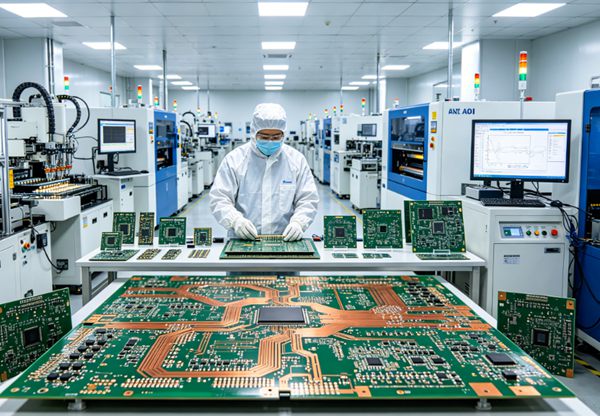
At manufacturers such as TOPFAST, power-related PCB projects are supported through controlled plating processes, engineering review, thermal management considerations, and quality inspection systems to help ensure dependable manufacturing performance.
Conclusion
Power and energy PCB manufacturing requires advanced process control, strong thermal capability, and stable long-term production consistency.
Choosing a PCB factory with heavy copper expertise, reliable quality systems, and engineering support is essential for ensuring operational reliability and long-term system performance.
In power electronics, manufacturing stability and thermal reliability are critical factors for product success.
FAQ
A: Heavy copper supports higher current capacity and improves thermal performance.
A: High Tg and thermally stable materials are commonly used.
A: Poor thermal performance can reduce reliability and shorten product lifespan.
A: Electrical testing, insulation testing, and impedance verification are commonly used.
A: No, heavy copper manufacturing requires specialized process capability.
A: Copper plating affects conductivity, heat dissipation, and long-term reliability.