Industrial control systems operate in demanding environments where stability and long-term reliability are critical.
Unlike consumer electronics, industrial equipment often runs continuously under conditions such as:
- high temperatures
- electrical noise
- vibration
- humidity
Because of these conditions, PCB manufacturing for industrial control applications requires stricter process management and higher production consistency.
Choosing the right PCB factory is essential for reducing downtime and ensuring long-term equipment reliability.
If you’re evaluating supplier quality systems: What Makes a High-Quality PCB Factory
Table of Contents
Why Industrial Control PCBs Require Higher Reliability
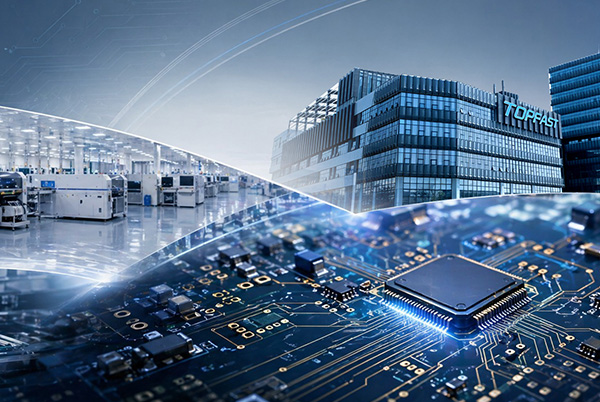
Industrial control systems are expected to operate for many years with minimal failure.
Common industrial environments
- factory automation
- power control systems
- robotics
- industrial communication equipment
Main reliability challenges
- continuous operation
- thermal cycling
- electrical interference
- harsh operating conditions
This means industrial PCBs must prioritize durability and stability over low manufacturing cost.
Key Requirements for an Industrial Control PCB Factory
Strong Process Control
Process stability is the foundation of reliable industrial PCB manufacturing.
Important control areas
- drilling accuracy
- copper plating consistency
- solder mask reliability
- layer alignment
Factories with poor process control often produce inconsistent results.
Related: How PCB Factories Control Quality
Long-Term Production Consistency
Industrial products often remain in production for many years.
Why consistency matters
- replacement compatibility
- stable electrical performance
- Reduced field failures
Manufacturing variation can create reliability issues over time.
Reliable Material Selection
Industrial applications frequently require materials with enhanced durability.
Common material considerations
- high Tg laminates
- thermal stability
- moisture resistance
Material quality directly affects product lifespan.
Comprehensive Inspection Systems
Industrial PCBs require strict inspection procedures.
Common inspection methods
- AOI inspection
- electrical testing
- impedance verification
Inspection reduces the risk of hidden defects.
Engineering and DFM Support
Engineering support is critical for industrial applications.
Typical engineering tasks
- DFM analysis
- stackup optimization
- thermal management review
DFM guide: PCB Design for Manufacturing Guidelines
Traceability and Documentation
Industrial customers often require production traceability.
Includes
- material records
- batch tracking
- inspection documentation
This helps identify and resolve issues efficiently.
Typical Industrial Control PCB Applications
Industrial control PCBs are widely used in:
- PLC systems
- motor control equipment
- industrial power supplies
- automation systems
- industrial IoT devices
Each application may require different manufacturing specifications.
Common Risks in Industrial PCB Manufacturing
Inconsistent production quality
May cause instability in field operation.
Poor thermal performance
Can shorten equipment lifespan.
Insufficient testing
Hidden defects may appear after deployment.
Choosing suppliers based only on price
Often increases long-term maintenance costs.
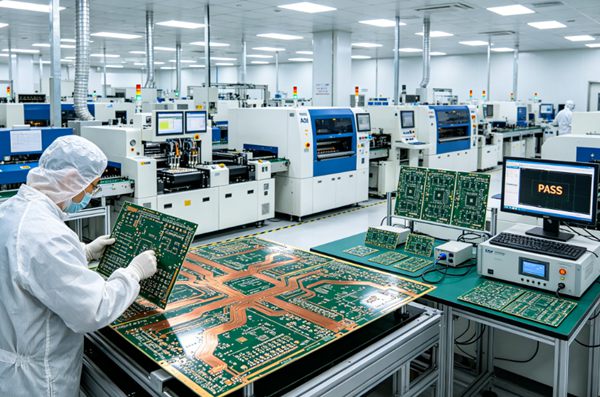
How to Evaluate an Industrial Control PCB Factory
- Step 1 — Review manufacturing capability
Check support for:
. multilayer boards
. heavy copper designs
. controlled impedance
Capability reference: PCB Factory Capabilities Explained - Step 2 — Evaluate quality systems
Ask about:
. AOI systems
. electrical testing
. process monitoring - Step 3 — Verify engineering support
Industrial projects often require close technical collaboration.
- Step 4 — Check production consistency
Long-term stability is critical for industrial applications.
- Step 5 — Review traceability systems
Traceability improves reliability management.
Why Industrial PCB Manufacturing Focuses on Stability
In industrial applications, the cost of failure is often much higher than the manufacturing cost itself.
Potential consequences of PCB failure
- production downtime
- equipment damage
- maintenance cost
- operational interruption
This is why industrial customers prioritize reliable PCB factories over the lowest pricing.
Real Manufacturing Perspective
Industrial PCB manufacturing requires stable processes, reliable materials, and long-term consistency.
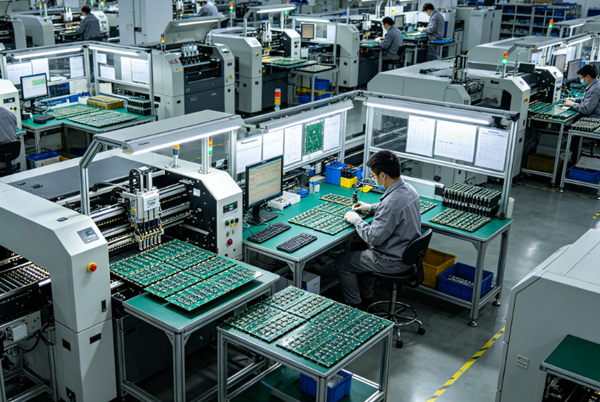
At manufacturers such as TOPFAST, industrial control PCB projects are supported through controlled production workflows, engineering review, inspection systems, and process management to help ensure stable manufacturing performance.
Conclusion
Industrial control PCB manufacturing requires a higher level of reliability, process consistency, and engineering support than standard consumer electronics production.
Choosing a PCB factory with strong quality systems, inspection capabilities, and long-term production stability is essential for reducing operational risks and ensuring dependable performance of industrial equipment.
In industrial control applications, manufacturing stability is one of the most important factors for long-term success.
FAQ
A: Industrial PCBs must operate reliably under harsh conditions and continuous operation.
A: High Tg and thermally stable materials are commonly used for durability and reliability.
A: Consistency ensures stable performance and reduces long-term operational failures.
A: AOI, electrical testing, and impedance verification are commonly used.
A: Not all factories have the process stability and engineering capability required for industrial applications.
A: Traceability helps identify production history and resolve issues efficiently.