PCB manufacturing requirements change significantly between the prototype stage and full-scale production.
A factory optimized for rapid prototyping may not be ideal for large-volume manufacturing, while a mass production factory may not provide the flexibility needed during product development.
Understanding these differences helps engineers and sourcing teams select the right manufacturing partner for each project stage.
If you’re evaluating overall manufacturing capability: PCB Factory Capabilities Explained
Table of Contents
What Is a Prototype PCB Factory?
A prototype PCB factory focuses on:
- small production quantities
- rapid turnaround
- engineering flexibility
- frequent design changes
Prototype manufacturing is commonly used during:
- product development
- engineering validation
- testing phases
The main goal is speed and flexibility rather than maximum manufacturing efficiency.
What Is a Mass Production PCB Factory?
A mass production PCB factory focuses on:
- large production volumes
- process consistency
- cost optimization
- production scalability
Mass production manufacturing prioritizes operational efficiency and stable long-term output.
Key Differences Between Prototype and Mass Production PCB Factories
Production Volume
Prototype factory
- small batches
- engineering samples
- quick-turn production
Mass production factory
- large production runs
- stable output capacity
- automated manufacturing systems
Manufacturing Speed
Prototype factories prioritize fast turnaround.
Typical focus
- expedited engineering review
- rapid setup
- flexible scheduling
Mass production factories prioritize production efficiency and long-term scheduling stability.
Lead time reference: PCB Lead Time Explained
Engineering Flexibility
Prototype projects often involve design changes.
Prototype factory advantages
- fast DFM feedback
- engineering communication
- rapid revision support
Mass production factories generally prefer stable and finalized designs.
DFM guide: PCB Design for Manufacturing Guidelines
Process Optimization
Mass production factories focus heavily on process efficiency.
Important areas
- yield optimization
- automation
- production standardization
Prototype factories prioritize flexibility over maximum efficiency.
Cost Structure
Prototype production usually has a higher per-unit cost.
Why
- small batch size
- frequent setup changes
- engineering involvement
Mass production benefits from economies of scale.
Pricing reference: PCB Pricing Explained
Quality Management Focus
Both factory types require quality control, but the focus differs.
Prototype manufacturing
- engineering validation
- rapid issue detection
- design verification
Mass production manufacturing
- process consistency
- stable yield
- defect reduction
Quality control: How PCB Factories Control Quality
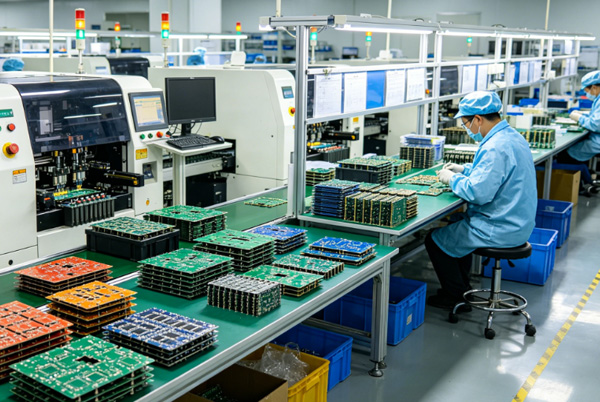
Production Automation
Mass production factories generally use higher levels of automation.
Includes
- automated SMT lines
- conveyorized production
- automated inspection systems
Prototype production often requires more manual flexibility.
When to Choose a Prototype PCB Factory
Prototype PCB factories are suitable for:
- new product development
- engineering testing
- rapid design iteration
- low-volume projects
Flexibility and fast response are usually the top priorities.
When to Choose a Mass Production PCB Factory
Mass production PCB factories are suitable for:
- stable product designs
- large-volume orders
- long-term manufacturing
- cost optimization
Consistency and scalability become more important.
Common Risks When Choosing the Wrong Factory Type
Using a prototype factory for large-scale production
May increase manufacturing cost and reduce scalability.
Using a mass production factory for rapid development
May reduce flexibility and slow engineering iteration.
Poor transition between prototype and production
Can create manufacturability issues during scaling.
How to Evaluate the Right PCB Factory for Your Project
- Step 1 — Define project stage
Determine whether the project is:
. prototype
. pilot production
. mass production - Step 2 — Evaluate manufacturing priorities
Consider:
. speed
. cost
. scalability
. engineering flexibility - Step 3 — Review engineering support
Prototype projects usually require stronger engineering collaboration.
- Step 4 — Assess production capability
Mass production requires stable automation and process consistency.
- Step 5 — Consider long-term scalability
Future production requirements should be evaluated early.
Why the Transition from Prototype to Production Matters
Many PCB projects fail during scaling because the design was not optimized for production.
Successful transition requires:
- DFM optimization
- process stability
- production planning
Factories that support both prototype and production can help reduce transition risk.
Real Manufacturing Perspective
Prototype PCB manufacturing and mass production PCB manufacturing require different operational strategies and production priorities.
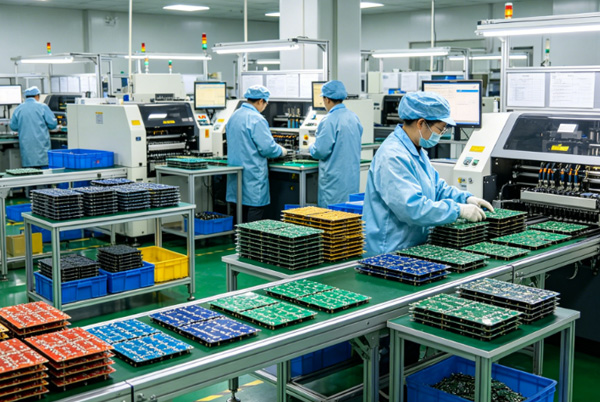
At manufacturers such as TOPFAST, prototype and production projects are supported through engineering review, flexible manufacturing workflows, process control systems, and scalable production management to help customers move efficiently from development to volume manufacturing.
Conclusion
Prototype PCB factories and mass production PCB factories serve different manufacturing goals.
Prototype manufacturing focuses on speed, flexibility, and engineering responsiveness, while mass production manufacturing prioritizes scalability, process consistency, and cost efficiency.
Choosing the right factory based on project stage helps improve product development efficiency, reduce manufacturing risk, and support long-term production success.
Understanding these differences is essential for building a reliable PCB manufacturing strategy.
FAQ
A: Prototype factories focus on flexibility and speed, while mass production factories focus on scalability and efficiency.
A: Small production quantities and frequent setup changes increase manufacturing cost.
A: Some can, but many prototype-focused factories are not optimized for large-scale manufacturing.
A: Rapid DFM feedback and design adjustments help improve manufacturability.A:
A: Stable process consistency and lower per-unit manufacturing cost.
A: Not necessarily, but their workflows are usually more flexible.