In PCB manufacturing, quality is not something that can be added at the end—it must be built into every step of the process.
Many PCB issues, such as:
- open circuits
- short circuits
- layer misalignment
are not random—they result from poor process control.
Understanding how PCB factories manage quality helps you:
- evaluate suppliers
- reduce production risks
- ensure consistent product performance
If you’re selecting a supplier: PCB Factory Capabilities Checklist

Table of Contents
Quality Starts with Process Control
The most important principle:
Quality is controlled during production, not after production
Key elements of process control
- standardized workflows
- parameter monitoring
- operator training
Factories with strong process control produce consistent results.
Key Stages of PCB Quality Control
1. Incoming Material Inspection
Raw materials must meet strict standards.
Includes
- laminate quality
- copper thickness
- prepreg consistency
Poor materials lead to defects later.
2. Inner Layer Inspection
After imaging and etching:
- circuits are checked for accuracy
- defects are identified early
Early detection reduces scrap rate.
3. Drilling Quality Control
Drilling affects electrical connectivity.
Controlled factors
- hole accuracy
- position tolerance
- wall quality
Related process: PCB Drilling vs Laser Drilling
4. Plating Process Control
Copper plating is critical for conductivity.
Key checks
- plating thickness
- uniformity
- adhesion
Poor plating leads to reliability issues.
5. AOI (Automated Optical Inspection)
AOI systems scan PCBs for defects.
Detects
- open circuits
- short circuits
- pattern defects
AOI improves yield and consistency.
6. Electrical Testing (E-Test)
Ensures all circuits function correctly.
Tests
- continuity
- isolation
This step is essential before shipment.
7. Final Inspection
Before delivery:
- visual inspection
- dimensional checks
Ensures boards meet specifications.
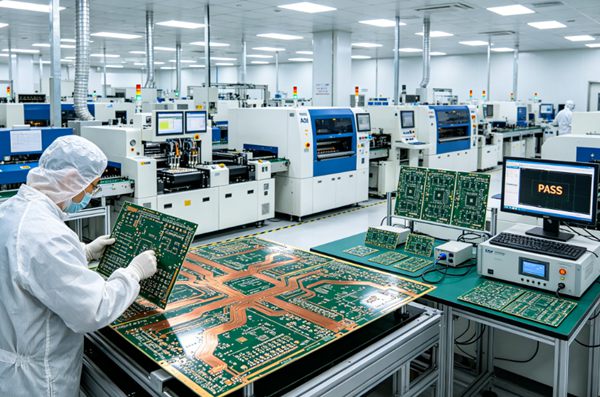
Inspection vs Process Control
Many buyers misunderstand this:
Inspection alone cannot guarantee quality
Difference
- Inspection → finds defects
- Process control → prevents defects
The best factories focus on prevention.
Quality Standards in PCB Manufacturing
Reliable factories follow standards such as:
- IPC standards
- ISO quality systems
Certification reference: PCB Certifications Explained
Common Causes of PCB Quality Issues
Poor process control
Leads to inconsistent results.
Inadequate inspection
Defects go undetected.
Material variability
Affects reliability.
Lack of engineering support
Design issues not addressed.
How to Evaluate a PCB Factory’s Quality System
Ask these questions:
- Do you have AOI and E-test?
- How do you control process parameters?
- What is your defect rate?
- Do you provide inspection reports?
Checklist: PCB Factory Capabilities Checklist
Role of Engineering in Quality Control
Engineering teams play a critical role:
- DFM review
- process optimization
- defect analysis
DFM guide: PCB Design for Manufacturing Guidelines
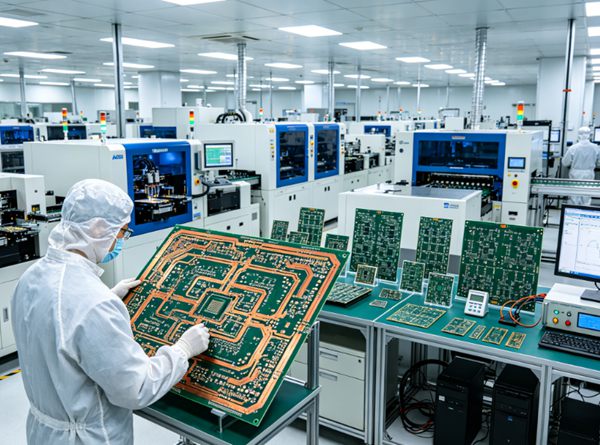
Real Manufacturing Perspective
A reliable PCB factory integrates quality control into every stage of production.
At manufacturers such as TOPFAST, quality is managed through a combination of process control, inspection systems, and engineering support to ensure consistent and reliable PCB production.
Conclusion
PCB quality is the result of controlled processes, not just final inspection.
Factories that implement strong process control, standardized workflows, and comprehensive inspection systems are more likely to deliver consistent and reliable products.
Understanding these principles helps engineers and buyers choose better manufacturing partners and reduce production risks.
FAQ
A: They use process control, inspection systems, and testing throughout production.
A: AOI is an automated inspection system that detects defects such as shorts and opens.
A: It verifies circuit continuity and isolation before shipment.
A: No, process control is more important because it prevents defects.
A: Common standards include IPC and ISO systems.
A: Request certifications, inspection reports, and ask about process control methods.