Automotive electronics are among the most demanding applications in PCB manufacturing.
Unlike consumer electronics, automotive systems must operate reliably under:
- high temperatures
- vibration
- long lifecycle requirements
A failure in automotive electronics can lead to serious consequences, making PCB quality and reliability non-negotiable.
Choosing the right PCB factory is critical for ensuring long-term performance.
If you’re evaluating general factory capability: What Makes a High-Quality PCB Factory

Table of Contents
Why Automotive PCBs Are Different
Automotive PCBs face stricter requirements than standard applications.
Key challenges
- extreme environmental conditions
- long-term durability (10–15 years)
- safety-critical functionality
This means not every PCB factory is suitable for automotive projects.
Key Requirements for Automotive PCB Manufacturing
1. Strict Quality Management Systems
Automotive manufacturing requires advanced quality systems.
Common standard
- IATF 16949
Why it matters
- ensures consistent production
- enforces process control
- reduces defect rates
Certification reference: PCB Certifications Explained
2. High Reliability Standards
Automotive PCBs must maintain performance over time.
Includes
- thermal resistance
- vibration resistance
- electrical stability
Reliability Guide: PCB Quality and Reliability Guide
3. Full Traceability
Traceability is essential in automotive manufacturing.
Must track
- materials
- production batches
- process parameters
This allows issues to be identified and resolved quickly.
4. Advanced Testing and Inspection
Automotive PCBs require more rigorous testing.
Common methods
- AOI inspection
- electrical testing
- X-ray inspection
Testing ensures product reliability.
5. Process Stability and Consistency
Consistency is critical in automotive production.
Focus areas
- stable yield rates
- repeatable processes
- controlled environments
Process control: How PCB Factories Control Quality
6. Material Selection
Materials must meet automotive standards.
Examples
- high Tg laminates
- heat-resistant materials
Material quality directly affects durability.

Typical Automotive PCB Applications
Automotive PCBs are used in:
- engine control units (ECU)
- ADAS systems
- infotainment systems
- power management modules
Each application has specific requirements.
Common Risks in Automotive PCB Manufacturing
Choosing a non-qualified factory
Leads to reliability issues.
Inadequate testing
Hidden defects may appear later.
Lack of traceability
Difficult to identify problems.
How to Choose a PCB Factory for Automotive Projects
- Step 1 — Verify certifications
Ensure IATF or equivalent standards.
- Step 2 — Evaluate quality systems
Check process control and inspection.
- Step 3 — Review experience
Look for automotive project experience.
- Step 4 — Test with pilot production
Validate consistency.
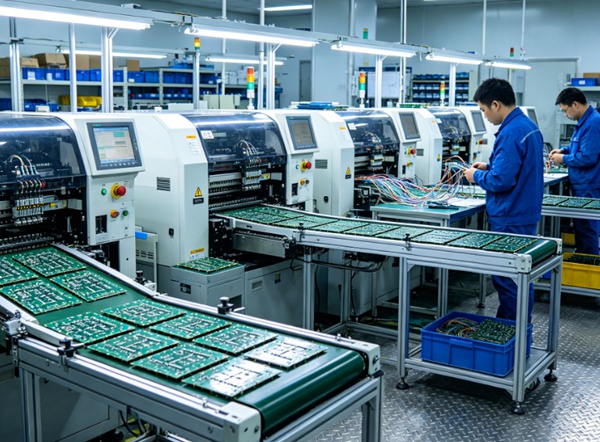
Checklist: PCB Factory Capabilities Checklist
Real Manufacturing Perspective
Automotive PCB manufacturing requires a higher level of discipline and control than standard applications.
At manufacturers such as TOPFAST, automotive projects are supported through strict process control, traceability systems, and consistent quality management to meet demanding industry requirements.
Conclusion
Automotive PCB manufacturing demands the highest standards of quality, reliability, and consistency.
Choosing the right PCB factory—with proper certifications, process control, and experience—is essential for ensuring long-term performance and reducing risks.
For automotive applications, quality is not just a requirement—it is a necessity.
FAQ
A: IATF 16949 is the most important certification for automotive applications.
A: They must operate reliably under extreme conditions and long lifecycles. ent alone.
A: No, only factories with proper quality systems and experience can meet automotive standards.
A: It is the ability to track materials and production processes throughout the lifecycle.
A: Testing includes AOI, electrical testing, and sometimes X-ray inspection.
A: Typically 10–15 years, depending on the application.