Table of Contents
The Criticality of Medical PCB Assembly
The medical device industry demands an unparalleled level of precision, reliability, and regulatory adherence. At the core of modern medical equipment—from wearable diagnostic monitors to complex imaging systems like MRI machines and life-support ventilators—lies the Printed Circuit Board Assembly (PCBA). Unlike consumer electronics, where a failure might merely cause user inconvenience, a malfunction in a medical PCBA can result in severe patient harm or loss of life. Consequently, Medical PCB Assembly is governed by stringent international standards, with ISO 13485 being the paramount framework for Quality Management Systems (QMS). Learn more about Solder Voiding under QFN: Root Causes and Thermal Profiling Solutions.
ISO 13485 dictates comprehensive requirements for the design, manufacture, and servicing of medical devices. For Electronics Manufacturing Services (EMS) providers, achieving and maintaining ISO 13485 certification is not merely a competitive advantage; it is an absolute prerequisite for participating in the medical device supply chain. A cornerstone of this standard is the rigorous implementation of component traceability, ensuring that every capacitor, integrated circuit, and soldering joint can be tracked backward through the manufacturing process to its original source.
This article delves into the technical intricacies of ISO 13485 compliance, the essential methodologies for achieving end-to-end component traceability, and the advanced quality control mechanisms required in medical PCBA.
Understanding ISO 13485 Compliance in PCBA
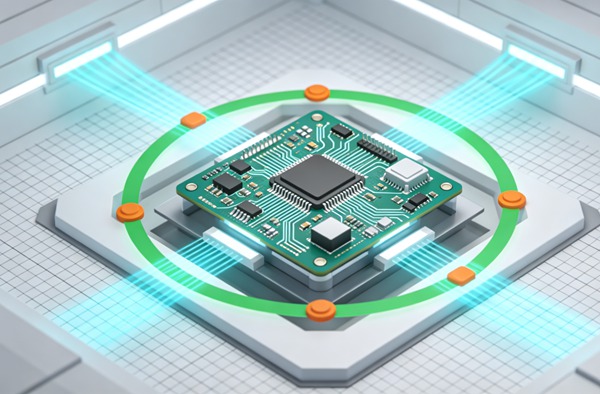
ISO 13485:2016 specifies requirements for a QMS where an organization needs to demonstrate its ability to provide medical devices and related services that consistently meet customer and applicable regulatory requirements. In the context of PCB assembly, this standard permeates every phase of the manufacturing lifecycle.
Risk Management Integration
Unlike general manufacturing standards like ISO 9001, ISO 13485 explicitly emphasizes risk management throughout the product lifecycle. This aligns closely with ISO 14971 (Application of Risk Management to Medical Devices). During the PCBA process, manufacturers must identify potential failure modes (such as cold solder joints, component delamination, or electrostatic discharge damage) and implement robust mitigation strategies. Process Failure Mode and Effects Analysis (PFMEA) becomes a mandatory engineering tool to anticipate and prevent defects before they occur.
Strict Document and Record Control
Documentation is the lifeblood of ISO 13485. Every procedure, from solder paste application parameters to the specific temperature profiles of reflow ovens, must be meticulously documented, validated, and strictly adhered to. Any deviation or change in the manufacturing process (Engineering Change Orders – ECOs) requires rigorous validation and authorization. The Device History Record (DHR) is generated for each production batch, providing a comprehensive paper trail (or electronic equivalent) that proves the assembly was built according to the Device Master Record (DMR). Learn more about Extreme Miniaturization: 0201m (008004) Component Placement in SMT Assembly.
Process Validation
For processes where the resulting output cannot be 100% verified by subsequent monitoring or measurement (such as the internal structural integrity of a solder joint beneath a Ball Grid Array – BGA), ISO 13485 requires process validation. This involves establishing documented evidence that a process consistently produces a result meeting predetermined specifications. Installation Qualification (IQ), Operational Qualification (OQ), and Performance Qualification (PQ) are standard protocols utilized to validate critical PCBA processes like wave soldering, conformal coating, and automated optical inspection (AOI).
Core Principles of Component Traceability
Component traceability is arguably the most demanding aspect of medical PCB assembly. It is the ability to track the history, application, or location of an entity by means of recorded identifications. If a specific batch of microcontrollers is discovered to have a latent defect post-deployment, the manufacturer must be able to rapidly identify every single medical device containing a component from that compromised batch to initiate a targeted recall.
Lot-Level vs. Reference Designator-Level Traceability
Traceability can be implemented at different resolutions.
* Lot-Level Traceability: Tracks components by their manufacturer lot code or date code to a specific production run of PCBAs. This is the minimum acceptable standard for many medical devices.
* Reference Designator-Level (Ref-Des) Traceability: A more granular approach where each specific component on the Bill of Materials (BOM) is linked to its exact physical location (e.g., C104, U5) on a serialized, individual printed circuit board. This requires sophisticated Manufacturing Execution Systems (MES) and automated scanning at the pick-and-place machines. Learn more about Busbar PCBs: Integrating Copper Busbars for High-Current Applications.
The Role of Manufacturing Execution Systems (MES)
Modern medical PCBA relies heavily on MES software. The MES acts as the central nervous system of the factory floor. It enforces routing, ensuring a board cannot proceed to the next manufacturing step (e.g., from Surface Mount Technology – SMT to Through-Hole assembly) unless all previous steps, inspections, and component scans have been successfully completed and logged against the board’s unique serial number.
How to Implement Component Traceability (Step-by-Step Guide)
Follow these engineering rules.
- Establish Unique Serialization
The foundation of traceability is assigning a unique, indelible identifier to every bare printed circuit board before any assembly begins. This is typically achieved using laser marking or high-temperature resistant labels containing a 2D barcode (such as a Data Matrix or QR code). This serial number becomes the primary key for the Device History Record.
- Implement Incoming Material Verification
All raw materials and components entering the facility must be rigorously inspected and logged. Components are scanned upon receipt, capturing critical metadata including the Manufacturer Part Number (MPN), supplier, date code, lot code, and quantity. The ERP/MES system generates a unique internal barcode for each reel, tray, or tube of components, linking it to the supplier data.
- Integrate MES with SMT Equipment
The pick-and-place machines on the SMT line must be integrated with the MES. Before production begins, the machine operator scans the internal barcode of the component reel and the barcode of the feeder slot on the machine. The MES verifies that the correct component is loaded into the correct feeder according to the validated BOM. If a mismatch occurs, the machine is interlocked and prevented from running.
- Capture Component Data During Placement
During the assembly process, the pick-and-place machine reports to the MES exactly which components (identified by their unique reel/lot ID) are being placed onto which specific PCB (identified by its 2D barcode). This establishes the critical link between the component lot and the individual medical device.
- Record Process Parameters
Traceability extends beyond physical components to include process parameters. The MES should record the environmental conditions (temperature, humidity), solder paste lot number, and the specific reflow oven profile (temperature zones and conveyor speed) used for each serialized board. This data is vital for root cause analysis if field failures occur.
- Aggregate Data into the Device History Record
All data collected throughout the manufacturing lifecycle—including component lots, machine operator IDs, inspection results (AOI, X-Ray), and functional test logs—are compiled into the electronic Device History Record (eDHR). This record is archived securely and must be retrievable for the operational lifetime of the medical device.
Implementing a robust traceability system compliant with ISO 13485 requires a systematic integration of hardware, software, and procedural controls.
Advanced Inspection and Quality Control Methodologies
To meet the zero-defect mandate of the medical industry, relying solely on visual inspection is grossly inadequate. EMS providers must deploy advanced automated inspection technologies.
Automated Optical Inspection (AOI)
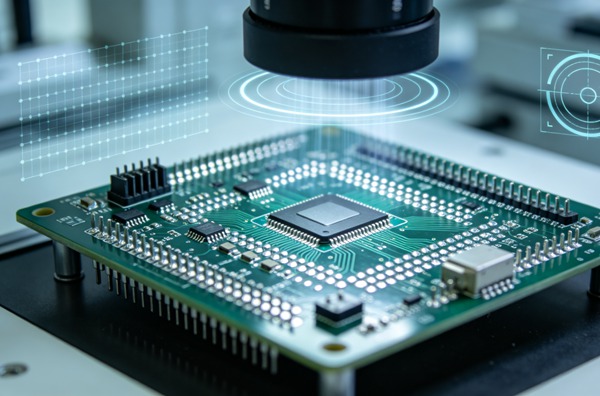
AOI systems utilize high-resolution cameras and advanced image processing algorithms to inspect PCBAs post-reflow. They verify component presence, correct orientation, polarity, and inspect the superficial quality of solder joints, identifying defects like tombstoning, bridges, and insufficient solder. In medical PCBA, 3D AOI is increasingly standard, providing volumetric data on solder joints for higher accuracy and lower false call rates.
Automated X-Ray Inspection (AXI)
With the prevalence of complex packages like Ball Grid Arrays (BGAs), Quad Flat No-leads (QFNs), and densely populated boards, many critical solder joints are hidden beneath the component body. AXI uses X-ray imaging to penetrate the component and inspect the structural integrity of these hidden connections. AXI can detect voids, shorts, and open circuits that are completely invisible to AOI. For Class III medical devices (life-sustaining/life-supporting), 100% AXI inspection of critical components is often mandated.
In-Circuit Testing (ICT) and Functional Testing (FCT)
Beyond physical inspection, the electrical functionality of the PCBA must be verified. ICT utilizes a custom “bed-of-nails” fixture to probe specific test points on the board, checking for shorts, opens, and verifying the values of passive components. FCT goes a step further by powering up the board and simulating its intended operating environment, running diagnostic software to verify that the assembly performs its designed function flawlessly. Learn more about SMT Stencil Design: Nano-Coating and Step-Stencils for Mixed Technology.
Supply Chain Risk Management and Counterfeit Avoidance
Traceability is only effective if the components being traced are authentic and reliable. The infiltration of counterfeit electronic components is a significant threat to medical device safety.
ISO 13485 requires stringent supplier evaluation and selection criteria. EMS providers must source components exclusively from Original Component Manufacturers (OCMs) or their franchised and authorized distributors. Purchasing from independent brokers should be strictly prohibited for medical builds unless exhaustive mitigation protocols (such as third-party decapsulation and material analysis) are in place, which is rarely justifiable.
Furthermore, proactive obsolescence management is essential. Medical devices often have long lifecycles, while electronic components are frequently discontinued. A robust supply chain strategy must include monitoring Component Product Lifecycle status to anticipate End-of-Life (EOL) events and secure sufficient buffer stock or identify valid drop-in replacements well in advance, minimizing the need for complex and risky re-validation efforts.
Frequently Asked Questions (FAQ)
While ISO 9001 is a general quality management standard focused on continuous improvement and customer satisfaction, ISO 13485 is specifically tailored for the medical device industry. ISO 13485 prioritizes regulatory compliance, rigorous risk management, strict document control, and process validation over continuous improvement, ensuring that the primary goal is the safety and efficacy of the medical product.
Yes, ISO 13485 mandates traceability. The extent of traceability required depends on the risk classification of the medical device. While lot-level traceability is a minimum baseline, high-risk devices often necessitate Reference Designator-level traceability to track the exact physical location of every critical component on a serialized board.
No. Building medical PCBAs requires significant investment in specialized infrastructure, advanced inspection equipment (like 3D AXI), comprehensive MES software for traceability, and a highly controlled manufacturing environment. Most importantly, the manufacturer must possess a certified ISO 13485 Quality Management System to be legally and operationally qualified to produce medical-grade electronics.
An MES prevents errors by enforcing strict procedural control. For example, it utilizes barcode scanning to interlock pick-and-place machines, preventing them from operating if an incorrect component reel is loaded into a feeder slot. It also controls routing, ensuring a board cannot advance to the next manufacturing stage if a previous test or inspection has failed or been skipped.
If a component defect is discovered, the manufacturer relies on the Device History Record (DHR) and traceability data. The traceability system allows them to quickly identify the specific supplier lot of the defective component and cross-reference it against the serial numbers of all finished devices that contain parts from that lot. This enables a targeted recall of only the affected devices, rather than a costly and widespread general recall.