Printed circuit boards (PCBs) are the foundation of modern electronic devices. From consumer electronics to industrial equipment, nearly every electronic product depends on reliable PCB manufacturing.
But what exactly does a PCB factory do?
For engineers and sourcing professionals, understanding how PCB factories operate can help:
- improve design decisions
- reduce manufacturing risks
- Optimize cost and lead time
This guide explains the role of a PCB factory, its manufacturing processes, and what capabilities to look for when selecting a production partner.
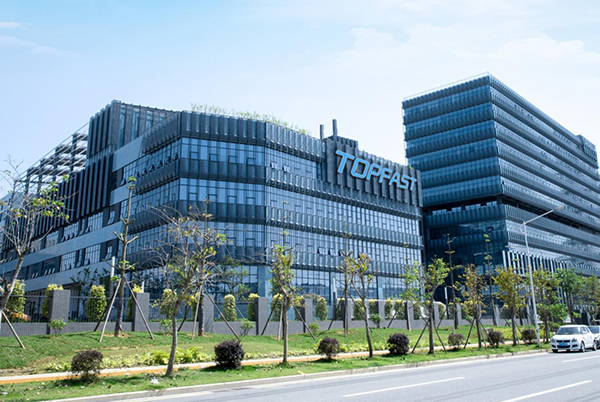
Table of Contents
What Is a PCB Factory?
A PCB factory is a facility that manufactures printed circuit boards by transforming raw materials into finished circuit boards ready for assembly.
A typical PCB factory handles:
- multilayer PCB fabrication
- prototype and mass production
- material processing and lamination
- precision drilling and plating
PCB factories are a key part of the electronics supply chain, working closely with assembly providers and product manufacturers.
The full production flow is explained in: PCB Manufacturing Process Explained
Core Processes Inside a PCB Factory
PCB manufacturing involves multiple precision processes.
1. Inner Layer Imaging and Etching
The process begins with transferring circuit patterns onto copper layers.
Steps include:
- photoresist application
- UV exposure
- chemical etching
This defines the internal circuitry of multilayer PCBs.
2. Lamination and Layer Stacking
Multiple layers are bonded together under heat and pressure.
This step creates:
- multilayer structures
- electrical connections between layers
3. Drilling
Holes are drilled to create vias and mounting holes.
Two main methods:
- mechanical drilling
- laser drilling (for HDI boards)
4. Copper Plating
Copper is deposited inside drilled holes to form electrical connections.
This step is critical for:
- via reliability
- signal continuity
5. Outer Layer Imaging and Etching
The outer copper layers are patterned to define the final circuit layout.
6. Solder Mask and Surface Finish
Protective and functional layers are added:
- solder mask coating
- surface finishes (ENIG, HASL, OSP)
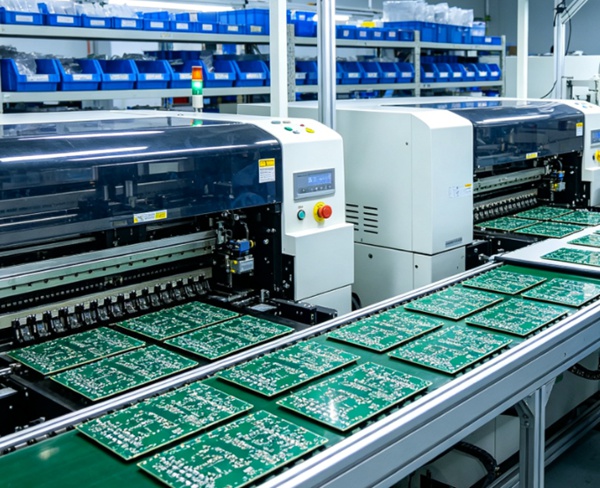
PCB Factory Capabilities
Different PCB factories offer different manufacturing capabilities.
Layer Count
Factories may support:
- single-layer PCBs
- double-layer PCBs
- multilayer PCBs (up to 20+ layers or more)
Material Types
Common materials include:
- FR4
- high-frequency materials (Rogers, etc.)
- flexible substrates
Precision Capabilities
Important parameters:
- minimum trace/spacing
- minimum drill size
- layer alignment tolerance
These capabilities directly affect design feasibility and product performance.
Prototype vs Mass Production
PCB factories typically support both prototyping and volume production.
Prototype PCB Manufacturing
Used for:
- product development
- testing and validation
Features:
Mass Production
Used for:
- commercial manufacturing
- stable product lines
Features:
- lower unit cost
- Higher process consistency
Quality Control in PCB Factories
Quality control is essential to ensure PCB reliability.
Inspection Methods
Common inspection processes include:
- Automated Optical Inspection (AOI)
- electrical testing (E-test)
- X-ray inspection (for complex boards)
Process Control
Factories maintain strict control over:
- material quality
- process parameters
- yield rates
Quality-related factors are discussed in: PCB Quality and Reliability Guide
How PCB Factories Support Electronics Manufacturing
PCB factories are not isolated—they are part of a larger ecosystem.
They support:
- PCB assembly (PCBA) providers
- OEM manufacturers
- product design teams
A well-structured PCB factory ensures that boards are:
- manufacturable
- reliable
- cost-effective
How to Choose the Right PCB Factory
Selecting a PCB factory requires evaluating multiple factors.
- Technical Capability
Ensure the factory supports your design requirements.
- Quality Standards
Look for certifications such as:
ISO 9001
UL
RoHS compliance - Lead Time
Evaluate production speed for both prototype and volume.
- Engineering Support
Factories that provide DFM feedback help reduce risks.
DFM concepts are explained in: PCB Design for Manufacturing Guidelines - Manufacturing Experience
Experienced factories typically offer:
higher yield
better process control
more stable quality
At PCB manufacturers such as TOPFAST, engineering teams typically review designs before production to ensure manufacturability and efficiency.
Conclusion
A PCB factory plays a critical role in turning electronic designs into physical products.
From imaging and etching to plating and finishing, each process must be carefully controlled to ensure quality and reliability.
By understanding how PCB factories work, engineers and buyers can make better decisions, reduce manufacturing risks, and achieve more efficient production outcomes.
FAQ
A: A PCB factory manufactures printed circuit boards through processes such as imaging, etching, drilling, plating, and finishing.
A: A PCB factory produces circuit boards directly, while a supplier may outsource production.
A: Yes, most PCB factories offer prototype services for small batch production.
A: PCB factories support industries such as consumer electronics, automotive, telecommunications, and industrial equipment.